Bethpage 1,4-Dioxane Delays Raise Exposure Concerns: Protecting Your Long Island Home’s Water
Key Takeaways
- Industrial treatment delays leave Bethpage homes exposed to 1,4-Dioxane longer than expected.
- 1,4-Dioxane resists standard activated-carbon filtration used by most municipal systems.
- Long Island’s sole-source aquifer makes the region especially vulnerable to persistent groundwater contamination.
- Whole-house filtration provides immediate household protection while large-scale remediation continues.
What Is 1,4-Dioxane—and Why Won’t It Go Away?
For homeowners across Long Island, few water quality issues have lingered as persistently as 1,4-Dioxane in Bethpage. This synthetic industrial solvent—used in manufacturing paints, varnishes, and consumer products—has seeped into local groundwater over decades and refuses to leave on its own.
Unlike many contaminants, 1,4-Dioxane does not biodegrade or evaporate. Once it enters an aquifer, it stays. What makes it especially difficult to address at the municipal level is that it resists standard activated-carbon filtration, the method most water treatment systems rely on. This chemical resistance is the reason why remediation timelines have stretched, leaving residents in a prolonged period of potential exposure while authorities work on more advanced treatment solutions.
Where Does 1,4-Dioxane Come From?
- Industrial Manufacturing: Used as a solvent stabilizer in chemical production facilities.
- Consumer Products: Found as a trace contaminant in detergents, cosmetics, and shampoos.
- Historical Disposal: Decades of improper industrial waste handling at sites like the Bethpage Community Water Supply Superfund Site.
- Groundwater Migration: Highly water-soluble and mobile, spreading through the aquifer over time.
Why Long Island Homeowners Can’t Wait for Municipal Fixes
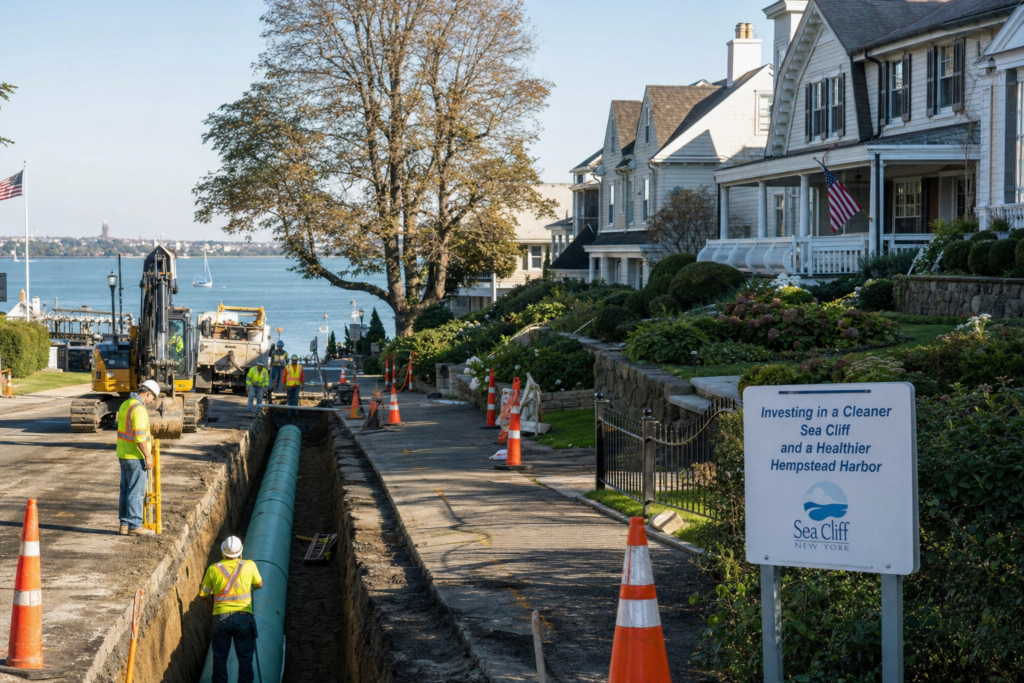
Long Island’s drinking water comes entirely from its underground aquifer system—there is no surface water backup. This sole-source dependence means any contamination that enters the ground can reach household taps, and the scale of remediation required to address industrial Superfund contamination like Bethpage’s is enormous.
Municipal treatment plants work to meet broad regulatory compliance for hundreds of thousands of residents. They are not configured to meet the specific purity preferences of individual households. That gap is where residential filtration becomes essential.
Beyond 1,4-Dioxane, Long Island tap water can carry:
- Chlorine: Added during disinfection, affecting taste, odor, and skin.
- Heavy Metals: Lead, mercury, and cadmium from aging distribution infrastructure.
- Bacteria and Microorganisms: Biological threats not always fully eliminated in transit.
- Sediment: Dislodged during pipe maintenance, reducing water clarity.
- PFAS and Other Emerging Contaminants: Industrial chemicals that require advanced filtration to address.
Concerned about 1,4-Dioxane in your Bethpage home’s water? FREE in-home water testing. Call (631) 991-3995.
The pHountain pHresh Approach: Advanced Whole-House Filtration
Our process starts before any equipment is recommended. Every pHountain engagement begins with a comprehensive in-home water test—identifying the specific contaminants, chemical levels, and conditions present in your water, not a regional average. Based on those results, we design a filtration system matched to your home’s actual needs.
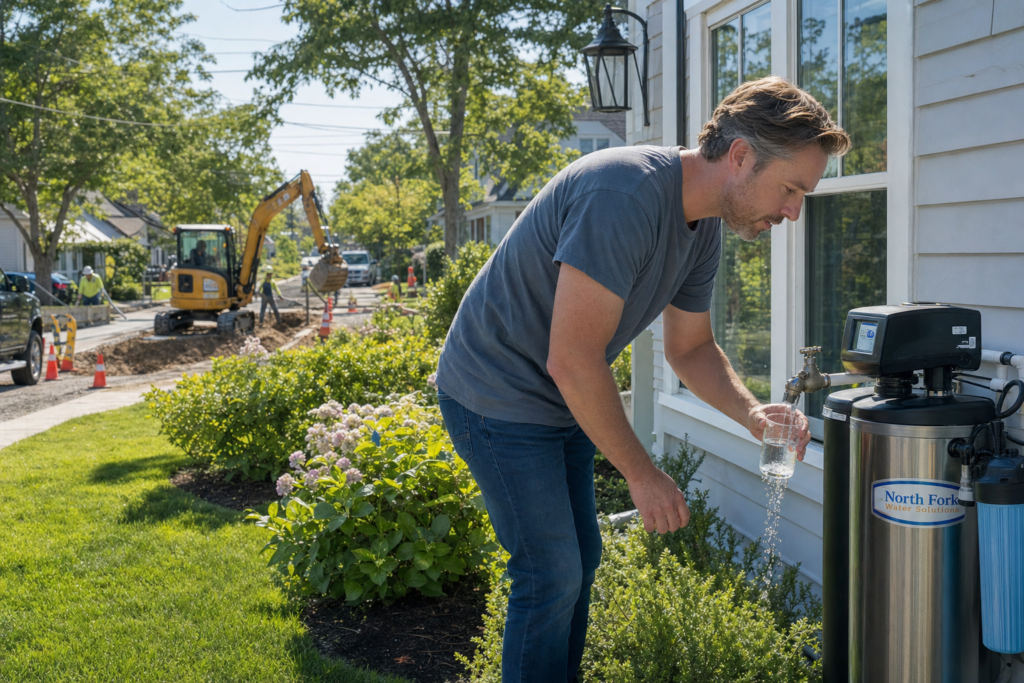
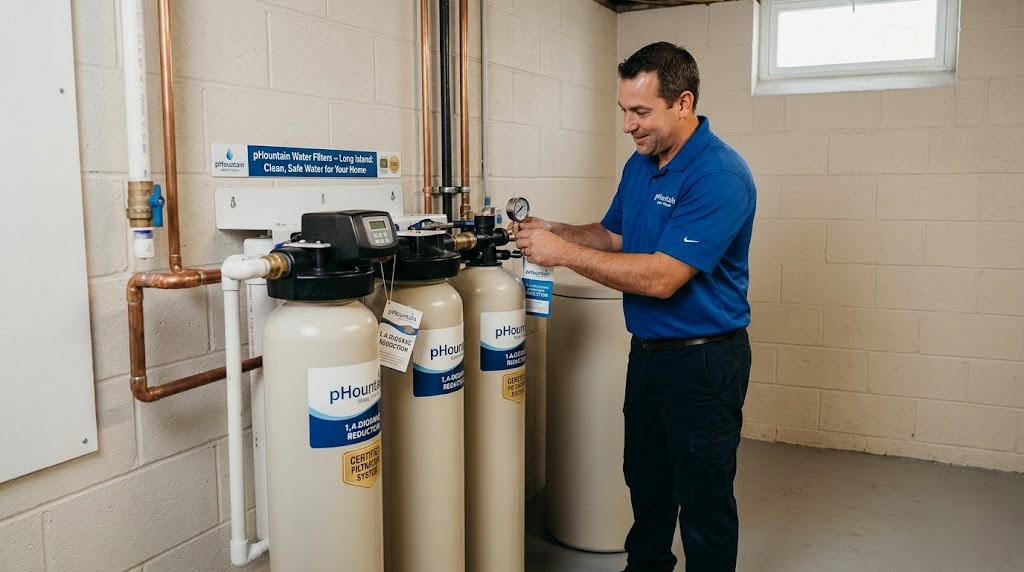
Our flagship solution, the pHountain pHresh Filtration System, is installed at the main water entry point of your home. Every faucet, showerhead, and appliance receives filtered water. The system is engineered to significantly reduce or remove:
- Industrial Chemicals: Including persistent contaminants like 1,4-Dioxane.
- Chlorine and Byproducts: Improving taste, odor, and reducing skin irritation.
- Heavy Metals: Lead, mercury, cadmium.
- Bacteria and Microorganisms: An additional layer of biological protection.
- Sediment and Particles: Protecting appliances and improving water clarity.
Comparison of Water Solutions
| Feature | Bottled Water | Carbon Pitcher Filter | pHresh System |
|---|---|---|---|
| 1,4-Dioxane Removal | Varies | Limited | Yes |
| Whole-Home Coverage | No | No | Yes |
| Long-Term Cost | High | Moderate | Low |
| Convenience | Low | Low | High |
| Microplastics | High Risk | No | No |
| Professional Installation | No | No | Yes |
Case Study: A Bethpage Family Takes Control
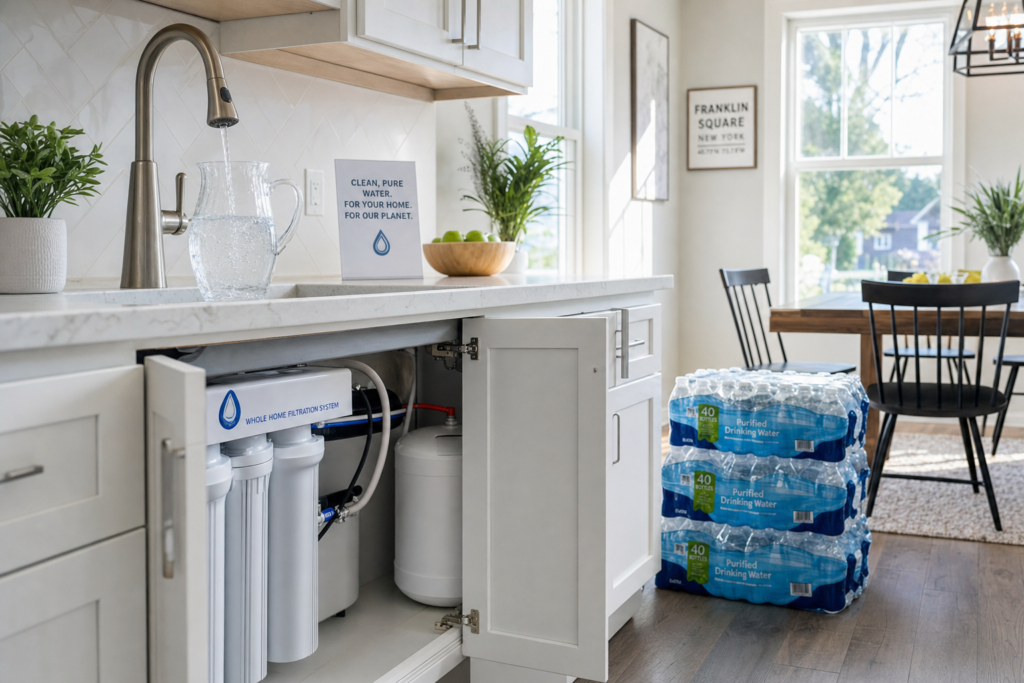
A Bethpage homeowner contacted pHountain after reading local news coverage about ongoing 1,4-Dioxane remediation delays near their neighborhood. They had been spending over $120 per month on bottled water and were still using unfiltered water for cooking, bathing, and laundry.
After a free in-home water test confirmed elevated industrial chemical levels, we installed a customized pHresh whole-house system. Within days, the family reported improved taste and odor from every tap. Their bottled water spending dropped to zero, and they gained confidence that every water use in their home—from drinking to showering—was filtered.
Investing in Your Home’s ROI
- Eliminate bottled water costs averaging $100–$150/month
- Typical payback period of 2–3 years on system investment
- Protect appliances and plumbing from sediment and chemical buildup
- Potential increase in home resale value with documented water quality improvements
- No recurring filter-replacement burden with high-capacity, long-life filtration
Frequently Asked Questions
Does a whole-house filter actually remove 1,4-Dioxane?
Advanced whole-house filtration systems using technologies beyond standard activated carbon are designed to reduce or remove persistent industrial chemicals including 1,4-Dioxane. Standard pitcher or faucet filters are generally not effective against this specific contaminant.
How do I know if 1,4-Dioxane is in my home’s water?
The only way to know for certain is to test your specific water supply. pHountain offers free in-home water analysis that identifies what’s actually present in your tap water.
Is Bethpage tap water safe to drink?
Bethpage municipal water is treated to meet current regulatory standards, but those standards may not address every household’s specific risk tolerance or the presence of contaminants at any level. Additional residential filtration provides an extra layer of protection.
Do you offer financing or payment plans?
Yes. Contact us to discuss options that make whole-house filtration accessible for your household.
Do you offer free water testing?
Yes—free in-home water testing is available with no obligation. Call (631) 991-3995 to schedule.
Ready to protect your home’s water? Call (631) 991-3995 for a FREE in-home water test.
Sources