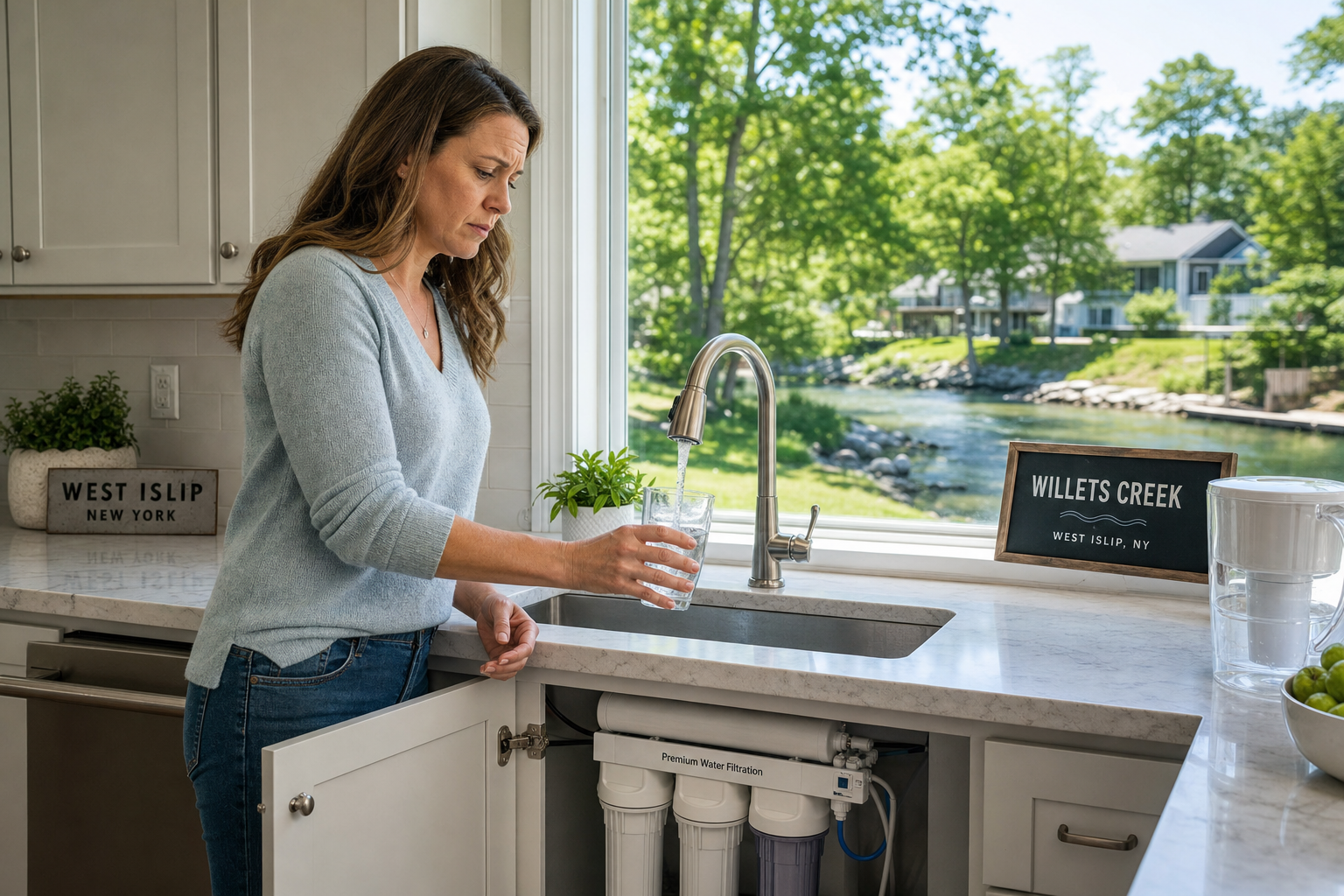
West Islip residents are hearing more about PFAS “forever chemicals” and water contamination tied to Long Island creeks and streams, including Willetts Creek. With national and state reports showing PFAS in surface waters across Suffolk County, many local homeowners are asking the same question:
Is my West Islip tap water affected, and what should I do about it?
This guide walks through what’s publicly known about Long Island PFAS contamination, how it connects to West Islip water contamination concerns, and practical steps you can take at home — including when it makes sense to consider whole-house filtration.
1. Recent PFAS findings in Long Island’s surface water sources
Public data and national analyses have highlighted just how widespread PFAS has become in New York’s waterways.
- A national report from Environment America found PFAS detected in 13 Long Island bodies of water, based on monitoring between 2022 and 2024, using EPA and Waterkeeper Alliance data.
- Across New York, 93.3% of 182 testing locations included in that analysis showed PFAS in the water.
- A related summary noted that all 13 Long Island sampling sites tested positive for PFAS, with 11 of those in Suffolk County.
PFAS, or per- and polyfluoroalkyl substances, are a large group of human‑made chemicals used in products such as firefighting foam, fertilizers, toilet paper, and cosmetics. They’ve earned the nickname “forever chemicals” because they break down very slowly in the environment and can persist in water, soil, and wildlife.
New York’s Department of Environmental Conservation (DEC) has acknowledged that PFAS contamination is widespread in groundwater and surface waters and is working on regulatory controls and treatment guidance.
For West Islip, these findings matter because:
- Willetts Creek is part of the local surface water network.
- Suffolk County is directly included in the areas where PFAS has been detected.
- Surface water and groundwater on Long Island are interconnected, so contamination in creeks can be a signal of broader regional water quality stress, even if your tap is supplied by treated public water.
2. PFAS concerns in Willetts Creek: What this means for West Islip homeowners
While the studies above focus on rivers, lakes, and streams, not individual home taps, they still raise valid questions for West Islip homeowners.
2.1 Distinguishing surface water contamination from tap water safety
On Long Island, groundwater is the primary source for public drinking water. Experts note that as PFAS enters groundwater, it is inevitable that it will also show up in lakes, rivers, streams, and the marine environment.
That relationship cuts both ways:
- PFAS in creeks and surface water can indicate that the surrounding groundwater has been stressed by PFAS sources.
- Public water suppliers may treat and monitor for PFAS, but contamination in the wider environment can still shape long‑term risk and regulatory changes.
For a West Islip homeowner, that means:
- PFAS detected in or near Willetts Creek does not automatically mean unsafe water at your tap.
- It does suggest that regional PFAS pressures are real, and that personal water testing and in‑home filtration are reasonable layers of protection if you’re concerned.
2.2 What sets PFAS apart from more common contaminants
PFAS stands out from more familiar contaminants like chlorine or sediment because:
- They’re man‑made: PFAS are not naturally occurring; they come from industrial and consumer products.
- They persist: Their chemical structure means they don’t break down easily, so they can accumulate over time in water and the environment.
- There are thousands of compounds: The EPA notes that thousands of PFAS chemicals exist, used across many sectors, making their impacts complex to fully assess.
These factors are driving new regulations, lawsuits, and public health research across Long Island.
3. Recognizing common water quality concerns in West Islip homes
PFAS itself is invisible — it has no taste, smell, or color. But many West Islip homeowners start asking about PFAS and other contaminants after noticing more general water quality issues in the house.
Here are typical household clues that often prompt a closer look:
- Chlorine odor: A strong pool‑like smell from the tap or shower, especially after running water for a few minutes.
- Dry skin or hair: Tight, itchy skin or brittle hair after bathing, even when using the same soaps and shampoos.
- Scale buildup: White or chalky deposits on shower doors, fixtures, or inside kettles and coffee makers.
- Metallic or chemical taste: Unpleasant flavors in coffee, tea, or when drinking straight from the tap.
- Staining: Brown, yellow, or orange marks on sinks, tubs, or laundry, often tied to minerals and metals.
- Appliance wear: Shorter‑than‑expected lifespans for dishwashers, water heaters, or washing machines due to mineral deposits or sediment.
These don’t prove PFAS is present, but they do indicate that your home water likely carries a mix of disinfectants, minerals, and possible industrial contaminants.
For many West Islip households, PFAS news becomes the final push to look at water more holistically — beyond just taste and odor.
4. Why relying solely on bottled water or basic filters may not suffice for PFAS
When PFAS headlines mention “forever chemicals” and Long Island contamination, the first instinct for many families is to buy more bottled water or rely on fridge filters. Both have limitations.
4.1 The limitations of bottled water use in homes
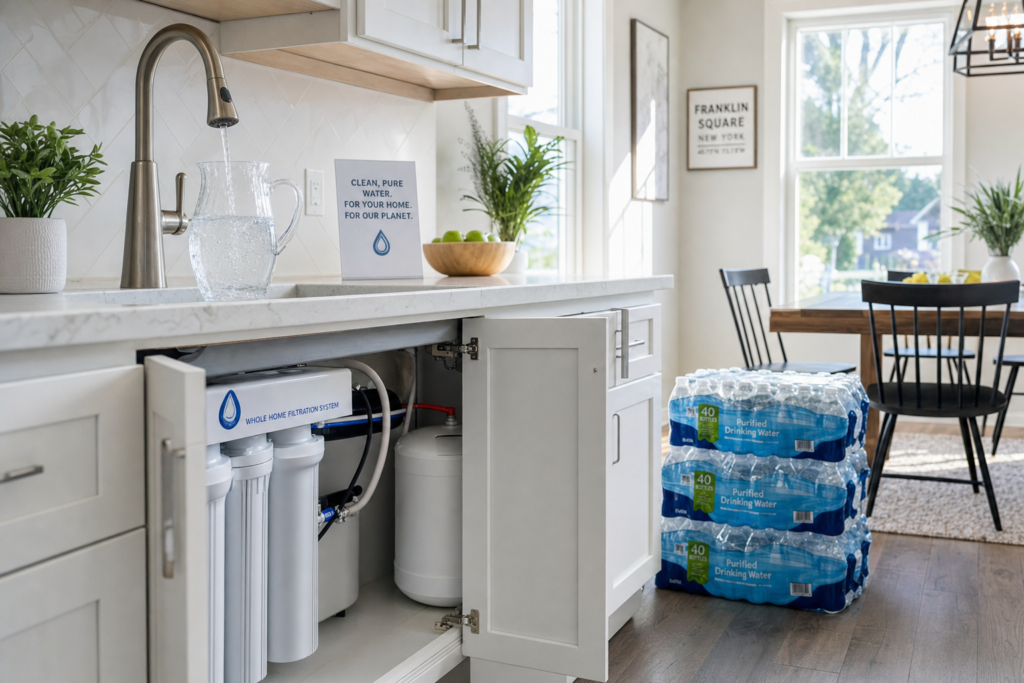
Many West Islip homeowners shift to bottled water for drinking and cooking, but over time they run into:
- High recurring costs: Buying cases each week can add up quickly for families.
- Limited coverage: Bottled water doesn’t help with showers, dishwashing, or brushing teeth, where water still contacts your skin and household surfaces.
- Plastic waste: Empty bottles contribute to recycling and waste concerns, especially when used long‑term.
Our composite West Islip case study (below) shows how easy it is to spend $30–$60 per month or more on bottled water alone when PFAS concerns linger.
If you’re weighing options, this comparison from pHountain Water Filters may help: Water Filters vs Bottled Water.
4.2 Why basic carbon filtration isn’t enough against PFAS
- Fridge and pitcher filters: These are typically designed for chlorine, taste, and odor, and often don’t address a broad range of industrial contaminants.
- Under‑sink units: Some can help with targeted contaminants at a single tap, but won’t support whole‑house uses like showers, laundry, or other sinks.
- Inconsistent maintenance: Filters that aren’t changed on schedule can lose effectiveness over time.
Because PFAS consists of many different compounds, experts often point to advanced, multi‑stage filtration approaches when households want more comprehensive contaminant reduction.
5. Illustrative story: How one West Islip home tackled PFAS alerts
This composite example illustrates how a typical West Islip household might move from PFAS headlines to a practical home solution.
5.1 Early concerns of the homeowner
A West Islip family living near local surface waters started hearing repeated news about PFAS in Long Island waterways and Suffolk County creeks. They were already noticing:
- Chlorine taste in tap water
- Dry skin after showers
- A growing stash of bottled water in the garage
After reading more about PFAS in Long Island waters through resources like this legal and environmental summary, they felt uneasy relying on basic fridge filters alone.
5.2 Testing and what it revealed
The family arranged for household water testing and learned that:
- Their water showed elevated levels of PFAS compounds, in line with regional alerts and broader Long Island patterns.
- Other common contaminants, such as chlorine and sediment, were also present.
These findings did not mean an immediate emergency, but they reinforced a desire for consistent, whole‑home filtration instead of piecemeal solutions.
5.3 Deciding on a whole‑house filtration system
After discussing options, the homeowner selected a professionally installed pHountain pHresh Filtration System. The goals were to:
- Address PFAS and other industrial contaminants entering the home’s main water line
- Improve taste and odor
- Extend benefits beyond drinking water to showers, laundry, and cooking
Since installation, the family reports:
- Less reliance on bottled water, saving approximately $30–$60 per month
- Greater confidence in every tap, not just one filtered faucet
- Peace of mind that their system was matched to Long Island conditions and installed by local professionals
6. Action plan: Managing your water quality in the coming month
You don’t need to be an expert in PFAS chemistry to take meaningful steps. Here’s a simple, practical roadmap.
6.1 Step 1: Understand how PFAS affects your area
- Review regional PFAS coverage: Articles from News 12 and Daily Voice outline where PFAS has been detected across Long Island and Suffolk County.
- Understand Long Island’s PFAS landscape: This overview from Migliore P.C. details how PFAS has become a regional legal and environmental issue.
- Check your water provider’s reports: Look for annual water quality reports that may summarize PFAS monitoring and treatment measures.
For a deeper, local‑focused primer, you can also read: Long Island Has a PFAS Problem. Here’s What You Need to Know.
6.2 Step 2: Evaluate if home water testing suits your needs
Consider in‑home water testing if:
- You live near creeks, marshes, or other surface waters, such as areas around Willetts Creek.
- You’ve noticed taste, odor, or staining issues and want to know what’s in your water.
- You want a baseline before investing in any filtration equipment.
pHountain Water Filters offers water quality testing and analysis as part of our consultation process. You can request a visit through the Free In‑Home Water Test page: Free In-Home Water Test
> Concerned about West Islip water contamination or PFAS near Willetts Creek? > Schedule a no‑obligation water evaluation to see what’s actually in your home’s water.
6.3 Step 3: Match filtration options to your home’s profile
When you have a better sense of your water profile, you can compare:
- Point‑of‑use filters (like under‑sink units) vs. whole‑house systems
- DIY cartridges vs. professionally installed filtration
- Short‑term fixes vs. long‑term infrastructure in your home
pHountain Water Filters focuses on customised whole‑house solutions for Long Island and Suffolk County homeowners. Learn more at: Whole-Home Water Filtration for Suffolk County
7. Integrating the pHountain pHresh System into your PFAS defense
The pHountain pHresh Filtration System is a whole‑house filtration solution installed at the main water entry point of your home. For West Islip residents, that can be especially helpful when you want coverage that extends beyond drinking water.
7.1 What makes the system stand out
- Whole‑home coverage: The system is installed where water enters your house, so every faucet, shower, and appliance receives filtered water.
- Contaminant‑focused design: It is engineered to address chlorine, heavy metals, industrial chemicals, bacteria, sediment, and other environmental contaminants commonly found in municipal water.
- High capacity: It is built to support family‑scale water usage with low day‑to‑day maintenance needs.
- Custom configuration: Systems are tailored to your home’s plumbing layout and water conditions, including Long Island‑specific challenges.
Because PFAS issues on Long Island often occur alongside other contaminants, many homeowners prefer a multi‑stage, whole‑house approach rather than relying on a single tap or pitcher filter.
7.2 Benefits of professional setup
- Plumbing integration: Certified technicians connect the system directly to your main water line, limiting disruption and helping ensure proper flow.
- Performance verification: After installation, technicians test and confirm system operation.
- Homeowner education: You’ll learn what your system is designed to address, how to monitor it, and when to schedule maintenance.
If you’re comparing West Islip options, it can help to see how filtration is handled in nearby communities as well: Water Filtration Islip NY Water Filtration Long Island NY
8. Side-by-side view: Popular water treatment choices for West Islip
The table below summarizes how different approaches typically stack up for a West Islip homeowner thinking about PFAS, chlorine, and everyday use.
| Approach | Coverage Area | Typical Use Length | Pros / Considerations |
|---|---|---|---|
| Bottled water | Drinking only | Days to weeks | Simple, portable; ongoing cost; no help for showers or laundry |
| Fridge / pitcher filter | One dispenser | Weeks to months | Improves taste/odor; limited contaminant range; frequent changes |
| Under‑sink filter | One faucet (kitchen/bath) | Months (varies) | Good for cooking/drinking at one tap; no whole‑home benefits |
| Whole‑house filtration | Entire home (all fixtures) | Long‑term system | Broad coverage; upfront investment; professional installation |
Frequently Asked Questions
Does PFAS in Willetts Creek automatically mean my West Islip tap water is contaminated?
No. Surface water testing results in creeks and streams do not directly measure what is in your household tap. However, experts note that PFAS in groundwater and surface waters are closely linked on Long Island. That’s why many West Islip homeowners choose to test their own water and add in‑home filtration as an extra layer of security.
I’m already on public water in West Islip. Why would I still consider filtration?
Public water suppliers must follow state and federal regulations, and New York is actively working on PFAS controls and treatment guidance. At the same time, regional studies show PFAS present in many Long Island waters, and some homeowners prefer to:
- Further improve taste and odor
- Add a home‑level barrier for contaminants
- Reduce dependence on bottled water
A whole‑house system lets you address water used for bathing, cooking, and cleaning, not just drinking.
How are West Islip homeowners typically responding to PFAS headlines?
Many local residents are:
- Reading regional PFAS coverage to understand the broader picture.
- Requesting water tests to see what’s present in their own homes.
- Upgrading filtration from simple pitchers to whole‑house systems that support all daily water uses.
If you’re ready to explore your options, you can start with a water evaluation from pHountain Water Filters: Contact Us
> You can’t control PFAS sources across Long Island, but you can control the water that enters your West Islip home. > Take the next step with a personalised water analysis from pHountain Water Filters.
pHountain Water Filters does not provide medical, legal, or regulatory advice. All information in this article is for general educational purposes only and should not be used as a substitute for professional guidance. Always consult appropriate licensed professionals for questions about your health, local water regulations, or legal rights related to water contamination.
Water quality varies by location. Municipal water provided by SCWA achieved EPA compliance in June 2025. Private well owners should have water tested regularly. pHountain provides free water testing for Nassau and Suffolk County.