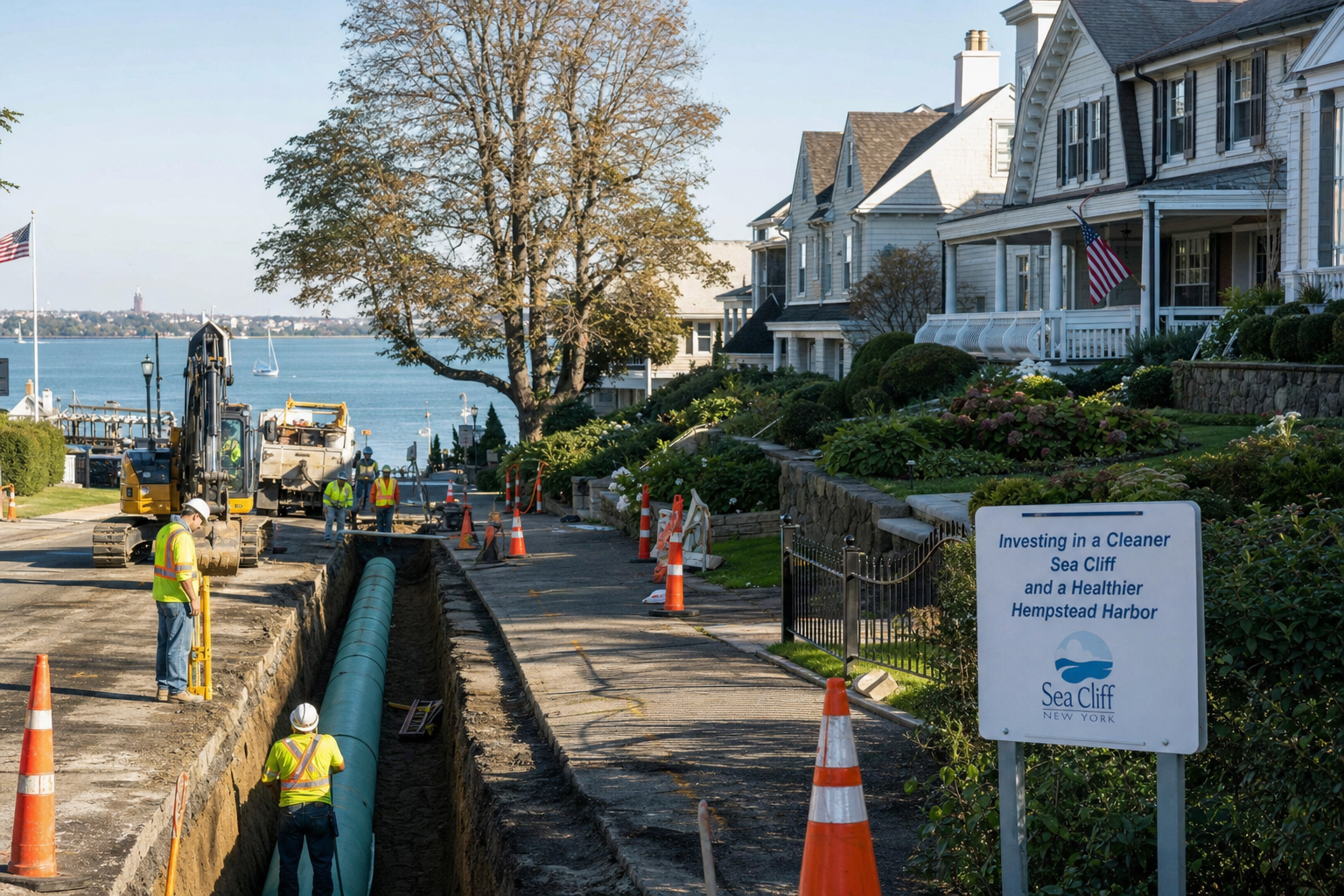
Sea Cliff’s sewer expansion project is aimed at protecting Hempstead Harbor. But if you live on or near Prospect Ave, Winding Way, The Drive, or Park Way, you may still be wondering what this actually means for your home’s tap water and whether you still need filtration once your cesspool is gone.
This guide walks Sea Cliff homeowners through the project, the benefits, the limits—and how to think about your home’s water as a separate question from your wastewater.
1. Essential details about the Sea Cliff sewer upgrade
In September 2026, federal, county and village officials announced a $6.5 million expansion of the Village of Sea Cliff’s sanitary sewer system, extending public sewers to areas that have relied on aging cesspools for generations.
According to the announcement from Congressman Tom Suozzi’s office, the expansion is funded through a mix of federal Community Project Funding, Nassau County bond authorization, and local resources: more than $1.1 million in federal funding secured by Congressman Suozzi, and $4 million in county bond authorization over the next two years secured by Nassau County Minority Leader Delia DeRiggi‑Whitton. The announcement does not give a construction schedule.
Streets and households impacted
This phase covers parts of four streets in Sea Cliff, NY:
- Prospect Ave
- Winding Way
- The Drive
- Park Way
In total, the announcement lists 45 service connections on these streets that will move from individual cesspools to the municipal sewer line.
The project’s role in broader environmental efforts
This is not Sea Cliff’s first sewer upgrade. Earlier work completed in the summer of 2021 sewered portions of Prospect, Maple, 12th, Sea Cliff, Summit, Central, 8th, and 7th Avenues, plus all of Fairview Place, according to the same announcement.
The new expansion builds on that earlier work and continues a long‑term plan to:
- Replace old cesspools that have limited capacity and can leak
- Protect Hempstead Harbor and ultimately the Long Island Sound from excessive nitrogen and other pollutants
- Modernize local infrastructure so both residents and businesses are less constrained by septic system limits
2. The environmental impact of cesspools on Hempstead Harbor and your home
Even if you’ve never had a failure, an aging cesspool is more than just an underground tank. It’s a direct pathway between household wastewater and the groundwater and coastal waters that define Sea Cliff’s environment.
The connection between cesspools and harbor pollution
The officials behind the project say that converting septic systems to sewers will reduce the nitrogen pollution entering the Sound.
When you flush or drain water from your home:
- Wastewater enters the cesspool
- Liquids seep into surrounding soil
- Nitrogen and other pollutants can move into groundwater
- Those contaminants eventually reach Hempstead Harbor and the Long Island Sound
Excess nitrogen in coastal waters is closely associated with:
- Algae blooms and murky water
- Low oxygen levels that stress marine life
- Long‑term ecosystem damage that’s difficult and expensive to reverse
By connecting homes to a sewer system, wastewater is piped to a treatment facility instead of soaking into the soil around your property. Congressman Suozzi called the project “transformational.”
Immediate household benefits of replacing cesspools
For homeowners, swapping a cesspool for a sewer connection can also affect:
- Yard conditions: fewer concerns about saturation or backups after storms
- Odors: less risk of sewage smells outdoors
- Maintenance: no more routine pumping or emergency cesspool service
But it’s important to separate wastewater management (sewer vs. cesspool) from tap water quality (what comes out of your faucets). The sewer project changes the first; it does not change the second.
3. Distinguishing sewer impacts from your drinking water quality
Once your home is connected to the Sea Cliff sewer system, your wastewater flows to a central treatment plant instead of into a backyard cesspool. That is a big win for Hempstead Harbor.
However, the sewer expansion changes where used water goes; it does not treat the water coming into your home, whether that comes from a public water supplier or a private well.
Improvements brought by sewer hookups
For the homes on Prospect Ave, Winding Way, The Drive, and Park Way, the sewer project can:
- Cut the risk of cesspool leakage into near‑surface groundwater
- Lower nitrogen loading from your property into local waters
- End routine cesspool pumping and related service calls
Those benefits are mainly environmental: they help the neighborhood and the harbor.
What remains unchanged at your taps
Before and after a sewer connection, your household water may contain:
- Chlorine and disinfection byproducts from municipal treatment
- Sediment and pipe‑related particles from aging distribution lines
- Taste and odor issues
If you are on public water, your supplier must meet federal and state drinking water limits and publish an annual water quality report. If you are on a private well, those limits do not apply to your well, and testing it is your responsibility.
Some homeowners add in‑home filtration for taste, odor or sediment concerns, separate from any sewer work. You can learn more about local options in our guide to Water Filtration Nassau County NY.
4. Scheduling your water decision-making alongside the Sea Cliff project
Here’s a simple way to think about next steps, whether your street is in this phase or not.
Coordinated action steps for managing water quality
- Confirm your status
- On a project street: Check with the Village of Sea Cliff for your connection schedule.
- Off the project streets: Check with the Village whether your home is already sewered (an earlier phase was completed in 2021) or still on a cesspool or septic system.
- Document current issues
- Water taste or odor: chlorine smell, earthy flavors, or cloudiness
- Appliance scale or staining: mineral buildup on fixtures
- Cesspool concerns: backups, odors, or frequent pumping
- Schedule a water test
- Even with public water, a home‑level test gives you a picture of what’s actually coming from your taps.
- You can request a Free In‑Home Water Test from pHountain Water Filters to get a tailored analysis and recommendations: Free In-Home Water Test
- Treat them as separate decisions
- Your sewer connection date is set by the Village’s project; a decision about water treatment can be made on its own schedule, based on what testing finds.
5. Weighing your choices: sewers alone versus added filtration
The table below summarizes how different approaches stack up for a typical Sea Cliff home transitioning away from a cesspool.
| Option | Wastewater impact | Tap water quality control | Typical homeowner experience |
|---|---|---|---|
| Stay on cesspool, no filtration | High nitrogen and pollutant loading to local groundwater and harbor | No control beyond municipal treatment (if on public water) | Ongoing pumping, risk of backups, environmental concerns |
| Connect to sewer, no filtration | Major improvement for harbor and groundwater compared with cesspools | Relies entirely on public treatment and distribution system | Lower maintenance, better for environment, but taste/odor or contaminant concerns may remain |
| Connect to sewer + whole‑home filtration | Strong environmental benefit from sewer connection | House‑level treatment configured around what testing finds | Treated water at every tap; the system needs periodic maintenance |
Put simply, the sewer project is an environmental investment, and filtration is a separate household decision about the water coming into your home.
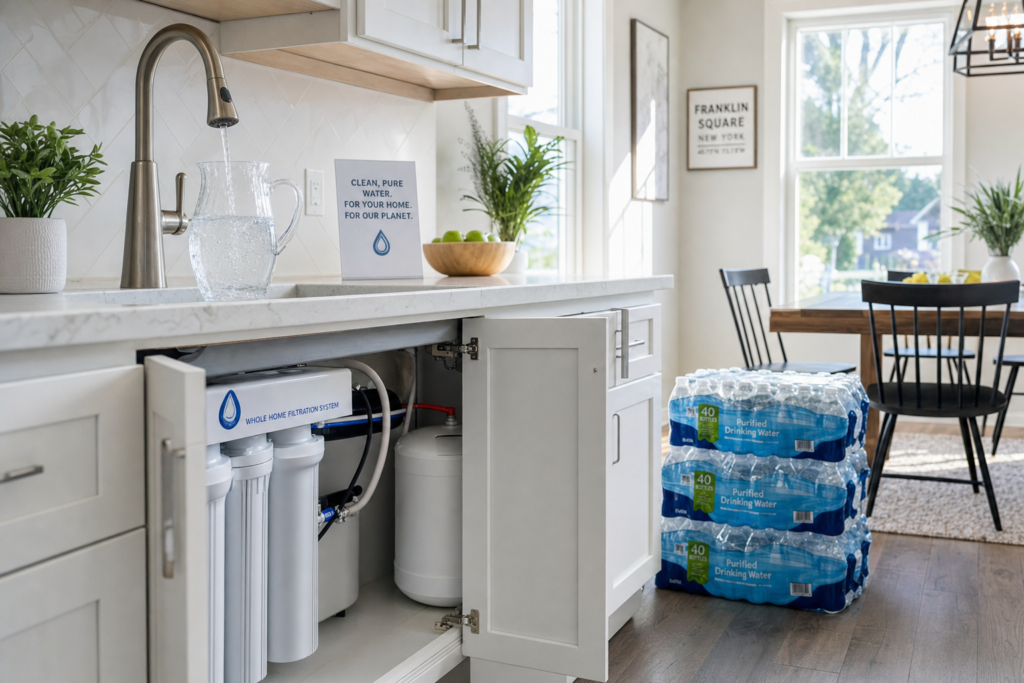
To explore your options beyond bottled water and small pitchers, see our overview of Water Filtration Long Island NY.
6. Tap water clues for Sea Cliff residents: when to consider testing and filtration
Whether or not your street is part of the Sea Cliff sewer project, it’s useful to pay attention to changes at the tap. These signs don’t prove a specific contaminant, but they can indicate that it’s time for testing and possibly upgraded filtration.
Typical water quality signals in Sea Cliff and Nassau County homes
- Chlorine smell: A strong pool‑like odor often points to higher chlorine levels used in disinfection. Municipal systems rely on chlorine to maintain water quality as it travels through pipes, but some homeowners prefer to address it at the tap for taste and comfort.
- Metallic or earthy taste: This can be related to pipe materials, minerals, or naturally occurring compounds. While not always dangerous, it can make water less appealing to drink.
- Cloudiness or particles: Visible sediment or cloudy water may stem from pipe disturbances, local construction, or aging infrastructure. A whole‑home system with sediment filtration can help address this at the point where water enters your house.
- Scale buildup and staining: White crust on fixtures or staining in toilets and tubs can signal hard water or mineral content that might be managed with appropriate treatment.
Why these signs remain relevant despite sewer improvements
The Sea Cliff sewer expansion deals with what happens after water leaves your home. But all of the issues above relate to water before it goes down the drain.
So even after:
- Your cesspool is abandoned
- Your home is fully tied into the sewer
- Local officials celebrate reduced nitrogen to Hempstead Harbor
you may still want in‑home filtration to improve taste, clarity, and your overall confidence in the water you and your family use every day.
7. The pHountain Water Filters partnership: helping Sea Cliff households thrive
pHountain Water Filters serves homeowners across Long Island, including Sea Cliff and the rest of Nassau County.
How pHountain Water Filters works with your home
- Water quality evaluation: A specialist conducts a home‑level test to understand your tap water, whether you’re on public supply or a private well.
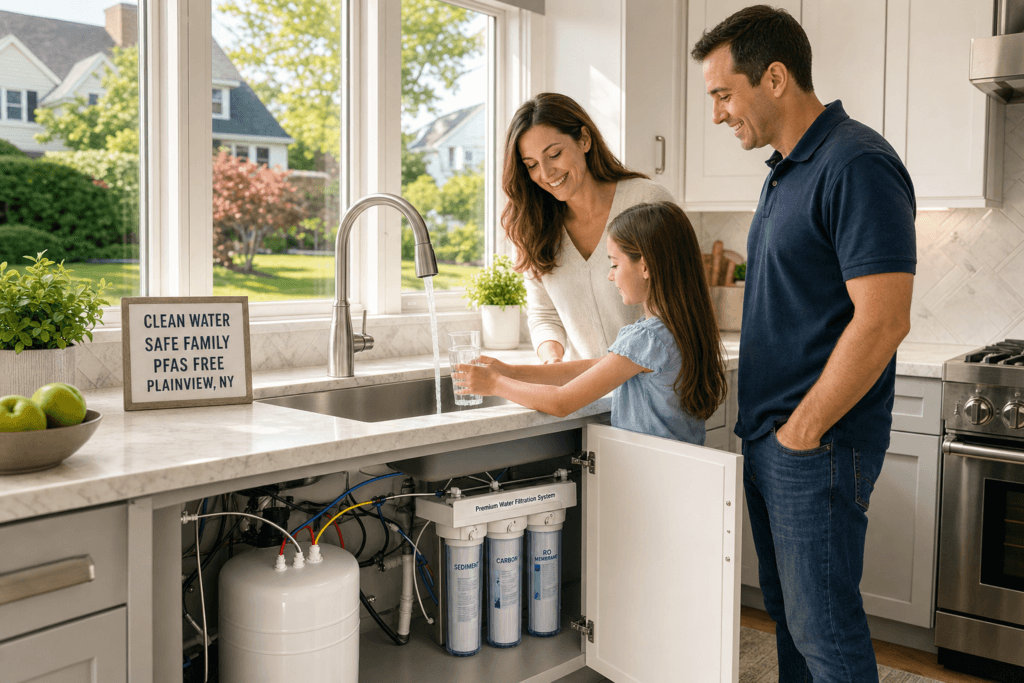
- Custom system recommendation: Based on your results, they suggest options—often including the pHountain pHresh Filtration System for whole‑home coverage—tailored to your home and household size.
- Professional installation: Trained technicians install the system at your home’s main water entry point, so every faucet benefits from the filtration setup.
- Ongoing support: You receive guidance on maintenance and on any adjustments if your water conditions change.
Whether or not your street is part of the sewer project, you can start by requesting a Free In-Home Water Test and building a plan that fits both your property and your budget.
Frequently Asked Questions
Will connecting my Sea Cliff home to the sewer system make my tap water “clean”?
Connecting to the Sea Cliff sewer system changes how your wastewater is handled and, according to the officials who announced the project, will reduce nitrogen pollution and help protect Hempstead Harbor.
However, it does not change the drinking water that arrives at your home. Public water suppliers must meet federal and state drinking water limits, and yours publishes an annual water quality report that shows what was detected. If you are on a private well, testing it is your responsibility. A whole‑home filtration system can give you additional control over what comes out of your taps, independent of the sewer project.
My Sea Cliff street isn’t part of this phase. Should I still think about filtration?
Whether your street is sewered and whether you filter your water are separate questions. Sewer status affects where your wastewater goes; filtration is about the water coming into your home. If you notice taste, odor, staining or sediment, or simply want to know more about your water, testing is a reasonable first step whether or not a future phase reaches your street.
I live on one of the project streets. When is the best time to test my water?
You don’t need to wait for the sewer work. Connecting to the sewer changes where your wastewater goes, not the water your supplier delivers, so there’s no need to time a test around your connection date. A good approach is:
- Start with your supplier’s annual water quality report if you are on public water.
- Get a home‑level test if you have taste, odor, staining or sediment concerns, to see what’s coming from your own taps.
- Test regularly if you are on a private well, since that is the owner’s responsibility.
If I install a whole‑home system, do I still need bottled water in Sea Cliff?
That’s a personal choice. A professionally installed whole‑home system is intended to reduce common impurities in the water throughout your home, and some households then use filtered tap water for drinking and cooking instead of bottled water. For a deeper comparison of options, you can read our overview of Water Filters vs Bottled Water.
This blog is for informational purposes only and is not intended as health, legal, or regulatory advice. Always consult your local water provider, municipality, or appropriate professionals for guidance specific to your situation.