
Residents in Franklin Square and Garden City Park are hearing about Western Nassau water contamination and new treatment systems for 1,4-dioxane and wondering: *Is my tap water finally safe, or do I still need extra protection at home?*
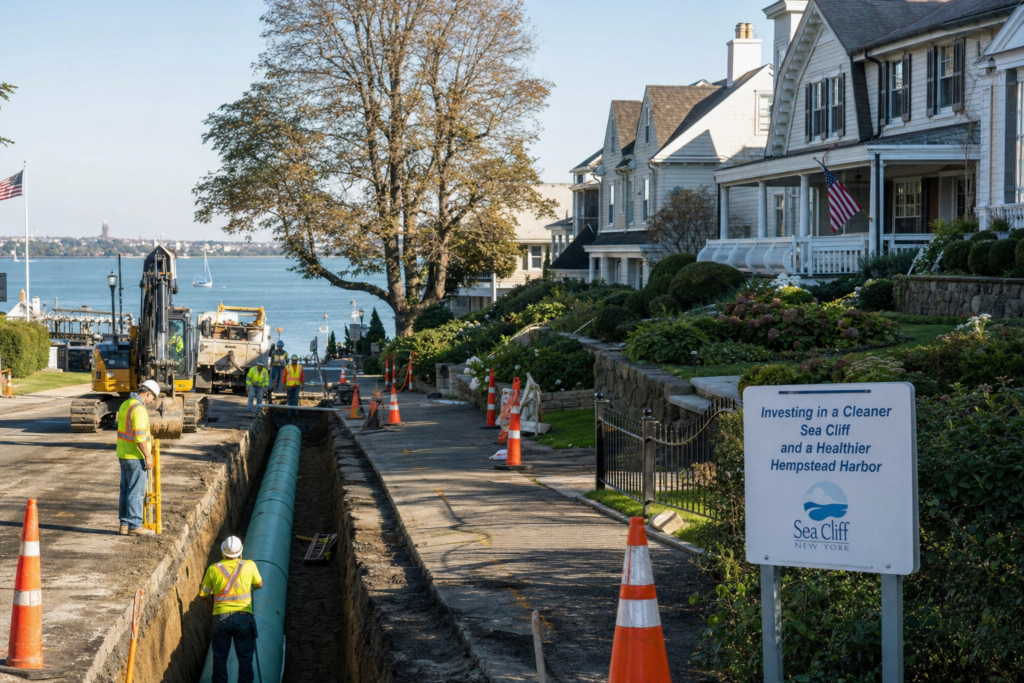
In September 2026, coverage of Western Nassau’s water systems highlighted that utilities have finalized Advanced Oxidation Process (AOP) treatments for 1,4-dioxane after running out of state deferrals, affecting an estimated 575,000 New Yorkers statewide, including parts of Nassau County that serve Franklin Square and Garden City Park (NY Focus). Even with these upgrades, regulators and reporters note that some systems have elevated toxins that still need close attention (NY Focus).
This blog walks through what this means for your home, how to interpret the news, and practical steps you can take to understand and improve the water coming out of your own faucets.
1. Understanding the Role of New AOP Treatment Systems in Western Nassau
1.1 A quick look at 1,4-dioxane in Nassau County
- 1,4-dioxane is an industrial chemical that has been detected in Long Island groundwater, including Nassau County public water systems (NY Focus).
- State regulators have pushed utilities to add treatment technology specifically aimed at this contaminant, leading to the AOP projects you’re now hearing about (NY Focus).
Because the contamination issue is regional, Franklin Square and Garden City Park homeowners are understandably focused on what these changes mean inside their homes, not just at the treatment plant.
1.2 How AOP treatment targets 1,4-dioxane
The Advanced Oxidation Process typically combines UV light and hydrogen peroxide to break down 1,4-dioxane molecules in water. According to reporting on Nassau County systems, these AOP units were installed to address state concerns about elevated 1,4-dioxane levels and to meet New York’s strict standards (NY Focus).
In plain terms:
- Hydrogen peroxide is added to the water stream.
- UV lamps energize the mixture.
- Reactive species formed in the process attack certain chemical bonds, including those in 1,4-dioxane.
These are major infrastructure upgrades, and for many residents they represent a critical step forward in addressing Western Nassau water contamination.
2. Reasons Franklin Square and Garden City Park Residents Should Stay Vigilant
2.1 System-wide progress vs. what comes out of your tap
Even with AOP in place, several realities remain:
- Multiple contaminants: The news coverage emphasizes that some Nassau County systems still have elevated toxins beyond 1,4-dioxane, even after treatment projects were completed (NY Focus).
- Distribution system factors: Water travels through miles of pipes before reaching your kitchen sink. Conditions in those pipes are not identical to what exists at the plant.
- Home plumbing: Older plumbing, fixtures, and in-home devices can influence what ultimately comes out of your tap.
That’s why many Franklin Square and Garden City Park residents are now reassessing their point-of-entry or point-of-use filtration, even though their utility has upgraded its treatment.
2.2 What “deferrals are over” actually means for you
The recent coverage notes that Western Nassau systems have run out of state deferrals and have now finalized AOP treatments for 1,4-dioxane (NY Focus). In practice, that means:
- Utilities are expected to meet state limits for 1,4-dioxane going forward (NY DOH).
- Regulators and reporters will be watching test data closely for any exceedances or lingering issues.
- Homeowners are no longer in a “wait and see” phase—this is the moment to confirm how these changes show up in their own homes.
If you’re in Franklin Square or Garden City Park, this is a good time to look beyond headlines about Western Nassau water contamination and get specific data on your household water.
3. How You Can Verify the Safety of Your Franklin Square or Garden City Park Tap Water
3.1 Start with your utility’s water quality reports
Your local water provider is required to publish Consumer Confidence Reports (CCRs) (EPA) and other testing summaries. These documents typically show:
- Detected 1,4-dioxane levels at the system level
- Other contaminants that were detected above certain thresholds
- Treatment updates, such as commissioning of AOP units
Look closely for:
- Sampling dates: Are you seeing results from before or after the AOP came online?
- Trends: Do 1,4-dioxane numbers appear to be decreasing, or hovering near state limits?
- Notes about ongoing projects: Some wells or treatment trains may still be in transition.
If the data is confusing, you can pair it with a local perspective by reading more about regional contamination issues in pieces like Long Island Has a PFAS Problem. Here’s What You Need to Know.
3.2 Follow up with home-specific testing
System-wide reports don’t always reflect what’s happening after water moves through:
- Your street’s mains
- Your building’s plumbing
- Your in-home fixtures and appliances
That’s why many Nassau County homeowners choose independent or in-home testing as a next step.
- Identify your concerns: Is your focus 1,4-dioxane, other industrial chemicals, taste/odor, or all of the above?
- Schedule a professional assessment: A local provider can help you understand which contaminants are most relevant to Western Nassau and your neighborhood.
- Compare options: Some residents start with a Free In-Home Water Test to get a clearer picture before investing in permanent equipment.
This layered approach—public data plus in-home testing—gives Franklin Square and Garden City Park families a more complete view of what they’re actually using every day.
4. What Our Experience Shows: A Common Scenario in Western Nassau Homes
To protect privacy, this is a composite case that reflects real-world conditions we frequently encounter in Western Nassau County homes.
4.1 The situation: lingering concerns after AOP is installed
- Location: Single-family home served by a Western Nassau municipal system, similar to many in Franklin Square or Garden City Park.
- Context: The homeowner had followed the news about 1,4-dioxane and knew that AOP units had recently been finalized at the utility.
- Concern: Even with these upgrades, they were uneasy about residual chemicals and wanted to reduce their reliance on packaged water.
They contacted pHountain Water Filters to ask whether municipal treatment alone was enough, or if they should consider additional whole-house filtration.
4.2 Testing and findings
After a site visit and water testing:
- Elevated 1,4-dioxane: Lab tests still showed detectable 1,4-dioxane in the home’s tap water at levels that prompted the homeowner to seek further filtration.
- Taste and odor concerns: The family also reported chemical-like taste and smell, which is common in chlorinated systems.
- Multiple contaminants: While AOP targeted 1,4-dioxane, the homeowner was also concerned about other industrial contaminants and disinfection byproducts that may be present in treated water.
The homeowner wanted a solution that would address not just one chemical but a broad range of contaminants commonly discussed in Nassau County.
4.3 The chosen approach and day-to-day impact
Based on the test results and their goals, the homeowner opted for:
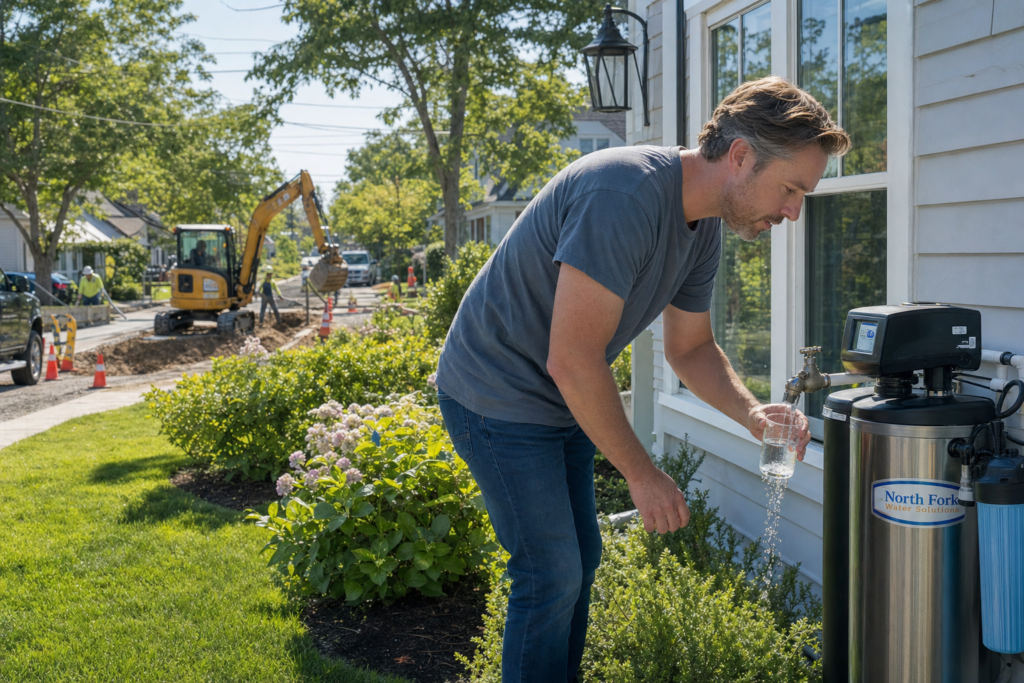
- pHountain pHresh Filtration System: A whole-house filtration system designed to address chlorine, heavy metals, industrial chemicals, bacteria, sediment, and various environmental contaminants.
- Professional Installation: Technicians integrated the system into the home’s plumbing so that every faucet and fixture benefited from the filtration.
After installation, the family reported:
- Improved taste and odor of drinking and cooking water
- Greater confidence in bathing and showering water
- Reduced dependency on packaged water, saving an estimated $20–$50 per month compared to their previous mix of bottled water and smaller filters
This example underscores a pattern we’re seeing: even after AOP upgrades, Western Nassau homeowners often choose to add in-home filtration for an extra layer of protection and convenience.
5. Evaluating Your Choices: Delaying Action, Using Bottled Water, or Installing Whole-Home Filtration
When you live in an area associated with Western Nassau water contamination, you’re usually weighing three main approaches.
5.1 Side-by-side comparison
Below is a general comparison for a typical Franklin Square or Garden City Park household:
| Option | Main Benefit | Main Drawback |
|---|---|---|
| Rely only on municipal AOP | Uses existing treatment you already pay for | Limited control over other contaminants or distribution system issues |
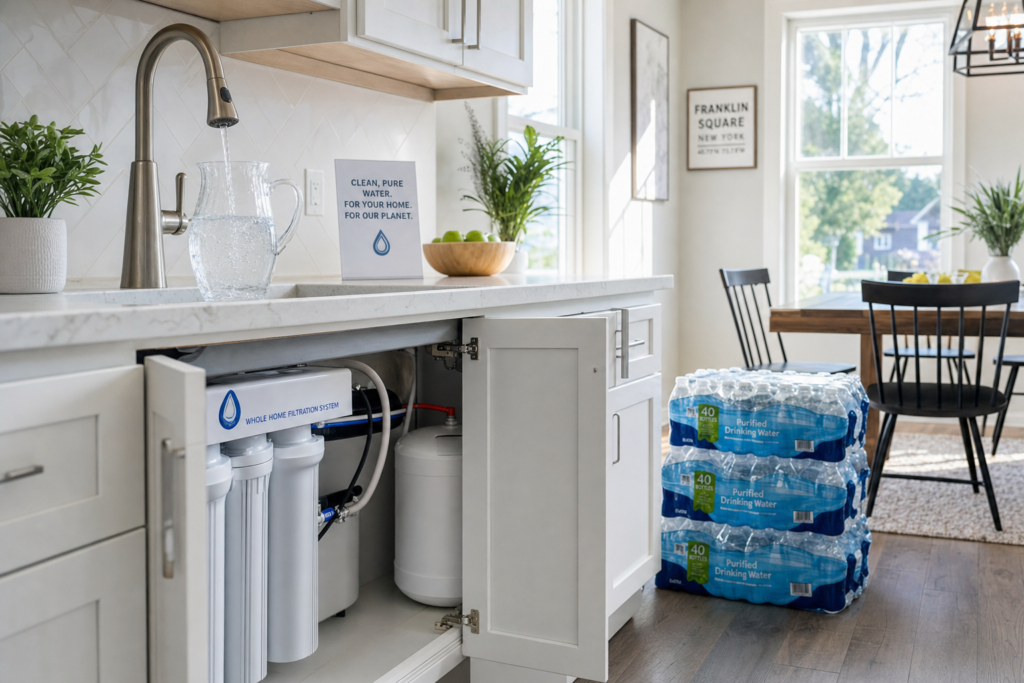
| Buy bottled water | Quick access to alternative drinking water | Ongoing cost, plastic waste, no help for showers or laundry |
| Whole-house filtration system | Filters water for every tap in the home | Requires upfront investment and installation planning |
Many Western Nassau residents end up blending these strategies for a while—using bottled water short-term while they evaluate more permanent filtration options.
5.2 Why more Nassau County homeowners are looking at whole-house systems
Homeowners in Franklin Square and Garden City Park often tell us they are motivated by:
- Whole-home coverage: They want cleaner-feeling water not just for drinking, but for bathing, laundry, and cooking.
- Broad contaminant focus: Instead of chasing each new headline, they prefer systems that address multiple contaminant categories at once.
- Long-term cost control: Over time, investing in a whole-house system can help manage costs compared with ongoing bottled water purchases and frequent cartridge changes.
If you’re exploring this route, you can see how pHountain Water Filters serves your area on our Water Filtration Nassau County NY page.
6. How pHountain Water Filters Supports Franklin Square and Garden City Park Families
6.1 A step-by-step path from concern to solution
For Franklin Square and Garden City Park residents, the process typically looks like this:
- Initial conversation: You reach out through our Contact Us page to share your concerns about 1,4-dioxane or other contaminants.
- Water evaluation: We help you arrange testing focused on the issues most relevant to Western Nassau’s current conditions.
- Customized recommendation: Based on your results, we recommend a configuration of the pHountain pHresh Filtration System or other appropriate options tailored to your home size and water usage.
- Professional Installation: Our technicians handle integration into your plumbing, aiming to minimize disruption and ensure proper performance.
- Follow-up support: We remain available to answer questions, discuss maintenance, and reassess if local water conditions change.
This process is designed to give you clarity at each step, so you can make informed decisions rather than react to every new headline about Western Nassau water contamination.
6.2 Local knowledge for Long Island and Nassau County
Because pHountain Water Filters focuses on Long Island and nearby New York areas, we stay attentive to:
- Regional contaminant trends reported for Nassau County (NY Focus)
- Town-specific concerns in communities like Franklin Square, Garden City Park, Hicksville, and others
- Infrastructure changes and news events, such as PFAS findings and other emerging contaminant issues, covered in resources like Long Island Faces PFAS Contamination in Produce After March 2026 Detection and Hicksville Water Contamination After Infrastructure Changes? Here’s Why (May 2026)
This local perspective helps us interpret how regional developments might translate to your specific block and home.
> Want to see what’s really in your Franklin Square or Garden City Park tap water after the AOP upgrades? Schedule a Free In-Home Water Test to get data specific to your faucets, not just your ZIP code.
7. Answering Your Top Questions on Western Nassau Water Contamination and Your Household
7.1 I live in Franklin Square. Does the new 1,4-dioxane treatment mean my water is now “safe”?
The new AOP systems in Western Nassau were installed specifically to address 1,4-dioxane after state regulators raised concerns about elevated levels in public water systems (NY Focus). That’s a significant improvement at the utility level.
However:
- AOP is focused on certain chemicals, not every possible contaminant.
- Water quality can change between the plant and your home.
- “Safe” is a broad term that depends on your personal risk tolerance and what other substances you’re concerned about.
Many Franklin Square homeowners choose to verify the impact in their own home through testing and, if needed, add in-home filtration for an additional layer of protection.
7.2 I’m in Garden City Park. If my utility meets state standards, why would I still need a whole-house filter?
State standards are designed for system-wide compliance, not necessarily to match each homeowner’s preferences. Garden City Park residents often look at whole-house filtration because they want:
- Better-tasting and better-smelling water than what chlorinated systems alone provide
- Coverage for baths, showers, and laundry, not just drinking water
- Broader contaminant management, including categories like chlorine, heavy metals, sediment, and various industrial chemicals
A whole-house system like the pHountain pHresh Filtration System is designed to support these goals across the entire home.
7.3 How do I know if my home is still affected by Western Nassau water contamination issues?
To understand your home’s situation:
- Review your utility’s latest reports for 1,4-dioxane and other contaminants, noting dates and trends.
- Arrange targeted testing in your home to check what’s actually coming from your taps.
- Compare options for filtration if your results show contaminants you’d like to address.
You can start that process by using our Contact form or booking a Free In-Home Water Test for a closer look at your specific water.
7.4 Does pHountain Water Filters only work with Western Nassau, or do you cover other Long Island towns too?
pHountain Water Filters serves Nassau and Suffolk Counties and parts of the broader New York metro area. In addition to Franklin Square and Garden City Park, we support homeowners across the region through service-area pages like:
If you’re unsure whether your home is in our service area, you can reach out via the Contact page to confirm.
Ready to move beyond headlines and see what’s actually flowing from your faucets in Franklin Square or Garden City Park? Take the next step and request a Free In-Home Water Test with pHountain Water Filters.
This content is for informational purposes only and is not intended as health, medical, or regulatory advice. Always consult your local water provider, appropriate regulatory agencies, and qualified professionals for guidance specific to your situation.
Water quality varies by location. Municipal water provided by SCWA achieved EPA compliance in June 2025. Private well owners should have water tested regularly. pHountain provides free water testing for Nassau and Suffolk County.