Residents across Plainview and western Nassau County are hearing more about PFAS “forever chemicals” in the news and wondering what it means for their tap water. With New York State suing major chemical manufacturers over PFAS in Long Island drinking water, it’s natural to ask how much of this affects your own kitchen sink and shower. News 12 Long Island reports that New York’s Attorney General is suing several of the nation’s largest chemical manufacturers over PFAS contamination in drinking water across Long Island and the state.
This guide focuses on Nassau County PFAS water contamination, what’s known from public information, and how Plainview-area homeowners are responding with home filtration.
1. What Homeowners Need to Know About PFAS in Nassau County
1.1 What are PFAS?
PFAS (per- and polyfluoroalkyl substances) are a large family of man‑made chemicals used for decades in many everyday products. Environmental advocates and researchers note that PFAS have been common in items such as nonstick cookware, some food packaging, textiles, and personal-care products.
Because PFAS break down very slowly, they can persist in the environment for years and can be found in air, soil, and water. This is why they are often called “forever chemicals.”
Experts cited by News 12 explain that people can be exposed to PFAS through:
- Drinking water: when groundwater or surface water is impacted
- Food: when it comes into contact with PFAS‑containing products, such as some cookware
- Inhalation: breathing air or dust that contains PFAS
1.2 Why PFAS are a concern for Long Island drinking water
Long Island relies heavily on a sole‑source aquifer system for drinking water. When chemicals like PFAS reach groundwater, they can be difficult and expensive to manage.
According to News 12’s coverage of the New York State lawsuit, health and environmental officials have documented PFAS contamination in water across the state, including Long Island. Because these chemicals persist for long periods, contamination can remain an issue even after the original source is controlled.
2. Linking New York’s PFAS Legal Actions to Local Water Supplies
2.1 What the lawsuit is about
The New York Attorney General is suing several major chemical manufacturers, accusing them of marketing and selling PFAS‑containing products that ended up contaminating drinking water supplies on Long Island and elsewhere.
Environmental advocates quoted in the News 12 report say they see the lawsuit as an important step toward holding companies accountable and pushing industry‑wide changes that limit future PFAS use and contamination.
2.2 What lawsuits don’t change in your kitchen today
Legal actions and state‑level enforcement can:
- Push for cleanup funding
- Encourage stricter regulations
- Support upgrades to public water systems
However, they do not instantly change the water coming out of your tap in Plainview or western Nassau County. Even as water providers implement treatment and monitoring, homeowners often look for additional layers of protection at the home level.
For broader Long Island context, you can read more in our guide on Long Island’s PFAS problem and what homeowners should know.
3. Current Measures by Nassau County Water Providers on PFAS
3.1 Public water efforts described in recent coverage
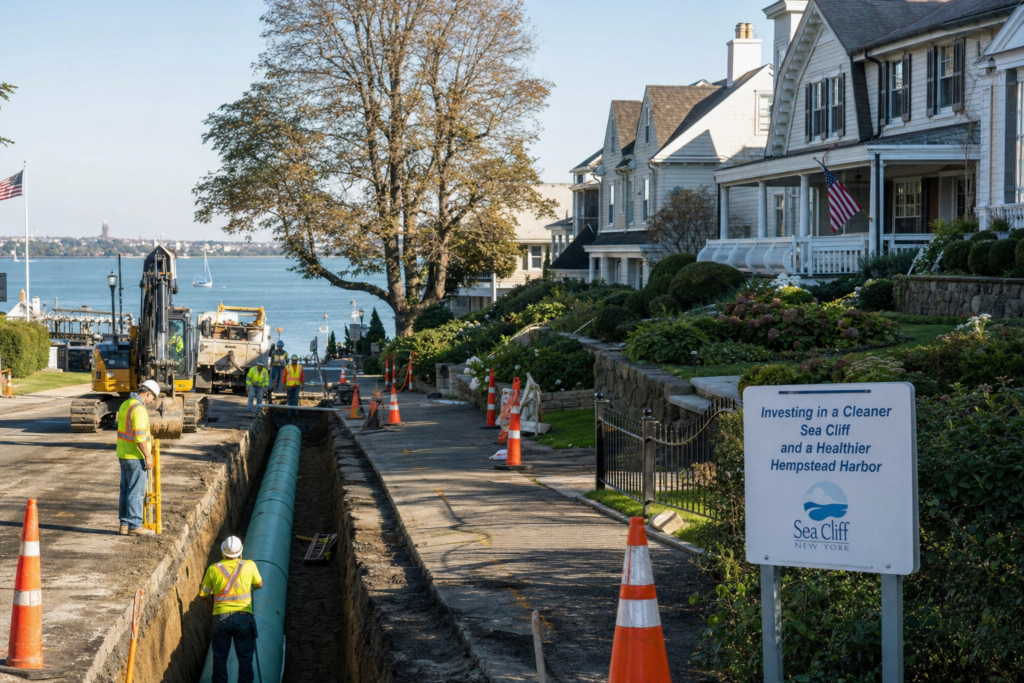
Local water providers on Long Island have been investing in treatment systems aimed at keeping PFAS out of the public water supply. In the News 12 report, a representative from the Suffolk County Water Authority explained that they’ve been using filtration systems since 2013 to target PFAS and other contaminants before water reaches homes.
He emphasized that water flows through filtration media and is then tested to confirm that contaminant removal is taking place.
While that example is from Suffolk County, it shows how Long Island water suppliers are responding to PFAS concerns with infrastructure upgrades and ongoing monitoring.
3.2 Why Plainview and western Nassau homeowners still ask about home filtration
Even when public water providers are investing in treatment, homeowners in Nassau County often:
- Want more control over what happens at the point where water enters their home
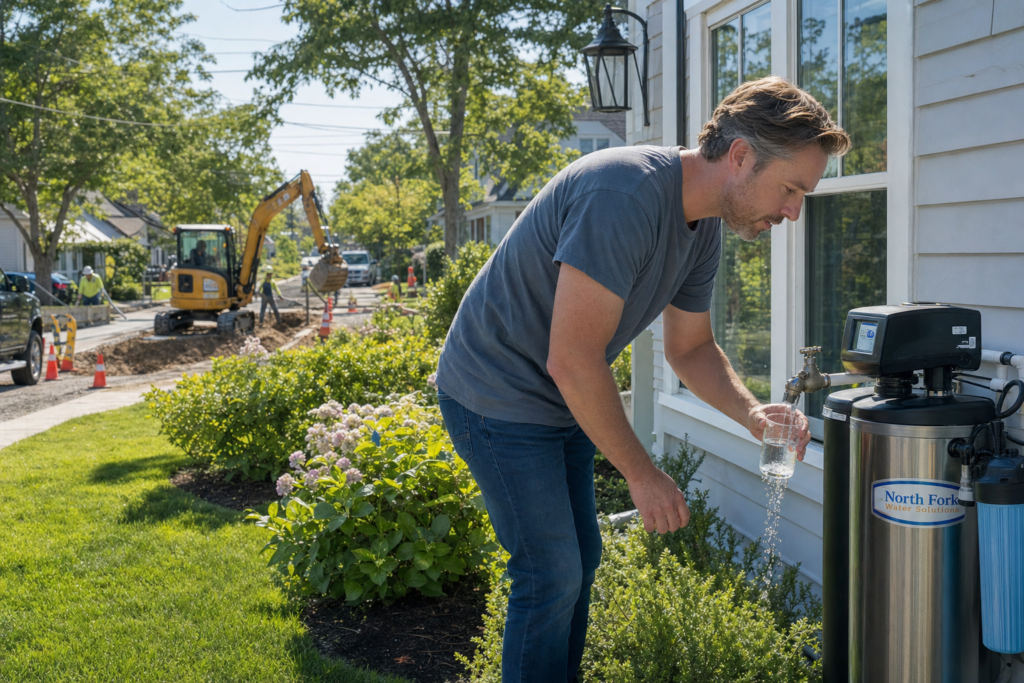
- Prefer to add a whole‑home filtration system as a second line of defense
- Are looking to avoid long‑term bottled water purchases for everyday drinking and cooking
For homeowners who rely on private wells in western Nassau County, there may be no large public utility managing PFAS for them, which can make household filtration an even more important consideration.
You can explore how pHountain Water Filters approaches Nassau County water challenges here: Water Filtration Nassau County NY.
4. Understanding PFAS Alongside Other Emerging Contaminants in the Area
4.1 How 1,4‑dioxane fits into the picture
PFAS are not the only emerging contaminants that concern Long Island and Nassau County residents. Local water authorities have also discussed 1,4‑dioxane, a synthetic chemical used historically as a stabilizer and in certain industrial processes.
The Western Area Water and Sewer Authority notes that 1,4‑dioxane can be found in groundwater and is difficult to treat using conventional methods. It has been detected in various water supplies, prompting regulatory attention and treatment planning.
While PFAS and 1,4‑dioxane are different chemicals, they share some characteristics that matter to homeowners:
- Man‑made origin and long‑term use in industry and consumer products
- Persistence in groundwater
- Need for specialized treatment technologies beyond basic disinfection
4.2 Why combined contaminant concerns drive interest in filtration
For many Plainview and western Nassau County households, the concern is not just one chemical, but the overall picture of emerging contaminants in the region’s groundwater.
This often leads homeowners to:
- Ask for comprehensive water testing that looks at a range of potential contaminants
- Consider whole‑home systems that are configured based on local water conditions
- Re‑evaluate long‑term reliance on bottled water for daily use
For a deeper dive on bottled water vs. installed filtration, see our breakdown: Water Filters vs Bottled Water.
5. Practical Example: How a Typical Household Handles PFAS Water Concerns
To illustrate how local families respond to Nassau County PFAS water contamination, here’s a composite example based on typical situations pHountain Water Filters encounters. This is not a single named customer, but a realistic scenario drawn from common patterns.
5.1 The situation: Elevated PFAS levels at the tap
A family in western Nassau County, in a neighborhood similar to parts of Plainview, had been following news about PFAS lawsuits and regional groundwater concerns. They requested water testing through a third party, which reported:
- PFAS levels above recommended safety thresholds (as defined by the testing body)
- Uncertainty about the combined effect of multiple emerging contaminants
The family’s main concerns were:
- Everyday drinking and cooking water
- Showers and baths for children
- Long‑term cost and hassle of bottled water
5.2 The solution: Whole‑home system with professional installation
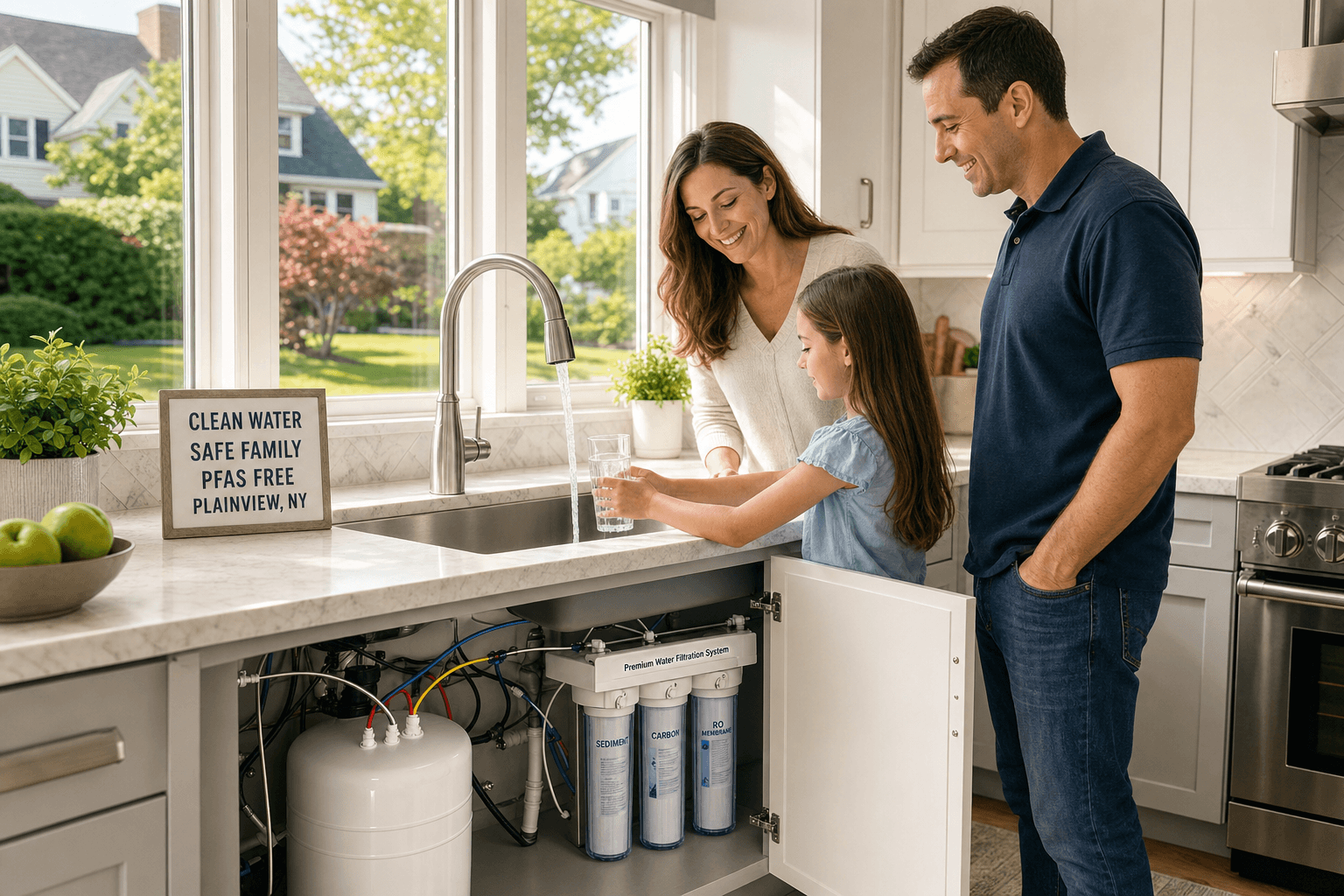
After consultation and water analysis, the household chose a pHountain pHresh Filtration System with professional installation from pHountain Water Filters.
Key aspects of their setup included:
- Whole‑home coverage: water is treated as it enters the home, so every faucet and shower benefits
- Custom configuration: components selected to address PFAS and other regional contaminants based on the home’s test results
- Low‑maintenance design: to keep ongoing upkeep manageable for a busy household
Professional installation ensured the system was integrated correctly into the home’s plumbing, with post‑installation testing to confirm proper operation.
5.3 The impact: Fewer bottles, more confidence
After installation, the family transitioned away from buying large amounts of bottled water for daily use. Based on their prior spending, they estimated monthly savings of roughly $30–$70 compared to their earlier bottled water purchases.
Beyond savings, they valued:
- Consistent filtered water from every tap
- The ability to shower, cook, and wash produce using water that has been treated at home
- Ongoing access to support and maintenance from a local company familiar with Long Island water conditions
To see how similar systems are configured across the region, you can review: Water Filtration Long Island NY.
6. Actionable Advice for Plainview and Nearby Nassau County Residents
You don’t need to be a water expert to take meaningful steps around PFAS and other contaminants. Here is a simple, sequential approach for Plainview and western Nassau County homeowners.
6.1 Step 1: Review your current water source
- Identify your supply: Confirm whether you’re on a public water system or a private well.
- Check local reports: Public systems often provide water quality reports that may mention PFAS or other emerging contaminants.
- Note any changes: Keep track of taste, odor, or appearance changes, even if they’re not directly linked to PFAS, as they can prompt broader testing.
If you’re unsure how your home fits into the regional picture, you can also look at nearby service details here: Water Filtration Levittown NY.
6.2 Step 2: Decide whether to pursue testing
- Clarify your goals: Are you mainly concerned about PFAS, or do you want a broader contaminant profile?
- Gather existing data: Review any past test results, real estate inspection reports, or utility notices.
- Plan for follow‑up: Understand that testing is a snapshot; contaminants can vary over time, so you may want periodic checks.
pHountain Water Filters offers water quality testing and analysis as part of a consultation to help homeowners interpret results and understand what they mean for filtration choices.
6.3 Step 3: Evaluate your filtration options
Once you have a sense of your water quality, you can compare approaches:
- Point‑of‑use filters: For a single sink or fridge line, focused on drinking water
- Whole‑home systems: For comprehensive coverage across taps, showers, and appliances
- Combination setups: For example, a whole‑home system plus a dedicated drinking water filter at the kitchen sink
Because PFAS and other emerging contaminants can require specialized filtration media, many homeowners prefer custom systems designed around their specific test results rather than generic store‑bought filters.
To discuss options tailored to your Plainview or western Nassau home, you can request a local consultation and water test here: Free In-Home Water Test.
7. Bottled Water vs. Whole-Home Filtration: A Side-by-Side View
Many families respond to PFAS headlines by stocking up on bottled water, but that approach has trade‑offs.
7.1 Typical monthly costs and limitations
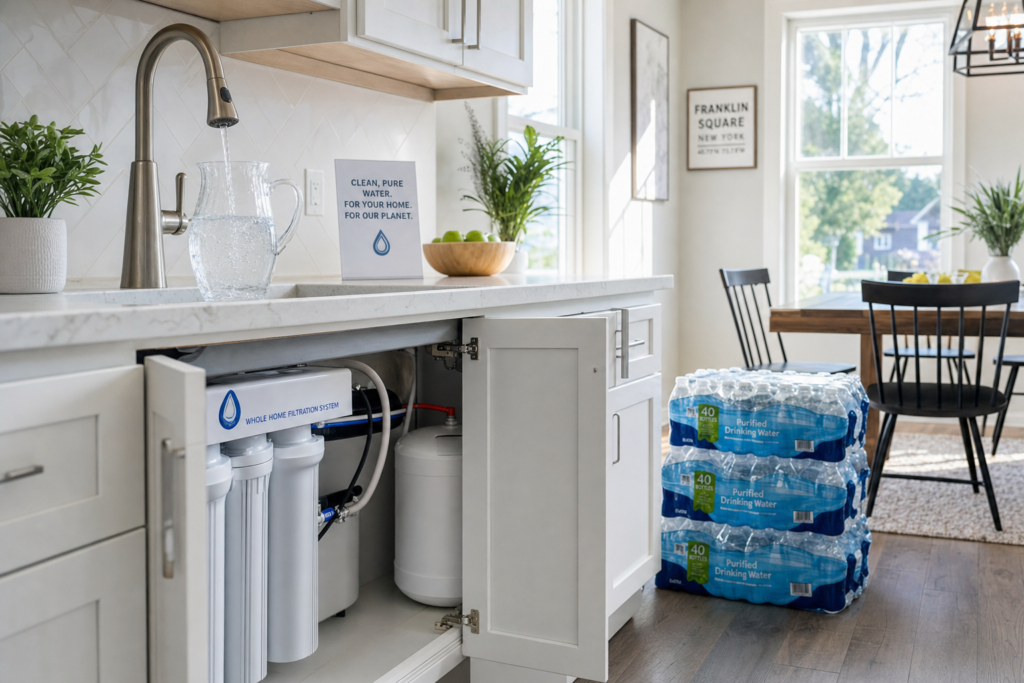
While exact costs vary, the composite Nassau County family above estimated that they were spending $30–$70 per month on bottled water before switching to a whole‑home system.
Here’s a simplified comparison of common considerations:
| Factor | Heavy Bottled Water Use | Whole‑Home Filtration System |
|---|---|---|
| Coverage | Drinking only | Drinking, cooking, bathing, cleaning |
| Monthly out‑of-pocket | Ongoing bottle purchases | Occasional maintenance once system is installed |
| Convenience | Lifting, storing, and disposing | Water available from every tap |
| Plastic waste | High | Significantly reduced bottle use |
| Control over treatment | Dependent on bottling company | Configured to your home’s water conditions |
Many homeowners choose a filtration‑first strategy, keeping a small amount of bottled water on hand for emergencies while relying on filtered tap water for daily life.
For a more detailed comparison of these approaches, see: Water Filters vs Bottled Water.
> Considering a filtration system because of Nassau County PFAS water contamination? Start by understanding what’s actually in your home’s water with a Free In-Home Water Test.
8. How pHountain Water Filters Serves the Nassau County Community
8.1 Local focus and customized systems
pHountain Water Filters works primarily with Long Island and New York metro area homeowners, including Plainview and western Nassau County. That local focus helps the team:
- Understand regional groundwater issues, including PFAS and other emerging contaminants
- Recommend pHountain pHresh Filtration System configurations that align with Nassau County water conditions
- Provide ongoing support when regulations, water quality, or household needs change
Core services include:
- Water quality testing and analysis
- Customized whole‑house filtration systems
- Under‑sink and drinking water filters
- Professional installation and system verification
- Maintenance and support over the long term
You can see how these services apply across the county here: Water Filtration Nassau County NY.
8.2 What to expect from the consultation process
When a Plainview or western Nassau homeowner reaches out about PFAS or other contaminants, the typical process looks like this:
- Initial conversation: Discuss your concerns, water source, and any known test results.
- Water analysis: Arrange testing to identify key contaminants and water conditions.
- System recommendation: Propose a pHountain pHresh Filtration System or other solution tailored to your home’s size and water profile.
- Professional installation: Integrate the system into your plumbing, with minimal disruption.
- Verification and education: Confirm proper operation and explain how the system works and what it addresses.
- Ongoing support: Provide maintenance guidance and options for future upgrades if needed.
Frequently Asked Questions
9.1 How do I know if PFAS is an issue for my Plainview home?
Public water systems may publish water quality reports that include PFAS information. If you’re on a private well, or if you want more specific data for your address, a targeted water test is the most direct way to understand your situation. pHountain Water Filters can help arrange testing and interpret results in the context of Nassau County PFAS water contamination concerns.
9.2 Are Plainview homes on public water safe from PFAS?
Local water providers on Long Island report that they have implemented treatment technologies and monitoring to keep PFAS out of the public water supply. However, each homeowner’s comfort level is different. Many Plainview residents choose to add home filtration for an extra layer of control and to address other contaminants as well.
9.3 I live in western Nassau County near Plainview on a private well. Should I be worried?
Private wells do not typically receive the same centralized treatment as public systems. Because PFAS and other contaminants can reach groundwater, well owners in western Nassau often choose to:
- Conduct periodic water testing
- Install whole‑home filtration systems configured for their specific well results
- Monitor local and state updates on groundwater quality
A consultation with pHountain Water Filters can help you understand which testing and filtration options fit your well and your household.
9.4 Will a single pitcher or faucet filter handle PFAS and other contaminants?
Some point‑of‑use filters may be designed to target specific contaminants, but not all are engineered for PFAS or a broad range of emerging contaminants. Because Long Island groundwater can contain multiple substances of concern, many homeowners prefer whole‑home or multi‑stage systems that can be tailored to their water test results.
9.5 How can I get started if I’m in Plainview or western Nassau County?
The simplest first step is to request a water analysis and consultation. pHountain Water Filters will review your situation, discuss PFAS and other contaminants, and outline filtration options that fit your home and budget. You can begin that process here: Contact Us.
> Ready to take control of your Plainview or western Nassau County home’s water quality? Schedule your Free In-Home Water Test with pHountain Water Filters and explore customized filtration options for your household.
This blog is for informational purposes only and does not substitute for professional water testing, legal advice, or medical guidance. Always consult appropriate licensed professionals for decisions related to your health, property, or regulatory obligations.
Water quality varies by location. Municipal water provided by SCWA achieved EPA compliance in June 2025. Private well owners should have water tested regularly. pHountain provides free water testing for Nassau and Suffolk County.