On March 2, 2026, the U.S. Environmental Protection Agency (EPA) described the earlier Lead Service Line Inventory requirement: “The guidance provides essential information to help water systems comply with the Lead and Copper Rule Revisions requirement to prepare and maintain an inventory of service line materials by October 16, 2024” (EPA). The same page stated, “On August 4, 2022, EPA released Guidance for Developing and Maintaining a Service Line Inventory to support water systems with their efforts to develop inventories and to provide states with needed information for oversight and reporting to EPA” (EPA).
Key points for checking your service line inventory
- Material classifications: EPA’s August 14, 2026, inventory guidance stated, “Material types identified could include lead, non-lead, or galvanized requiring replacement (GRR)” (EPA).
- Baseline submission: As of that guidance date, EPA said, “water systems must prepare and submit a Baseline Inventory by November 1, 2027” (EPA).
- Unknown-line identification: The same guidance stated, “Most water systems have up to ten years, until December 31, 2037, to identify all unknown service lines”; it immediately qualified that schedule: “Some water systems may qualify for a later deadline” (EPA).
- Public accessibility: As of March 2, 2026, EPA described its inventory fact sheet this way: “The fact sheet can help water systems quickly identify the key LCRR inventory requirements, including inventory elements, planning, records review, investigations, public accessibility, and information for non-lead systems” (EPA).
What an unknown service line classification means
EPA’s August 14, 2026, inventory guidance stated, “In the initial inventory, systems may have also identified a service line as ‘unknown'” (EPA). For that designation, the same guidance gave the condition “if they did not know the line material to be a lead, GRR, or a non-lead service line” (EPA).
How inventories are kept up to date
As of August 14, 2026, EPA’s inventory guidance stated, “Systems must then update their inventory annually” (EPA). EPA’s March 2, 2026, inventory page also documented an earlier resource: “On June 28, 2023, EPA released Developing and Maintaining a Service Line Inventory: Small Entity Compliance Guide to support water systems, particularly small water systems, in complying with the Lead and Copper Rule Revisions (LCRR) initial inventory requirements” (EPA).
What records support a service line classification
As of August 14, 2026, EPA’s inventory guidance stated, “To identify service line materials, water systems are required to use records including construction and plumbing codes, water system records, and distribution system inspection records” (EPA). The same guidance retained an approval condition for other information: “If approved by the primacy agency, water systems may use other evidence-based sources of information to determine that a service line is non-lead” (EPA). It also stated, “Documentation from water system personnel can be used by water systems to support service line material classification if approved by the primacy agency” (EPA).
When galvanized means requiring replacement
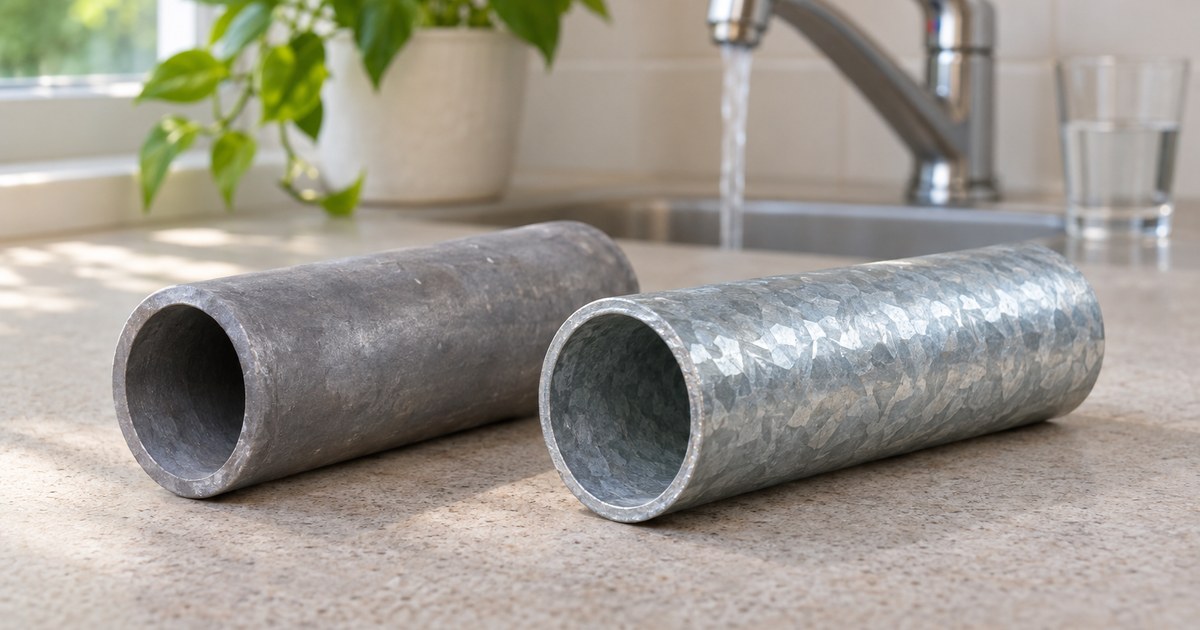
As of August 14, 2026, EPA’s inventory guidance stated, “Water systems are required to identify galvanized service lines as galvanized requiring replacement (GRR) if they are currently or were previously downstream of a lead service line (LSL)” (EPA). The same guidance also noted that “the legally binding requirements applicable to public water systems are determined by statutes and regulations” (EPA).
What the Lead and Copper Rule Improvements changed
As of December 29, 2025, EPA’s final-rule page stated, “The Lead and Copper Rule Improvements (LCRI) also require more rigorous testing of drinking water and a lower threshold requiring communities to take action to protect people from lead exposure in water” (EPA). On communication, the same page stated that “the final rule improves communication within communities so that families are better informed about the risk of lead in drinking water, the location of lead pipes, and plans for replacing them” (EPA).
Earlier notification provisions
In its March 2, 2026, account of the earlier Lead and Copper Rule Revisions, EPA listed “notification to persons served of known or potential lead service line” among the requirements (EPA). The same page also listed “Tier 1 public notification of a lead action level exceedance, and associated reporting requirements” (EPA).
Background: plumbing materials and tap-water sampling
Corrosion and plumbing materials
EPA’s December 29, 2025, page stated, “In drinking water, the primary source of lead is from pipes” (EPA). pHountain’s common contaminants guide, dated October 25, 2026, described the corrosion mechanism: “Lead can enter drinking water when plumbing materials that contain lead corrode, especially where the water has high acidity or low mineral content that corrodes pipes and fixtures” (pHountain).
Sampling-site selection
As of that October 25 publication, the same guide stated, “The federal Lead and Copper Rule requires a public water system to test tap water from sites likely to have plumbing containing lead” (pHountain). The guide also noted, “Homes built before 1986 are more likely to have lead pipes, fixtures and solder” (pHountain).
Private-well plumbing
As of the guide’s publication, it stated, “SDWA does not regulate private wells which serve fewer than 25 individuals” (pHountain). The guide also noted, “Even if you get your water from a private well, there may still be a concern about lead in your water if the plumbing in your home contains lead solder or lead materials” (pHountain).
What to ask your public water supplier
Request the inventory entry for your Long Island address, and use the water quality and safety guide as a reference while assembling your questions. Keep your request focused on the entry, its supporting documents, and the process for reviewing a possible correction.
- What is the current inventory entry for my address, and can you provide a copy showing the classification and the date it was last revised?
- Which construction, plumbing, inspection, or other records support that entry, and which portions of the supporting documentation can I review?
- What information would you need from me to review the classification, and how should I submit a proposed correction or supporting document?
- If my entry is unknown, what additional information would you need before changing it, and who should receive that information?
- If the entry says galvanized requiring replacement, what documented service line history supports that classification, including any information about an earlier connection?
- Can you provide any notification or replacement-plan documents that apply to my address, along with the date and version of each document?
- Who should I contact with a follow-up question about the entry, and how can I confirm whether you have reviewed a submitted correction?
Save the response alongside the entry and the documents you receive. When comparing versions, note the date on each copy and ask for clarification about any wording you cannot match between them.
Questions about inventory checks and water reports
Can service line materials be identified without seeing the pipe exterior?
EPA’s August 14, 2026, inventory guidance stated that “there are methods to identify unknowns which do not rely on visual inspection of the pipe exterior” (EPA). On modeling, the same guidance stated, “The EPA encourages water systems to use, and primacy agencies to allow the use of predictive modeling techniques approved by the primacy agency to identify service line materials” (EPA).
What if my supplier cannot establish a galvanized line’s history?
For a galvanized service line, EPA’s August 14, 2026, guidance stated, “If the system cannot show that it was never downstream of a lead line, then it is a galvanized requiring replacement line” (EPA). On validation more generally, the same guidance stated, “The EPA also recommends that water systems discuss with their primacy agency the validation steps they will need to take” (EPA).
Where can I look for my annual water quality report?
pHountain’s water-quality guide, dated October 25, 2026, quoted the state health department’s instruction to “Find and map a large public water system closest to you and view its Annual Drinking Water Quality Report” (pHountain). The same guide also quoted the instruction to “contact your water supplier to view the latest results” (pHountain).
As of that publication date, the guide stated, “EPA requires community water systems to deliver a Consumer Confidence Report, also known as an annual drinking water quality report, to their customers” (pHountain). It also quoted the delivery requirement: “Reports must be sent by your water supplier each year by July 1” (pHountain).
For the revised reporting rule, the same guide quoted a future change: “Starting in 2027, the final rule will ensure that these reports are easier to read and support access to translations in appropriate languages while enhancing information about lead in drinking water” (pHountain). As of that guide’s publication, it also stated that “systems serving over 10,000 customers will be required to distribute reports twice per year” (pHountain).
A separate in-home water test option
pHountain offers a free, no-obligation in-home water test.
Information on our website about water quality, health benefits, or filtration performance is provided for general educational purposes only and does not constitute medical, legal, or engineering advice.
Works Cited
- “Common Drinking Water Contaminants.” pHountain Water Filtration, 25 Oct. 2026, phountainwaterfilters.com/common-contaminants. Accessed 15 Nov. 2026.
- “Drinking Water Safety & Quality Guide.” pHountain Water Filtration, 25 Oct. 2026, phountainwaterfilters.com/water-safety-quality. Accessed 15 Nov. 2026.
- EPA, U.S. “LCRI Service Line Inventories Tips.” U.S. Environmental Protection Agency, 14 Aug. 2026, www.epa.gov/system/files/documents/2026-08/508_0813inventorytips_clean.pdf. Accessed 15 Nov. 2026.
- “Lead and Copper Rule Improvements.” U.S. Environmental Protection Agency, 29 Dec. 2025, www.epa.gov/ground-water-and-drinking-water/lead-and-copper-rule-improvements. Accessed 15 Nov. 2026.
- “Revised Lead and Copper Rule.” U.S. Environmental Protection Agency, 2 Mar. 2026, www.epa.gov/ground-water-and-drinking-water/revised-lead-and-copper-rule. Accessed 15 Nov. 2026.


