Residents across Yaphank are hearing more about PFAS in private wells, especially with Suffolk County Water Authority’s push for a $36 million grant to extend water mains to PFAS‑impacted homes in Yaphank and nearby areas like Manorville. If you rely on a private well, you might be wondering what this means for your water, your home, and your next steps.
This guide focuses on Yaphank private well PFAS testing, the upcoming SCWA project, and practical options you can use to protect your household water now and over the next few years.
1. Current Developments Regarding PFAS and Private Wells in Yaphank
1.1 Overview of the SCWA $36M grant push
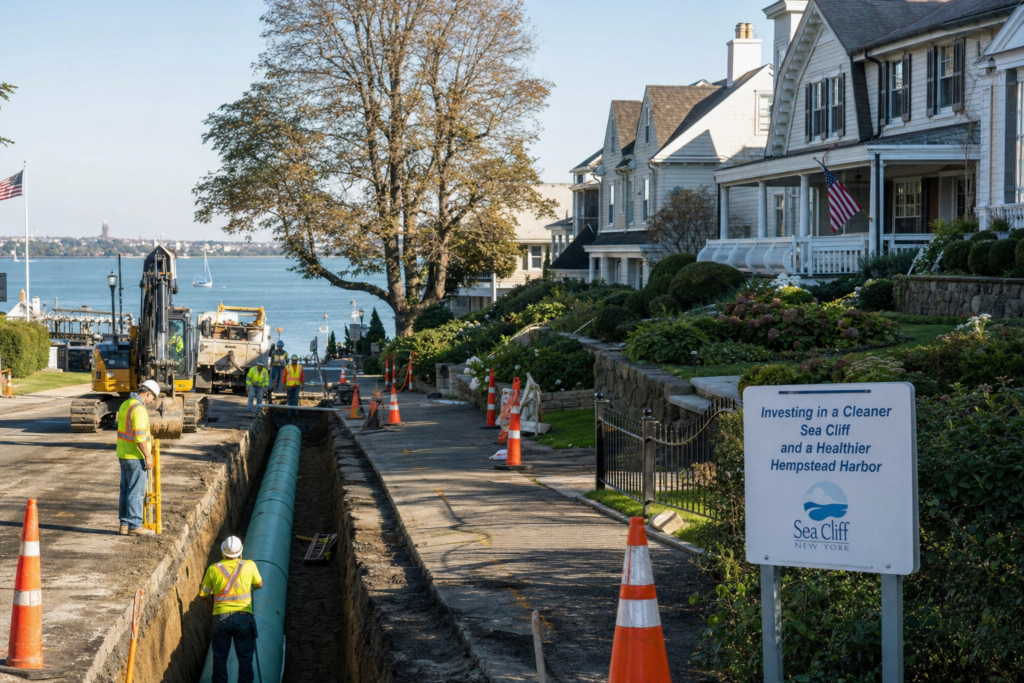
The Suffolk County Water Authority (SCWA) has applied for $36 million in infrastructure grants to extend public water mains into areas where private wells have been affected by contaminants, including PFAS, in Yaphank, Manorville and surrounding communities.
According to SCWA and local reporting, the project is expected to:
- Connect about 186 homes that currently rely on private wells in impacted areas
- Extend new water mains so those homes can switch from private wells to public water when construction is complete
- Move forward once grant funding is approved and construction is scheduled, which is anticipated to be around July 2026 based on the project timeline in public statements
Right now, the status is “applications submitted, construction pending” — meaning the funding is not yet finalized and work has not begun.
1.2 Why PFAS is driving water main extensions
PFAS (often called “forever chemicals”) have been found in private wells across parts of Suffolk County, leading to increased state and local attention. SCWA’s grant application and related news coverage highlight that:
- Private wells near known contamination areas are at higher risk for PFAS and other pollutants
- Extending water mains is seen as a long‑term solution for homes where well contamination has been documented
At the same time, many Yaphank homes are not yet on the list for main extension, and even homes in the project area will likely be waiting years before they can actually connect. That’s where private well testing and in‑home filtration come in.
2. How to Evaluate Your Yaphank Private Well’s Potential PFAS Exposure
2.1 Indicators for higher risk locations
You cannot see, smell, or taste PFAS in water, so testing is the only way to know if your well is affected. But some location factors can raise concern:
- Proximity to known contamination zones: Homes near industrial sites, landfills, firefighting training areas, or other documented PFAS sources in Suffolk County may face higher risk, according to local reporting.
- Reliance on a private well instead of public water: Local news outlets have emphasized that private wells are not automatically monitored the way public systems are, so homeowners must take the initiative to test.
- Inclusion in SCWA’s grant‑targeted areas: If your block or neighborhood is mentioned in SCWA or local news coverage about PFAS‑impacted wells, it’s a signal that formal testing has already found issues nearby.
Even if you are not in one of the 186 homes targeted for water main extension, you can still be vulnerable if you rely on a private well and live in the broader Yaphank/Manorville area.
2.2 Understanding testing availability and significance
Coverage of Suffolk County well testing notes that some residents are being offered free private well tests in PFAS‑concern areas. Availability can vary by program and neighborhood, so it’s important to:
- Check SCWA and county announcements for any current testing programs in your part of Yaphank.
- Ask whether PFAS is included in the testing panel — not all standard well tests automatically include PFAS.
- Consider supplementing public testing with a dedicated PFAS panel if you want a clearer picture of your specific home’s water.
For a broader understanding of PFAS on Long Island, you may find this overview helpful:
3. PFAS Essentials: What Private Well Owners in Yaphank Should Know
Key Takeaways
PFAS are a group of synthetic chemicals used for decades in products like nonstick coatings, firefighting foam, and stain‑resistant materials. Over time, they can migrate into soil and groundwater, where they persist for long periods.
Key points for Yaphank private well owners:
- Groundwater reliance: Suffolk County heavily depends on groundwater aquifers, meaning contaminants that reach the ground have a pathway into wells.
- Private wells are not automatically regulated the same way public water systems are, so you are responsible for monitoring your own water quality.
3.2 Why PFAS is particularly concerning for private wells
PFAS is drawing attention in Suffolk County because:
- Testing has already found PFAS in some private wells in several communities, prompting local responses and infrastructure planning.
- Remediation and water main extensions take time, leaving homeowners in an uncomfortable “wait and see” period.
For many Yaphank residents, that raises a practical question: How do I protect my home’s water now, not just in 2026?
4. What SCWA’s Water Main Extension Means for Your Home
4.1 Expected timeline and next steps until 2026
Based on SCWA’s public updates and local news reporting, the water main extension effort is still at the funding and planning stage. A realistic sequence for affected Yaphank homes looks like this:
- Grant approval phase: State or federal agencies review SCWA’s $36 million request.
- Engineering and design: Once funded, SCWA finalizes routes, sizing, and construction plans.
- Construction of mains: Crews install new mains along designated streets in Yaphank and nearby areas.
- Service connections: Individual homes are connected to the new mains, which may involve additional coordination and costs for property‑side plumbing.
This progression is why many homes are looking at a multi‑year window before they fully transition from well water to public supply.
4.2 Options if your home is not included in first phase
Even if your home is not one of the 186 properties directly mentioned in coverage of the extension project, you still have options:
- Independent testing for PFAS and other contaminants to understand your specific risk profile
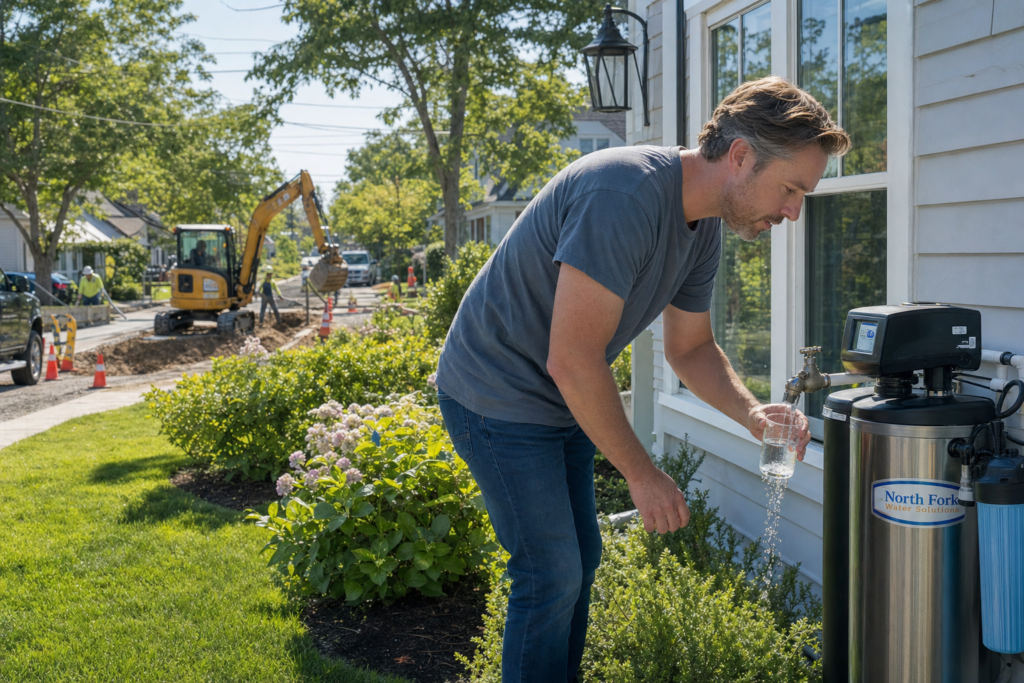
- Whole‑home filtration if you want to address a broad range of contaminants in your well water
- Future readiness: Installing a system now can still be valuable even after a potential switch to public water, as many homeowners choose to filter municipal water as well
To see how filtration fits into the broader Suffolk County picture, you can explore:
5. A Stepwise Approach to PFAS Testing for Yaphank Homeowners
5.1 Choosing the appropriate water test
For Yaphank private well PFAS testing, consider these options:
- Publicly offered testing programs: Local news has highlighted that some Suffolk residents in high‑concern areas are being offered free private well testing. Check whether your address qualifies.
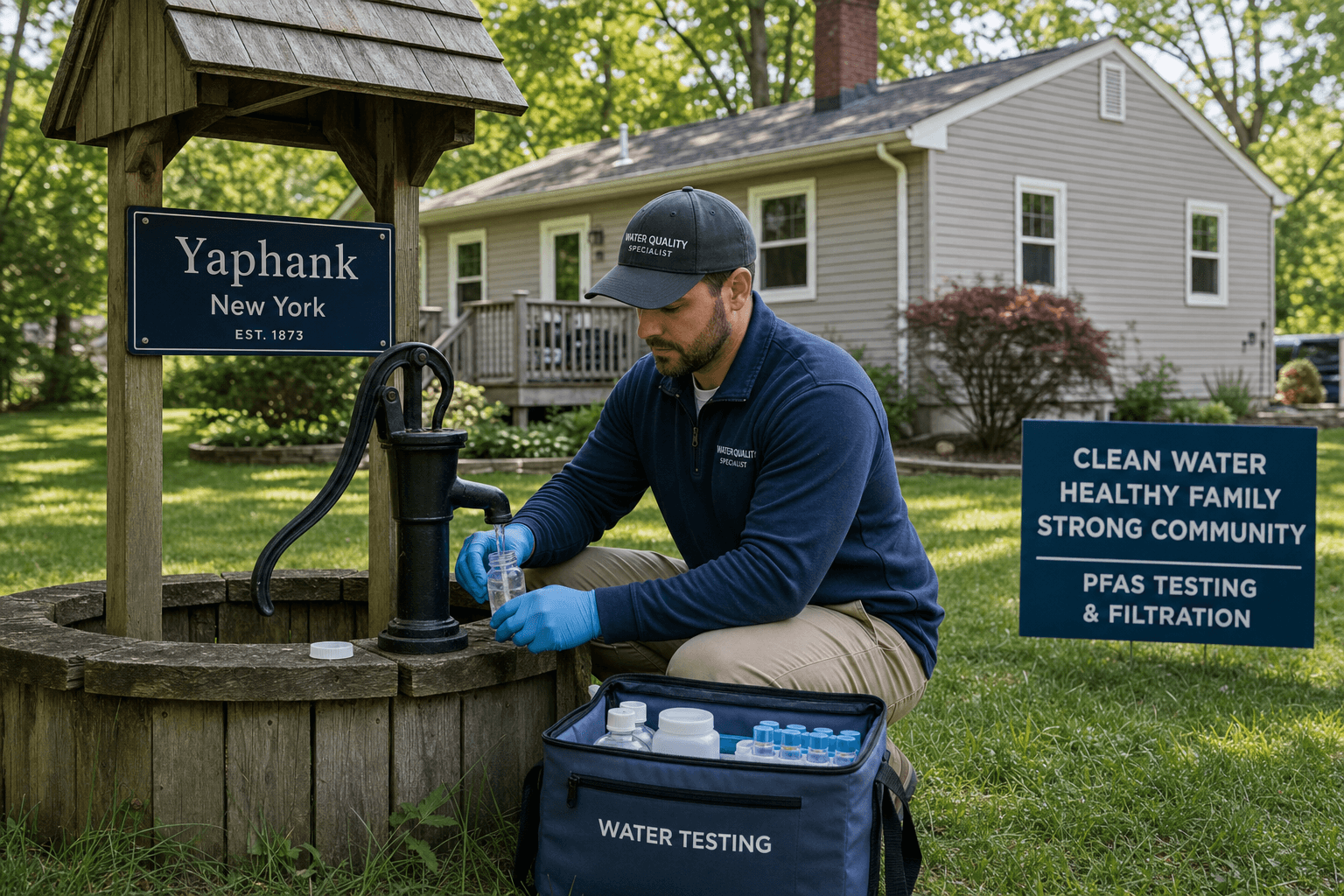
- Private lab testing: You can work with a certified lab or water professional to collect samples and run a PFAS‑specific panel along with general water quality parameters.
5.2 Additional factors to test beyond PFAS
While PFAS is a major concern, private wells can also contain:
- Sediment and turbidity
- Iron and manganese (staining and taste issues)
- Bacteria and microorganisms
- Other industrial chemicals or solvents depending on local history
A comprehensive test helps you design a filtration approach that addresses all relevant categories, not just PFAS.
If you want help understanding well water issues more broadly, this guide is a good starting point:
6. Evaluating Home Water Safety Options: Wait, Bottled Water, or Whole‑Home Filtration?
Yaphank homeowners typically weigh three main strategies while waiting on the SCWA project.
6.1 Pros and cons of each approach
Below is a high‑level comparison of common approaches:
| Option | Pros | Cons |
|---|---|---|
| Wait for water mains | Long‑term connection to public water; overseen by SCWA | Multi‑year wait; no immediate change to current well water; may still want home filtration later |
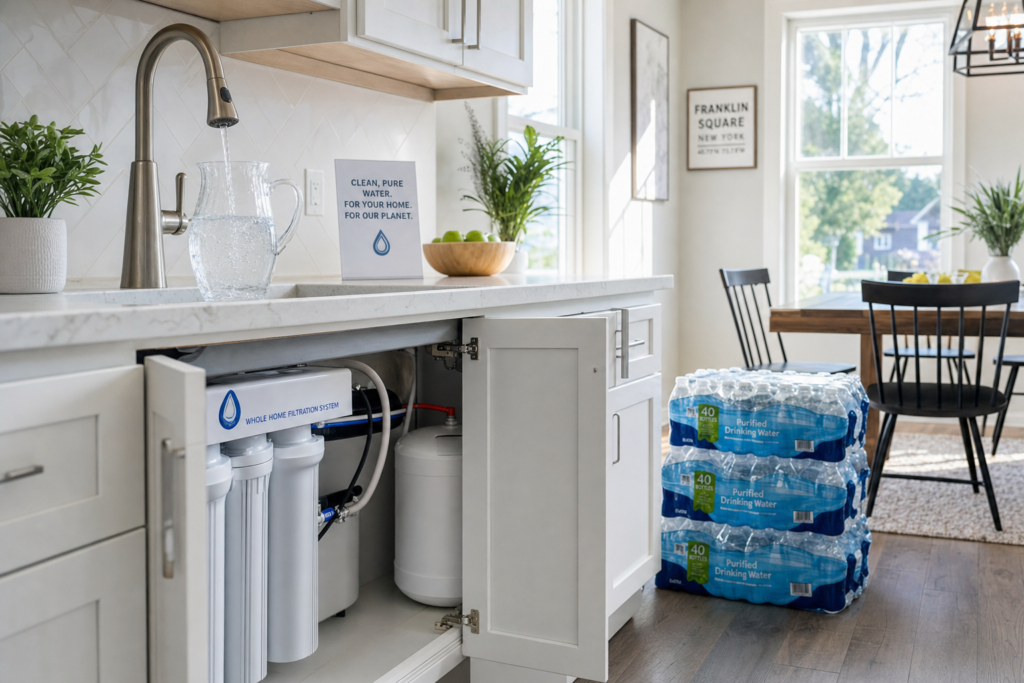
| Rely on bottled water | Quick access to an alternate drinking water source | Does not address water for bathing, cooking, or laundry; ongoing expense; plastic waste |
| Install whole‑home filtration | Treats all water entering the home; can be tailored to PFAS and other contaminants; can still be used with future public water | Upfront installation cost; requires professional setup and periodic maintenance |
For many families, the practical solution is a combination:
- Use testing to understand current water quality
- Consider filtration to address contaminants now
- Transition to public water when mains are extended, while potentially keeping filtration in place for added protection and taste preferences
To explore how filtration compares with relying on bottled water over time, see:
> Concerned about PFAS in your Yaphank well? You can request a Free In-Home Water Test to understand what’s actually in your water before you decide on next steps.
7. Case Study: How One Yaphank Home Managed Elevated PFAS Levels
7.1 Identifying elevated PFAS in a private well
A local homeowner (composite example, no name used) living in a Suffolk County neighborhood with documented PFAS concerns had their private well tested after hearing about nearby contamination. The lab report showed:
- Elevated PFAS levels above recommended thresholds from public health authorities for drinking water
- Additional issues with sediment and metallic taste
The family was worried about everyday exposure — not just from drinking, but also from showering, cooking, and washing dishes with well water.
7.2 Installing a whole‑home filtration system to address concerns
After consulting with pHountain Water Filters and reviewing their water test results, the homeowner chose to have a pHountain pHresh Filtration System installed. Key aspects included:
- Treatment at the main water line: All water entering the home passes through the system, so every tap and shower benefits from the same filtration approach.
- Custom configuration: The system was chosen to address PFAS, sediment, and other contaminants identified in their test results.
- Professional installation: Certified technicians integrated the system into the home’s plumbing, optimizing flow and placement for long‑term performance.
By switching from short‑term stopgaps (like basic pitchers and jugs of water) to a whole‑home system, the homeowner estimated monthly savings of roughly $50 to $150 compared with their previous combination of bottled water and temporary filters.
8. How pHountain Water Filters Provides Support for Yaphank Residents
8.1 Experienced local service tailored to Suffolk County wells
pHountain Water Filters focuses on Long Island and Suffolk County homes, with experience in both municipal and private well water conditions. For Yaphank residents, that means:
- Water quality testing and analysis to identify PFAS and other contaminants relevant to your area
- Customised filtration recommendations based on your test results and home size
- Professional installation by technicians familiar with local plumbing setups and well configurations
You can learn more about regional service coverage here:
8.2 Features of the pHountain pHresh Filtration System
The pHountain pHresh Filtration System is a whole‑house solution designed to address:
- Chlorine and disinfection byproducts in municipal supplies
- Heavy metals and sediment common in various water sources
- Industrial chemicals and environmental contaminants that may affect some private wells
For Yaphank homeowners dealing with PFAS concerns, the system can be configured as part of a broader strategy that starts with testing and may later include a transition from well water to public water when SCWA’s project reaches your street.
To discuss options tailored to your home, you can use the online contact form:
Frequently Asked Questions
9.1 How do I find out if my specific Yaphank address is in the 186 homes SCWA plans to connect
SCWA and local news reports state that about 186 homes are targeted for water main extensions in Yaphank, Manorville, and nearby areas, but they do not publicly list every address in detail. To find out if your property is included:
- Check SCWA’s announcements and project updates for maps or street‑level descriptions.
- Contact SCWA directly and ask whether your parcel is part of the proposed extension area.
- Keep an eye on local news coverage for any updates that mention your neighborhood.
Even if your home is not in the initial group, you can still pursue independent testing and filtration.
9.2 If my Yaphank well tests positive for PFAS, will SCWA automatically connect me to public water
Current coverage indicates that SCWA is focusing the grant‑funded project on specific clusters of homes where contamination has already been documented and where mains can be extended efficiently. A positive PFAS test does not automatically guarantee:
- Immediate connection to a new main
- Eligibility under the current grant application
However, your test results can still be important evidence when:
- Discussing your situation with SCWA or local officials
- Deciding whether to install a whole‑home filtration system as an interim or long‑term solution
9.3 Should I invest in filtration now if my Yaphank home might get public water in 2026
Many homeowners choose to install filtration now for several reasons:
- 2026 is still years away, and water quality is a day‑to‑day concern, not just a future one.
- Even after connecting to public water, some residents prefer additional filtration to address taste, odor, and other contaminants that can still be present in municipal supplies.
- A whole‑home system can often be configured to work with both well water today and public water later, offering flexibility over the long term.
If you’re unsure whether to act now or wait, an in‑home water test and consultation can clarify your options:
9.4 Is PFAS only a concern for drinking water, or should I worry about showers and baths too
Public health agencies and researchers have noted that PFAS exposure pathways can include more than just drinking water, including potential contact during bathing or other household uses, which is why whole‑home solutions are often considered by families who want to address all water coming into the house. For specific medical or health questions, you should speak directly with a healthcare professional.
9.5 I live in another Suffolk town but use a private well. Does this still apply to me
Yes. While this article focuses on Yaphank, Suffolk County’s PFAS and groundwater concerns extend across many communities. The same general steps apply:
- Test your private well, including PFAS where appropriate
- Review results with a water quality professional
- Consider whole‑home filtration if contaminants are detected
For nearby communities, you can explore localised service pages such as:
> Ready to understand your Yaphank well water and explore filtration options? Start by requesting a Free In-Home Water Test and a customised consultation for your home.
This content is for informational purposes only and is not a substitute for professional water testing, medical advice, diagnosis, or treatment. Always seek the advice of your physician or other qualified health provider with any questions you may have regarding potential health concerns, and consult a licensed water treatment professional for testing, interpreting results, and recommending filtration or treatment options suitable for your home.
Water quality varies by location. Municipal water provided by SCWA achieved EPA compliance in June 2025. Private well owners should have water tested regularly. pHountain provides free water testing for Nassau and Suffolk County.