For many families in Amityville and across Long Island, tap water is something we often take for granted. We use it to brew our morning coffee, boil pasta for dinner, wash fresh produce, and bathe our children. It is part of nearly every household routine, which is a good reason to know what is in it rather than assume.
Amityville is an incorporated village on the South Shore of Long Island in Suffolk County, within the geographical boundaries of the Town of Babylon, and the village lists the Suffolk County Water Authority (SCWA) as its water provider, according to the Village of Amityville. Whether your home is on public water or a private well, understanding what is actually flowing through your pipes is the first step toward deciding whether you need to do anything about it. This post explains where Amityville’s public water comes from, what SCWA publishes about it, how to read that information, and where testing at home fits in.
Who Supplies Amityville’s Water
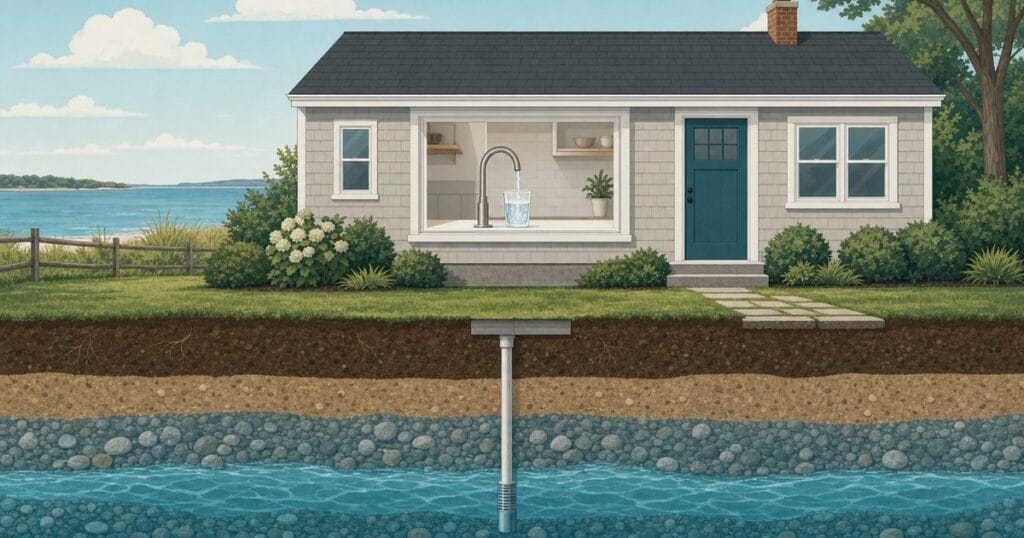
SCWA supplies public water in the village; your water bill confirms your supplier. All of the water SCWA supplies is groundwater, pumped from the layered formations of the Long Island aquifer system, which SCWA says is deepest along the south shore and shallowest on the north shore, according to the “Our Water Source” pages of SCWA’s 2026 Drinking Water Quality Report.
SCWA has reported several projects in and around Amityville:
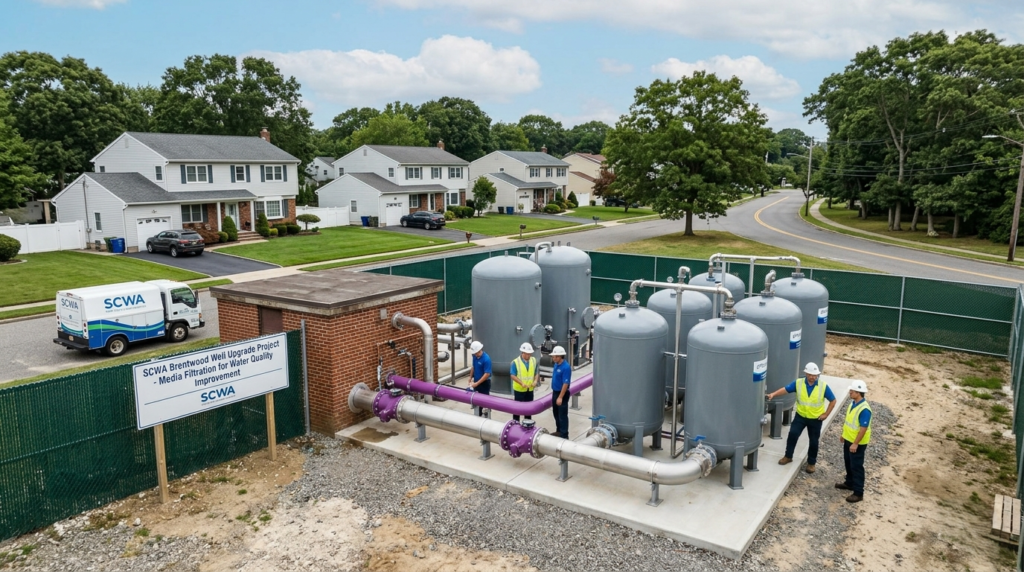
- Iron removal: In an April 10, 2024 update for Town of Babylon customers, SCWA said it had completed maintenance on an iron removal system at the Great Neck Road and Albany Avenue pump stations in Amityville. SCWA said this type of system is used predominantly in South Shore communities, where excess iron in the groundwater is most prevalent, and that it filters iron out of the groundwater before it reaches customers’ faucets. The same update said the location is scheduled to receive a replacement drinking water well once a DEC permit application is granted.
- Water main replacements: The same April 2024 update listed a 2,900-foot main replacement on Grand Central Avenue in Amityville, plus replacements on Silverpine Drive and Prospect Street in North Amityville.
- Main extension: In August 2023, SCWA said it was installing more than 360 feet of new ductile iron water main on Richmond Avenue and Bayside Avenue, to improve water distribution, water pressure and fire protection in the area.
Understanding the Reality of Your Tap Water
Water quality is not static. It can vary with your location, the age of the plumbing in your home and neighborhood, and the wells that supply your street. SCWA says that although its system can look like one large network, customers typically receive water from a small group of wells located nearest to them, according to its April 14, 2025 announcement. Water that meets drinking water standards can still contain substances that affect its taste, odor or appearance.
When we talk about “water quality,” we are referring to the presence, or absence, of various substances. For SCWA customers, these include:
- Chlorine: Before water leaves the pump station, SCWA adds minute traces of chlorine, according to the specifications of the state health department, to prevent bacterial growth that could occur in its water mains and tanks, according to the water treatment pages of SCWA’s 2026 report. Some people notice its taste or smell.
- Iron and manganese: These metals occur naturally in some groundwater; the same report says SCWA adds sequestering agents to control iron and keep it in solution, and uses removal filters and systematic main flushing to reduce these metals.
- Lead and copper: SCWA’s groundwater is naturally acidic, so SCWA adds a hydrated lime product (or sometimes soda ash) to raise the pH, which it says greatly reduces or eliminates the leaching of lead and copper from customers’ interior plumbing (2026 report, water treatment pages). Older homes can still have lead in pipes, solder or fixtures; see the EPA’s lead page. SCWA’s lead and copper page lets you enter your address to see the identified service line material for your property.
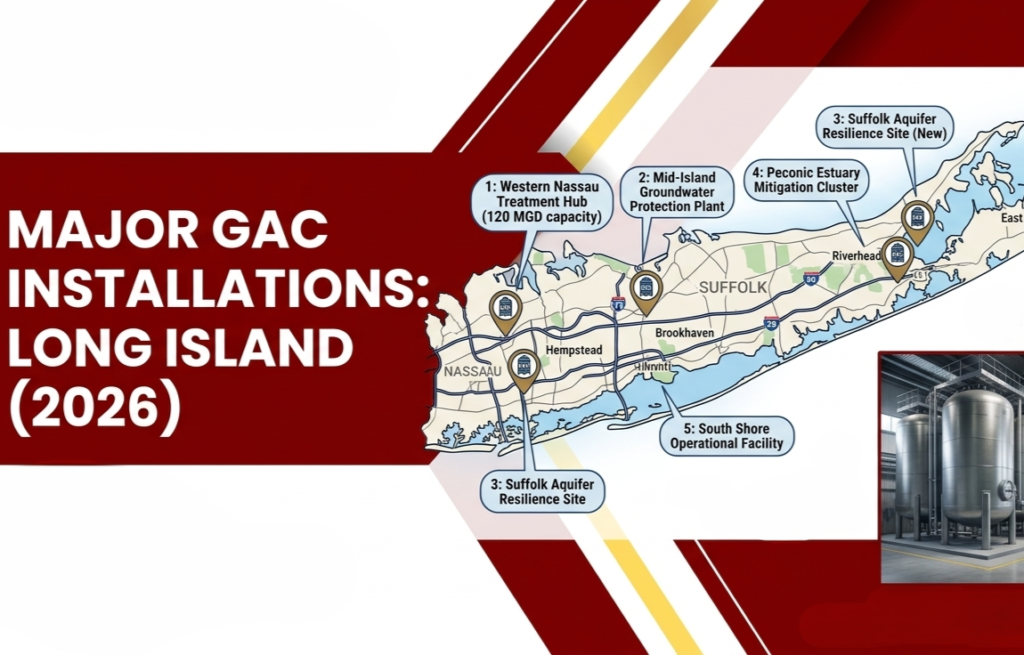
- PFAS and 1,4-dioxane: In its letter to customers in the 2026 report, SCWA said it installed 13 new granular activated carbon (GAC) treatment systems to remove PFAS in 2025, completed three Advanced Oxidation Process (AOP) systems for 1,4-dioxane, and now has 19 AOPs in service. SCWA’s June 22, 2026 Emerging Contaminants Action Plan update lists wells at the Albany Avenue and Great Neck Road stations in its 1,4-dioxane status table, each with its action: monitoring, blending with other wells, or keeping a well out of service.
- Bacteria: SCWA’s laboratory tests water at the wellhead, at various stages of treatment and throughout the distribution system for bacteria and a range of chemicals, according to SCWA’s water quality reports page.
- Sediment: Fine particles can cloud water and collect in faucet aerators, especially after water main work or flushing nearby.
For context on limits: New York set drinking water limits of 10 parts per trillion for PFOA and PFOS and 1 part per billion for 1,4-dioxane in 2020 (NYSDOH), and the EPA finalized limits of 4.0 parts per trillion for PFOA and PFOS in April 2024, with public water systems required to comply by 2029 (EPA).
SCWA’s report also summarizes the state’s source water assessment for Suffolk County supply wells, which rates most wells as highly susceptible to nitrate and very highly susceptible to volatile organic compounds; SCWA stresses that these ratings show potential, and that in most cases it has not resulted in actual contamination (2026 report, “Our Water Source” pages).
The goal is not to worry about every item on a list. It is to know what is in your water, so any decision about treatment is based on facts.
How to Read SCWA’s Annual Water Quality Report
Every public water supplier publishes an annual water quality report, also called a Consumer Confidence Report. SCWA’s 2026 report covers testing during 2025; SCWA says that in 2025 it conducted 192,931 tests on 92,702 samples (2026 report, letter to customers). The data is organized by numbered distribution areas, and the “How to Read Your Water Quality Data” pages explain each column:
- Detected compound and likely source: what was found, and where it might come from.
- MCL: the highest amount of a compound allowed in drinking water.
- MCLG: the level below which there is no known or expected health risk.
- Low, high and average values: the range found in all samples for the area during the year; SCWA describes the average as the amount that would typically be present in your drinking water on any given day.
- Number of tests, and ND (not detected).
For a closer look, SCWA’s My Water Quality map lets you search an address and view testing results from the nearest sample station.
Why Reliance on Bottled Water Isn’t the Long-Term Solution
When homeowners begin to worry about their water quality, a common first reaction is to switch to bottled water. While this may seem like a quick fix, it is rarely a convenient long-term strategy.
First, consider the waste: single-use plastic bottles add up. Second, there is the matter of convenience and cost. Hauling cases of water from the store is tiring, and the purchases add up over time. Finally, bottled water covers only what you drink; it does nothing for the water you cook with, shower in or wash with. Our post on Water Filters vs Bottled Water walks through the tradeoffs.
Instead of relying on outside sources, another approach is to treat your water where it enters your home. A whole-home system installed at the main water entry point treats the water that reaches every faucet, so whether you are filling a glass, rinsing vegetables or taking a shower, the water has passed through a system configured for your household.
The Importance of Water Quality Testing
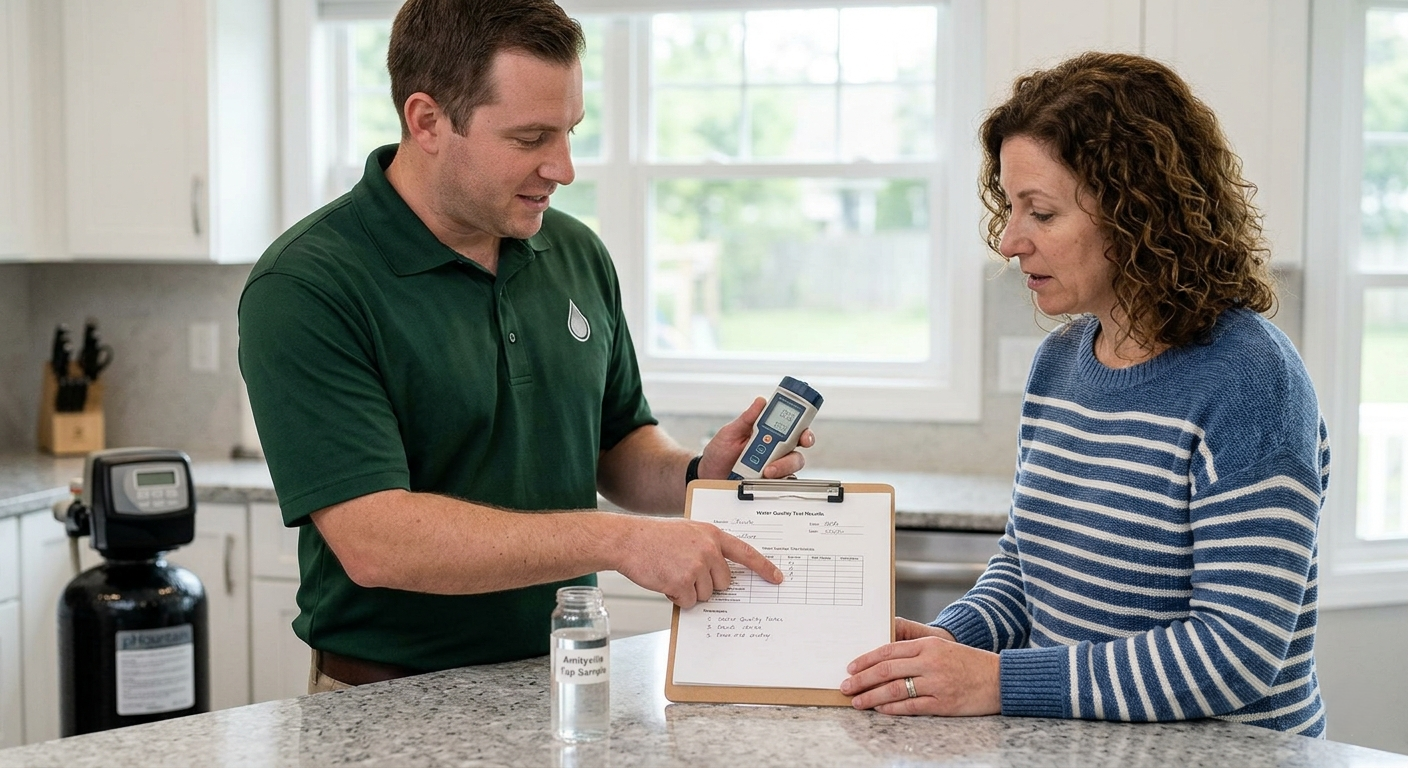
You cannot manage what you do not measure. That is why pHountain Water Filters starts with a free in-home water test before recommending any filtration system.
Why does testing at your own tap matter? Because every home is different. As SCWA’s April 2025 announcement explains, customers typically receive water from the wells nearest to them, and your home’s own plumbing adds its own variables. An in-home test looks at:
- What you notice: taste, odor, cloudiness or staining, and when it happens.
- Your water’s characteristics: a specialist tests your water on-site.
- Your home’s needs: the results, your plumbing layout and your household’s water use shape the recommendation.
Measuring PFAS and 1,4-dioxane at the levels regulators use (parts per trillion and parts per billion) requires analysis by a certified laboratory; a free in-home water test is a starting point for understanding your water and your options.
If your home is on a private well, testing it is your responsibility, because drinking water limits apply to public water systems, not private wells. See the EPA’s guidance on private drinking water wells and the Suffolk County Department of Health Services private well testing page.
Choosing a filter based on generic advice can mean paying for treatment you don’t need, or missing the issue you actually have. Testing first means the recommendation is based on your water.
The pHountain Filtration System: A Whole-House Approach
The pHountain Filtration System is a whole-home (point-of-entry) system with a cartridge-free media design intended to reduce common impurities in tap water. It is meant for homeowners who want one system for the whole house rather than a collection of small, point-of-use devices.
What makes a whole-house system different? Most filtration products are limited to a single sink. Under-sink filters can be useful for drinking and cooking water, but they do not treat the water used in showers, baths or laundry machines. A system installed at the main water entry point treats the water entering your home before it reaches any tap.
A whole-home system is configured around what testing finds. For any specific contaminant, ask for independent certification data (for example NSF/ANSI listings) for the exact system you are considering.
What a whole-house approach offers:
- Whole-home coverage: every faucet, shower and appliance receives water that has passed through the system.
- A configuration based on your test: the recommendation follows what testing finds in your home.
- A 10-year guarantee on the installed system.
The Value of Professional Installation
We often get asked whether homeowners should install a whole-house filtration system themselves. While DIY is popular, a whole-house system becomes part of your home’s plumbing, and mistakes in plumbing work can lead to leaks or pressure problems.
pHountain systems are professionally installed at the main water entry point, in the configuration recommended from your test results, so you are not left to work out the plumbing yourself.
Beyond the System: Staying Informed About Your Water
Water quality is an ongoing topic, and conditions can change from year to year. A few habits help, whether or not you install a filter:
- Read SCWA’s annual report each year on its water quality reports page, and look up your address on My Water Quality.
- Watch for local work. SCWA posts water main replacements and other projects on its news page; main work nearby can briefly cause cloudy or discolored water.
- Ask SCWA about changes. If taste, odor or clarity changes and does not clear after you run your cold water, contact SCWA. Its 2026 report lists 631-218-1129 for questions about drinking water quality (letter to customers).
- Retest if something changes, such as new plumbing work, a new household need or a change you can see or taste.
How We Can Help You
Improving your household water quality starts with a simple conversation. Whether you are curious about your Amityville home’s water or you are considering a whole-house system, the process is straightforward:
- Initial consultation: Reach out to discuss your concerns.
- Free in-home water test: A specialist tests your water on-site.
- System recommendation: We suggest a configuration based on the results.
- Professional installation: The system is installed at your main water entry point and backed by the 10-year guarantee.
Amityville Water: Common Questions
Is Amityville in Nassau or Suffolk County?
Suffolk. According to the village, Amityville is on the South Shore of Long Island in Suffolk County, within the Town of Babylon.
Is Amityville tap water safe to drink?
Public water suppliers such as SCWA must meet federal and state drinking water limits, and each publishes an annual water quality report showing what it tested for and what it found; the EPA explains how to find yours. SCWA’s report and its My Water Quality tool show the results for the water that reaches your area. If your home is on a private well, testing it is your responsibility.
Next Steps for Amityville Homeowners
Your home should be a comfortable place, and the water you drink, cook with and bathe in is part of that. pHountain Water Filters serves Long Island, including Amityville and the rest of the Town of Babylon; our Babylon service-area page covers Amityville, and our Suffolk County page covers the rest of the county.
When you are ready, request a free in-home water test or call (631) 991-3995.
This blog is for informational purposes only and is not endorsed by or affiliated with any public water supplier or government agency. Water conditions and regulations can change; always consult your local water provider and a qualified water treatment professional for advice tailored to your home.
Sources
- Incorporated Village of Amityville — About Amityville
- Suffolk County Water Authority — Suffolk County Water Authority Updates Town of Babylon Customers on $6.6 Million Construction Project Investments (April 10, 2024)
- Suffolk County Water Authority — Suffolk County Water Authority Extends Water Main to Improve Distribution in Amityville (August 9, 2023)
- Suffolk County Water Authority — Suffolk County Water Authority Launches Innovative New Tool Offering Customers a Precise Look at Their Water Quality (April 14, 2025)
- Suffolk County Water Authority — Water Quality Reports
- SCWA 2026 Drinking Water Quality Report — letter to customers (page 1)
- SCWA 2026 Drinking Water Quality Report — How to Read Your Water Quality Data (pages 4–5)
- SCWA 2026 Drinking Water Quality Report — Our Water Source and Source Water Assessment Summary (pages 37–38)
- SCWA 2026 Drinking Water Quality Report — Statistics, Well Information and Water Treatment (pages 42–44)
- Suffolk County Water Authority — Emerging Contaminants Action Plan Monthly Update (June 22, 2026)
- Suffolk County Water Authority — See My Water Quality
- Suffolk County Water Authority — Lead and Copper
- New York State Department of Health — Drinking Water Standards for PFAS and Other Emerging Contaminants
- U.S. EPA — Per- and Polyfluoroalkyl Substances (PFAS)
- U.S. EPA — Consumer Confidence Reports (annual water quality reports)
- U.S. EPA — Lead
- U.S. EPA — Private Drinking Water Wells
- Suffolk County Department of Health Services — Private Well Water Testing