When Levittown shows up in headlines for 1,4‑dioxane, homeowners feel it immediately. Levittown families are reading about design changes and emergency funding for contaminated wells and wondering what’s actually coming out of their taps.
According to Patch, the Town of Hempstead approved almost $140,000 in 2026 for unplanned design and treatment upgrades to tackle 1,4‑dioxane at five Levittown Water District wells. That tells me two things: the problem is serious enough to require extra money, and the fix is still in motion, not finished.
Our team at pHountain Water Filters has tested water in hundreds of Long Island homes, including right here in Levittown. When infrastructure projects ramp up, we usually see a spike in homeowner questions: Is the water safe to drink? Should I still be buying bottled water? Do I need my own filtration?
This guide breaks down what the Levittown water district 1,4 dioxane situation really means for your home in 2026, and how a whole‑house system like the pHountain pHresh Filtration System is designed to help address it.
Important points for Levittown residents to know
- According to Patch, Hempstead approved nearly $140,000 in 2026 for 1,4‑dioxane treatment upgrades at five Levittown Water District wells, showing elevated contamination is a real concern.
- Levittown’s water supply is managed by the local water district, which reports system updates and water quality information through its website. Levittown Water District
- Town‑level work is important, but it doesn’t give you control over what enters your specific home or how it affects your plumbing and appliances.
- A whole‑home system like the pHountain pHresh Filtration System is designed to target a broad range of contaminants — including industrial chemicals — at the point where water enters your house.
- Many Long Island families we work with cut $30–$70 per month in bottled‑water spending once they trust their tap again.
- The most practical first step is a professional test. You can schedule a free water analysis with our team here: Free in‑home water test.
What you should understand about 1,4‑dioxane in Levittown
The Levittown water district 1,4 dioxane story isn’t just another abstract environmental headline. It’s a local infrastructure issue that directly touches your kitchen sink.
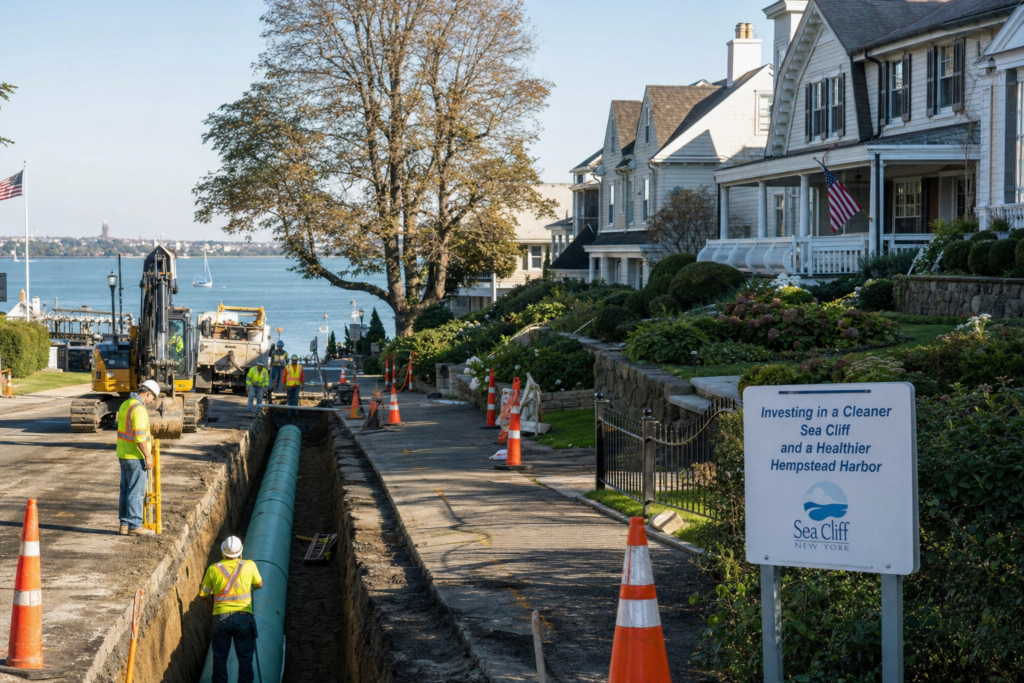
According to Patch, the Town of Hempstead recently approved nearly $140,000 in additional funding for unexpected design and treatment upgrades at five Levittown Water District wells to address 1,4‑dioxane. That funding is specifically tied to improving treatment systems aimed at this contaminant.
Here’s what that means in plain language:
- 1,4‑dioxane is an industrial chemical that has been used in solvents, manufacturing, and as a byproduct in various products. Regulators classify it as a likely carcinogen, which is why it gets so much attention when it shows up in drinking water.
- Levittown relies on groundwater wells. The Levittown Water District draws from the same aquifer system that serves much of Long Island. Over decades, industrial activity and disposal practices have allowed contaminants like 1,4‑dioxane to migrate into that groundwater.
- Treatment is complex and expensive. The fact that Hempstead had to allocate extra money for “unexpected” design and treatment upgrades shows how challenging it is to engineer systems that specifically target 1,4‑dioxane at the municipal level. According to Patch, these upgrades are tied to five separate wells, meaning multiple parts of the system are being reworked.
- The town is actively engaged. The Town of Hempstead positions itself as a community‑oriented township with environmental initiatives like storm‑drain programs and other local efforts, as described on its official website. According to the Town of Hempstead, they promote programs that protect local waterways and neighborhoods, which fits with the decision to invest in better water treatment.
The Levittown Water District itself provides system information, service updates, and customer resources through its official site. According to the Levittown Water District, the district uses its platform to keep residents informed about operations and water‑related issues.
Municipal work like this is essential. But from what we see in Long Island homes every week, it doesn’t fully answer the question that matters most to you: what’s happening to the water in your specific house, at your faucets, your showers, and inside your appliances?
Typical home impacts of 1,4‑dioxane concerns in Levittown
When the Levittown water district 1,4 dioxane story hits the news, the first reaction we hear from homeowners is anxiety. The second is confusion.
Here’s how this kind of problem typically plays out at the house level:
- Aquifer contamination feeds the wells
Long Island’s sole‑source aquifer sits under Levittown just like it does under the rest of Nassau and Suffolk. Over time, industrial chemicals can migrate through soil into the groundwater. Wells that supply the Levittown Water District then draw from that same aquifer.
- Treatment plants do their best — but standards evolve
The Levittown Water District and the Town of Hempstead are clearly investing to strengthen treatment. According to Patch, the 2026 funding is specifically for 1,4‑dioxane upgrades at five wells. But as regulations tighten and science advances, treatment plants are constantly playing catch‑up with new standards and contaminants.
- Water leaves the plant and enters aging distribution lines
Even after treatment, water still has to move through miles of pipes under Levittown streets. Those pipes can add their own issues — from sediment and discolored water to metals that weren’t part of the original treatment design.
- Your home’s plumbing becomes the final stage
Once water reaches your curb, it passes through your own service line, then through your home’s plumbing. Older pipes, hot‑water heaters, and fixtures can all influence taste, odor, and what actually comes out of each tap.
That’s why we see such a range of experiences in Levittown and across Long Island. Two houses on the same block, both on public water, can have very different water quality at the tap.
A municipal upgrade project might improve the overall baseline, but it doesn’t give you direct control over what your family drinks and bathes in every day. That’s where a whole‑home solution at the point of entry makes a real difference.
If you want a deeper dive into regional contamination beyond Levittown, we’ve covered broader PFAS and 1,4‑dioxane issues on Long Island here:
- Long Island Has a PFAS Problem. Here’s What You Need to Know
- Bethpage 1,4‑Dioxane Delays Raise Exposure Concerns: Protecting Your Long Island Home’s Water
Reasons Levittown homeowners consider filtration upgrades in 2026
With the Levittown water district 1,4 dioxane upgrades underway, we’re seeing the same pattern we’ve seen in other Long Island towns:
- More bottled water deliveries and store runs
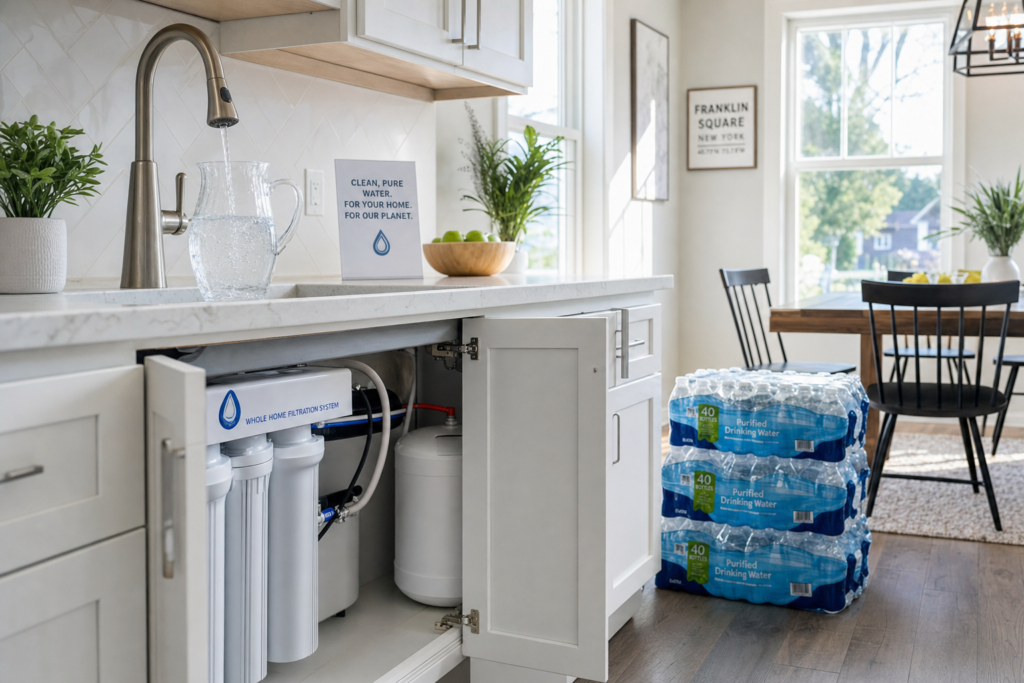
Families start relying heavily on bottled water for drinking and cooking. For a typical Levittown household, that can easily run $30–$70 per month or more, once you add in jugs, cases, and emergency convenience buys. And that still leaves showers, dishwashers, and laundry unaddressed.
- Pitcher filters and faucet attachments everywhere
Countertop and fridge filters are a natural first step. But they only treat a fraction of the water you use and usually target a limited set of contaminants. Most don’t meaningfully address industrial chemicals or whole‑home exposure.
- Growing concern about long‑term exposure
Once residents learn that 1,4‑dioxane is a likely carcinogen and that it’s been discovered in local wells, they start thinking beyond taste and smell. Even if the Levittown Water District is working to meet all regulatory limits, many homeowners want an extra layer of protection they control.
- Pressure on aging appliances and fixtures
Untreated water with chlorine, sediment, and other contaminants can be hard on hot‑water heaters, washing machines, and dishwashers. Over a decade, that can mean repairs and replacements that cost far more than a filtration system.
Our team’s view is straightforward: town projects are essential, but they operate at the system level. A whole‑home filtration solution works at the house level — for your family, your pipes, and your daily routine.
If you want to see how we serve your specific neighborhood, you can explore our Levittown‑focused page here: Water Filtration Levittown NY
Features of the pHountain pHresh Filtration System for Levittown water
When Levittown residents ask what they can do about 1,4‑dioxane and other contaminants, we usually end up talking about one core concept: treat the water at the point it enters your home, not just at one faucet.
The pHountain pHresh Filtration System is our flagship whole‑house solution built around that idea.
Comprehensive whole‑home filtration
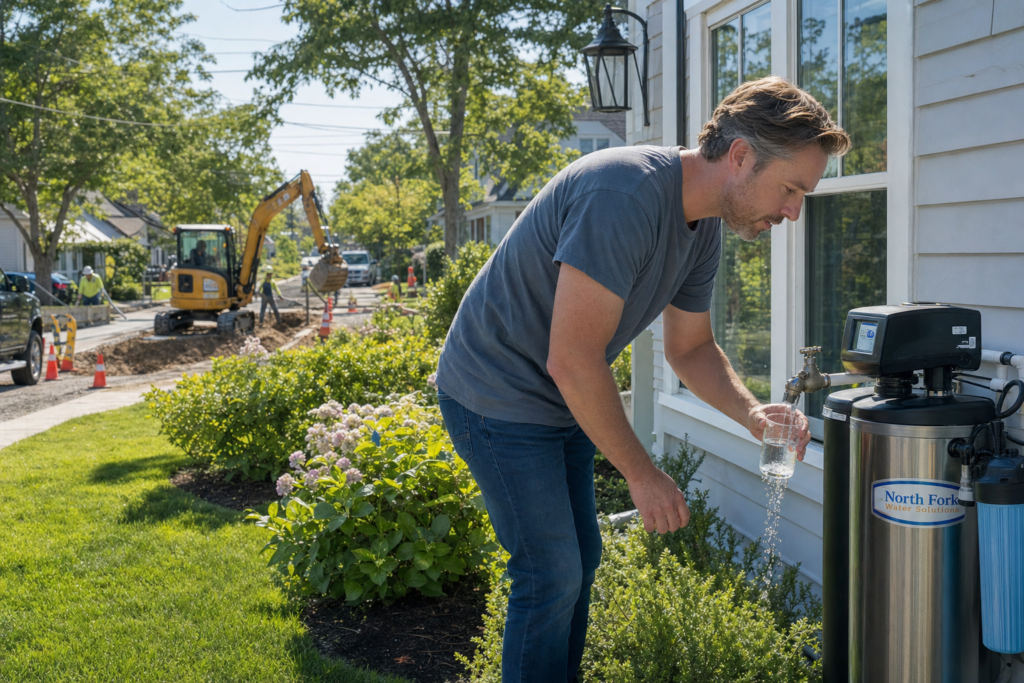
We install the pHountain pHresh Filtration System where the water line first comes into your Levittown home. From that point forward, every faucet, showerhead, and appliance benefits from treated water.
Instead of just filtering a pitcher or a single sink, you address:
- Kitchen taps
- Bathroom sinks and showers
- Laundry machines
- Dishwashers
- Ice makers and fridge dispensers
- Outdoor spigots (if you choose to include them)
For a town like Levittown, where the water district is actively upgrading treatment for 1,4‑dioxane, this gives you a personal, house‑level safeguard on top of whatever the municipal system is doing.
Broad range contaminant removal
Our systems are designed to help reduce exposure to a wide range of substances commonly found in Long Island and Levittown tap water, including:
- Chlorine and disinfection byproducts that affect taste, odor, and skin comfort
- Heavy metals that can be introduced through pipes and fixtures
- Industrial chemicals — the same broad category that includes contaminants like 1,4‑dioxane
- Bacteria and microorganisms that may be present in certain conditions
- Sediment and particulates that can cloud water and clog fixtures
We don’t claim that the pHountain pHresh Filtration System addresses every molecule of any specific contaminant. What we can say, and what we design for, is that it targets these categories to help improve overall water quality throughout the home.
Expert professional installation included
One of the biggest differences between pHountain Water Filters and off‑the‑shelf solutions is how we install and support the system.
Our process for Levittown homes typically looks like this:
- On‑site evaluation – We look at where your main line enters, your plumbing layout, and your water‑usage patterns.
- Water testing and analysis – We test your tap water so we’re not guessing about what’s in it.
- System recommendation – Based on your test results and home size, we recommend a configuration of the pHountain pHresh Filtration System tailored to your situation.
- Certified installation – Our technicians integrate the system into your main water line, minimizing disruption and ensuring correct flow and orientation.
- Post‑install check – We verify that the system is operating properly and that treated water is reaching all intended fixtures.
Because these systems are designed for high capacity and long service life, maintenance is usually far less frequent than what you deal with on small filters and pitchers.
If you’re comparing options across Long Island, it can also help to look at how we serve neighboring areas:
Levittown homes and 1,4‑dioxane: a combined customer experience story
To protect privacy, this is a composite based on several real Levittown‑area customers we’ve worked with — but the situation will feel familiar if you’ve been following the Levittown water district 1,4 dioxane news.
The problem
A Levittown family started hearing about 1,4‑dioxane in local wells and saw coverage of new treatment projects in the Town of Hempstead. They were already unhappy with the strong chlorine smell in their tap water and had been relying on bottled water for years.
They ordered an independent water test and were told there were elevated levels of 1,4‑dioxane in their sample, indicating a significant contamination concern. The parents were worried about long‑term exposure and frustrated that even “filtered” fridge water still had an off taste.
What they tried first
Like many Long Island homeowners, they cycled through:
- Refrigerator filters
- Pitcher filters on the counter
- A faucet‑mounted filter in the kitchen
- Cases of bottled water delivered monthly
None of that did anything for showers, laundry, or bathroom sinks — and the plastic waste and monthly bills kept climbing.
The solution we installed
After a consultation and water test with our team, they chose a pHountain pHresh Filtration System with professional installation at the point where water enters the home.
The system was configured to target:
- Chlorine and disinfection byproducts
- Heavy metals related to older plumbing
- Industrial contaminants like those being discussed in Levittown’s 1,4‑dioxane upgrades
- Sediment and other particulates affecting clarity
Within a short period, the family reported that the water tasted and smelled noticeably better at every tap. Showers felt different, and they were more comfortable using tap water for cooking and making coffee instead of reaching for bottled water.
The financial impact
By cutting down bottled‑water deliveries and impulse buys, they estimated they were saving about $30 to $70 per month. That doesn’t even factor in the longer‑term benefit of reduced wear on appliances from untreated water.
This is the pattern we see over and over in Levittown and across Long Island: once homeowners trust their tap again, they stop paying a premium for temporary fixes.
Understanding the true expense behind bottled water in Levittown
If you live in Levittown and you’re worried about 1,4‑dioxane, bottled water probably feels like the safest default. But it comes with some hidden costs and limitations.
The financial burden of bottled water
For a typical family of four:
- Weekly cases of water, plus a few extra for parties or sports, can easily hit $30–$70 per month.
- That’s $360–$840 per year, every year, for water that only covers drinking and maybe some cooking.
- You’re still showering, washing dishes, and doing laundry in unfiltered tap water that’s influenced by whatever is happening at the Levittown Water District wells and in local pipes.
There’s also the environmental side: plastic waste, transport emissions, and the fact that many bottled waters start as municipal water anyway.
We break down this comparison more fully here: Water Filters vs Bottled Water
Limitations of relying solely on bottled water
No matter how much bottled water you buy, it won’t:
- Improve the water in your showers or baths
- Protect your hot‑water heater, dishwasher, or washing machine from untreated water
- Address whole‑home exposure to contaminants like chlorine, metals, or industrial chemicals
A whole‑home system is an investment, but it’s one that works 24/7 for every drop that enters your Levittown home — not just the glasses you drink.
Practical next steps for Levittown homes facing 1,4‑dioxane
If you’re concerned about the Levittown water district 1,4 dioxane situation, here’s a practical, no‑nonsense checklist for the next seven days:
- Read the local update carefully
Start with the original coverage so you understand what’s funded and why. According to Patch, the extra $140,000 in 2026 is specifically for 1,4‑dioxane treatment upgrades at five Levittown wells.
- Review information from your water district
Visit the Levittown Water District website to see what they share about water quality, system improvements, and how they communicate with residents.
- Take stock of your current setup
- How much are you spending on bottled water each month?
- Where do you currently filter water (if at all)?
- Are you noticing chlorine smell, staining, or cloudy water?
- Schedule a professional water test
Lab reports and local headlines are helpful, but nothing beats data from your own tap. Our team offers free in‑home water testing for Levittown and the rest of Long Island. You can request a visit here: Free In‑Home Water Test
- Compare long‑term options
After you see your test results, weigh the ongoing cost of bottled water and piecemeal filters against a whole‑home system that targets a broad range of contaminants at the point of entry.
Common inquiries from Levittown water users
1. What does the 1,4‑dioxane funding in Levittown actually mean for my tap water?
According to Patch, the Town of Hempstead approved nearly $140,000 in 2026 for unplanned design and treatment upgrades at five Levittown Water District wells to address 1,4‑dioxane. That indicates the district is investing in better treatment technology aimed at this contaminant. However, those projects take time to design, build, and optimize, and they operate at the system level — not specifically at your home’s point of entry.
2. Is Levittown’s water considered safe if the district is upgrading treatment?
Municipal systems like the Levittown Water District are required to meet regulatory standards and report on water quality. The district uses its website to share information and updates with residents. According to the Levittown Water District, it provides resources and communication about its operations. Many homeowners still choose an additional filtration layer at home to address taste, odor, and whole‑house exposure, even when the system meets regulatory requirements.
3. Can the pHountain pHresh Filtration System help address concerns about 1,4‑dioxane in Levittown?
The pHountain pHresh Filtration System is designed to target broad categories of contaminants — including industrial chemicals — at the point where water enters your home. While we don’t claim to eliminate any specific contaminant, the system is engineered to help reduce exposure to chlorine, heavy metals, industrial contaminants, bacteria, and sediment across every tap and appliance. For Levittown residents following 1,4‑dioxane news, that added layer of treatment can be an important part of their overall strategy.
4. I’m on Levittown public water. Do I still need to test my water at home?
From our experience across Long Island, the answer is yes. Even when you’re on a public system like Levittown’s, what comes out of your tap is influenced by your service line, your home’s plumbing, and your fixtures. A test at the tap shows you what’s actually in your water after it travels from the well, through treatment, across the distribution system, and into your house. That’s why we offer free in‑home testing for Levittown residents.
5. How is a whole‑house system different from the pitcher filter on my counter?
A pitcher filter only treats the water you pour into it — usually for drinking. It doesn’t touch showers, baths, laundry, dishwashers, or bathroom sinks. A whole‑house system like the pHountain pHresh Filtration System is installed where water enters your Levittown home, so it’s designed to treat every drop used throughout the house. It also targets a broader range of contaminants than most small consumer filters and is built for high capacity and long service life.
If you live in Levittown and the ongoing 1,4‑dioxane upgrades have you rethinking your water, the most effective next step is to see exactly what’s in your own tap and explore whole‑home options.
You can book a free professional water analysis with our team here: Free In‑Home Water Test
Water quality varies by location. Municipal water provided by SCWA achieved EPA compliance in June 2025. Private well owners should have water tested regularly. pHountain provides free water testing for Nassau and Suffolk County.