
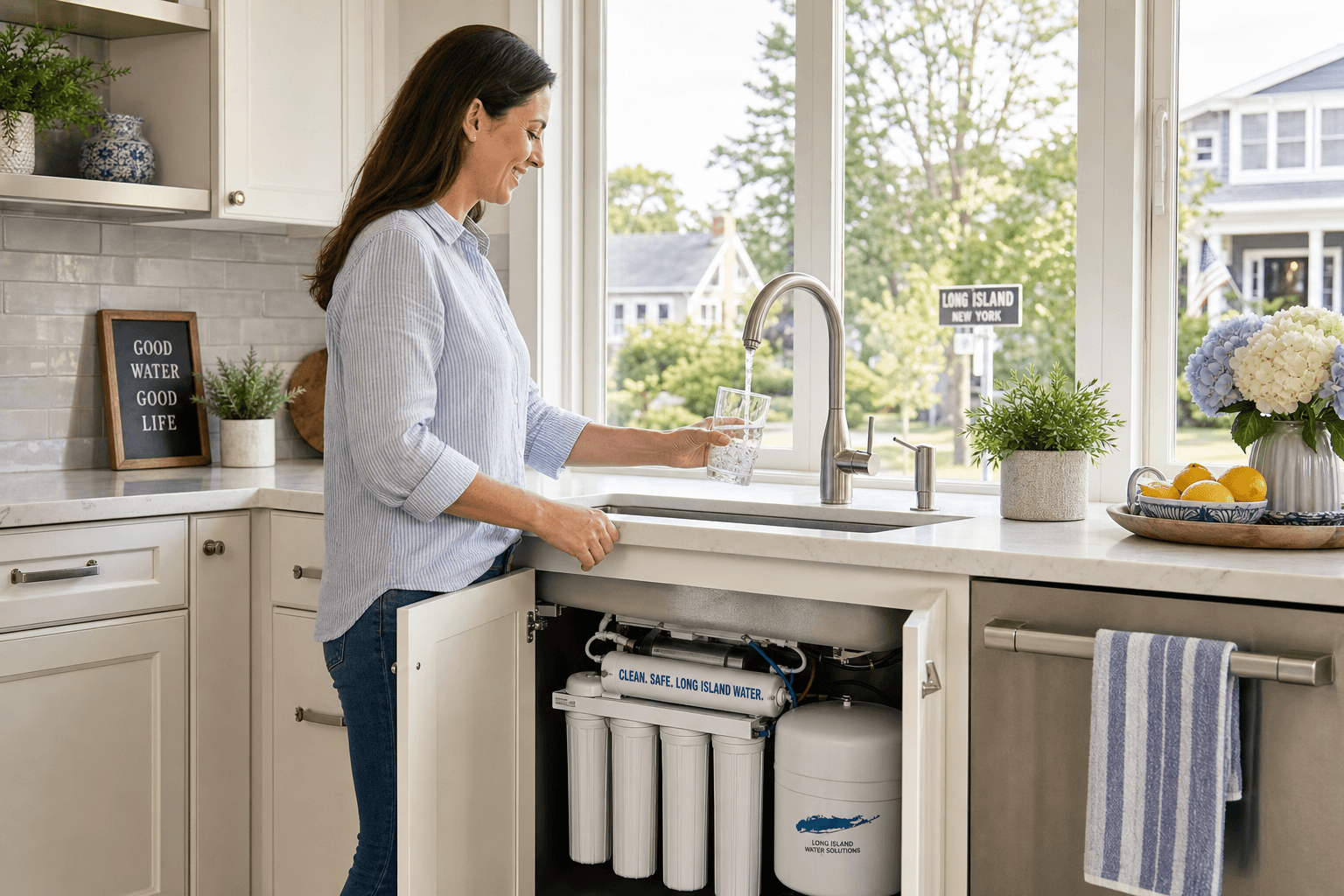
New York’s 2026 PFAS lawsuit against major chemical manufacturers is big news for Long Island. But if you’re a homeowner, the real question is simple: *what does this actually mean for the water coming out of your taps today*?
This breakdown focuses on Long Island, what “forever chemicals” are, and what you can control inside your own home while the lawsuit moves through the courts.
Background on the Long Island PFAS Legal Action
On July 10, 2026, the New York Attorney General filed a lawsuit against several of the nation’s largest chemical manufacturers, accusing them of marketing and selling products containing PFAS that have contaminated drinking water on Long Island and across the state.[^news12]
Environmental advocates say PFAS (per- and polyfluoroalkyl substances) have been used in consumer products for decades, and view this lawsuit as a key step toward reducing public exposure.[^news12]
The case is focused on:
- Corporate accountability: Holding companies responsible for the costs of cleaning up PFAS-contaminated water supplies.[^news12]
- Long-term contamination: Addressing chemicals that persist in air, soil and water for years because they break down very slowly.[^news12]
- Widespread exposure: Recognizing that millions of Long Islanders have been affected by PFAS contamination in drinking water.
Litigation has only just begun, so this is the start of a multi-year legal process—not an instant fix.
Defining PFAS and the Reason Behind the “Forever Chemicals” Label
PFAS are a large family of man‑made chemicals used to make products resistant to water, grease and stains. Environmental experts note they have been used in many everyday items, including:[^news12]
- Nonstick cookware
- Food packaging
- Children’s products
- Cosmetics and personal care items
- Household goods like some textiles and carpets
Why They’re Known as “Forever Chemicals”
Health and environmental officials have documented PFAS contamination in air, soil and water, and note that these compounds break down very slowly in the environment.[^news12] That slow breakdown is why they’re often called “forever chemicals”—once released, they can linger for years.
Exposure Routes for PFAS
Experts say people can be exposed to PFAS through multiple everyday pathways:[^news12]
- Drinking contaminated water
- Inhaling PFAS in air or dust
- Eating food that has contacted PFAS-containing materials (for example, from certain cookware or packaging)
On Long Island, drinking water is a major concern because groundwater is the region’s primary source of public supply.
Specific Effects of PFAS on Long Island’s Water Supply
Long Island’s geology—porous sandy soils and a sole-source aquifer—means contaminants can move relatively easily from the surface down into groundwater. Reporting has highlighted several key issues:
- Widespread drinking water contamination: PFAS have been found in public water supplies on Long Island and across New York State.[^news12]
- Landfill-related concerns: Communities near landfills and waste sites are worried about PFAS and other pollutants migrating into groundwater, prompting calls for stronger monitoring and cleanup.[^inside]
- Multiple contamination sources: In addition to consumer products, PFAS can originate from industrial uses, firefighting foams, and waste disposal practices.[^inside]
A recent investigation into a Long Island community near a landfill described residents’ concerns about “spreading landfill pollution” and potential impacts on their drinking water, including PFAS among other contaminants.[^inside]
How Local Water Authorities Are Responding to PFAS Challenges
Local water providers say they have taken extensive steps to address PFAS in public drinking water. A representative from the Suffolk County Water Authority explained that the utility has been using filtration systems since 2013 to treat PFAS and other contaminants before water reaches homes.[^news12]
He described the process this way:[^news12]
- Filtration units are installed so that water flows through treatment media.
- As water passes through, the system is designed to capture contaminants.
- Regular testing is performed to verify that the treatment is working as intended.
The message from local providers is that they are actively treating PFAS and monitoring results.[^news12] At the same time, environmental advocates stress that PFAS remain common in products and in the environment, which is why they view the lawsuit as a necessary step to reduce future contamination and protect public health.[^news12]
What to Expect from the Lawsuit in Terms of Drinking Water
It’s important to separate legal action from day-to-day water quality in your home.
Potential Long-Term Benefits of the Lawsuit
If the state prevails, outcomes could include:[^news12]
- Funding for cleanup: Money to design, build and operate more advanced water treatment.
- Stronger controls on PFAS use: Pressure on industries to phase out or reformulate products containing PFAS.
- Expanded monitoring: More testing of drinking water sources and contaminated sites.
All of this could improve regional water quality over the long term.
Immediate Limitations of the Lawsuit for Homeowners
For a homeowner in 2026, the lawsuit does not instantly:
- Change the PFAS levels currently entering your home
- Guarantee that private wells are tested or treated
- Alter what is coming out of your faucets today
Court cases move slowly. Even if settlements fund new infrastructure, designing, permitting, and building treatment systems can take years.
That’s why many Long Island homeowners are looking at in-home filtration as an added layer of protection they can control directly.
How PFAS Contamination Can Reach Your Household
Even with public utilities working to manage PFAS, there are several ways these chemicals can still be part of your daily environment.
1. Limits and Challenges of Public Water Systems
- Infrastructure timelines: Installing treatment at every affected well or plant can be a multi-year process.
- Changing contamination patterns: As PFAS move through groundwater, new wells or areas can become affected over time.[^inside]
- Distribution system complexity: Treated water can mix with other sources in the system, and conditions may vary by neighborhood.
2. Private Well Considerations on Long Island
Many Long Island homes rely on private wells, which:
- Are not automatically tested on the same schedule as public supplies
- May be closer to landfills, industrial sites, or historical waste areas where PFAS and other pollutants have been detected[^inside]
- Put the testing and treatment responsibility on the homeowner
If you’re on a private well, local water quality testing and analysis is especially important to understand your specific situation.
3. Household Sources of PFAS Exposure
Even if your tap water is treated, PFAS can still be present in:
- Nonstick pans and bakeware
- Stain-resistant fabrics and carpets
- Some food packaging and wraps
- Certain cosmetics and personal care products[^news12]
The lawsuit targets manufacturers, but these products are already in homes. That’s another reason many families focus on reducing what’s in their water, where they can make a direct change.
A Typical Homeowner Experience with PFAS on Long Island
To illustrate how this plays out in daily life, consider a composite Long Island homeowner (no single customer’s identity) who discovered PFAS in their tap water.
Challenges Faced Inside the Home
- Persistent concern: The homeowner had been following news about PFAS for years and grew increasingly worried about long-term exposure from tap water.
- Water testing: A water test showed elevated PFAS levels consistent with regional contamination patterns.
- Daily impact: The family had shifted heavily toward bottled water for drinking and cooking, adding cost and plastic waste.
Adopted Filtration Solution
After reviewing options, the homeowner decided on a pHountain pHresh Filtration System with Professional Installation as a whole-house solution. The goal was to:
- Treat water at the main entry point so every faucet, shower and appliance would receive filtered water
- Address PFAS along with other contaminants like chlorine, sediment and industrial chemicals
- Reduce reliance on bottled water and the hassle of hauling cases home
While every installation is customized, this kind of system is designed to improve overall water quality throughout the home.
Saving Money and Improving Convenience
By shifting away from bottled water, this composite homeowner saw:
- Approximate monthly savings: Around $30–$60 per month as bottled water purchases decreased
- Convenience gains: No more last-minute store runs for cases of water
- Consistency: The same treated water at every tap, not just from a fridge or pitcher
Individual results vary, but this scenario reflects what many Long Island households are looking for: more control over their own water while larger legal and infrastructure changes play out in the background.
Comparing Common Water Solutions for Long Island Homeowners
Here’s a simple side-by-side look at common approaches Long Island homeowners consider.
| Option | Main idea | Typical drawbacks |
|---|---|---|
| Do nothing | Rely entirely on public treatment or untreated private well | Limited insight into what’s in your water; no added barrier at home |
| Bottled water only | Use bottled water for drinking/cooking | Ongoing monthly cost, plastic waste, does not address showers, laundry, dishes |
| Pitcher or faucet filter | Small point-of-use filter at one sink | Limited capacity; usually treats one tap only; frequent cartridge changes |
| Whole-house filtration | Treat water where it enters the home | Requires upfront investment and professional installation, but covers all fixtures |
If you’re weighing these choices, it can help to start with a local water analysis to understand which contaminants are actually present at your address.
How pHountain Offers Filtration Tailored to PFAS and More
pHountain Water Filters focuses on residential water quality in Long Island and the NYC metro area. For homeowners concerned about PFAS and related issues, the process typically includes:
- Water quality testing and analysis
- Identifying PFAS and other contaminants, mineral levels, and general water conditions.
- Considering whether you’re on public water or a private well.
- Customized water filtration system design
- Recommending a solution based on your home’s plumbing layout, water usage and test results.
- Often centering on the pHountain pHresh Filtration System for whole-house coverage.
- Professional Installation
- Installing the system at the main water entry point, so treated water flows to sinks, showers and appliances.
- Ensuring the system is integrated correctly into your existing plumbing.
- System testing and customer education
- Verifying that the system is operating as intended.
- Explaining what the system is designed to address and how to keep it maintained.
If you’re in Suffolk County and want to see what a whole-home setup can look like in your area, explore Whole-Home Water Filtration for Suffolk County.
> Want to understand your own PFAS risk instead of just reading headlines? Start with a Free In-Home Water Test and see what’s actually in your Long Island tap.
Bigger Picture: The Ongoing PFAS Issues on Long Island
The 2026 lawsuit is part of a larger pattern of concern and action around PFAS and other contaminants in the region.
Community Advocacy Near Contamination Hotspots
Investigations have documented how communities near landfills and waste facilities on Long Island are pressing officials to:[^inside]
- Expand groundwater monitoring for PFAS and related chemicals
- Accelerate cleanup efforts where contamination is spreading
- Increase transparency about what’s been found in local wells
Residents have described watching contamination migrate outward from older waste sites and worry about what that means for their drinking water.[^inside]
Responses by Water Utilities and Regulators
In parallel, water providers and regulators have been:
- Installing new treatment systems targeting PFAS and other emerging contaminants
- Shutting down or blending water from wells with elevated levels
- Updating testing protocols to track more compounds at lower detection limits
The Attorney General’s lawsuit aims to shift long-term costs of this work from ratepayers and taxpayers to the companies that produced and sold PFAS-containing products.[^news12]
For homeowners, this landscape can feel complex—but it underscores one point: PFAS is a long-term issue, not a passing headline.
Recommended Actions for Long Island Residents Facing PFAS
While the lawsuit moves forward, you still have decisions to make about your own tap.
1. Identify Your Water Source
- Public water: Check your bill or local water provider’s website to confirm your water district. Review their published water quality reports.
- Private well: If you’re on a well, testing is your responsibility. Consider a lab analysis that includes PFAS and other regional contaminants.
For more background on Long Island’s PFAS situation, see Long Island Has a PFAS Problem. Here’s What You Need to Know.
2. Obtain a Precise Water Test for Your Home
A home-specific test gives you more precise information than regional averages. It can help identify:
- PFAS compounds (where testing is requested)
- Chlorine or disinfection byproducts
- Heavy metals, sediment, and other industrial chemicals
You can request a Free In-Home Water Test from pHountain Water Filters to get a clearer picture of your tap.
3. Choose Your Level of Water Protection
Ask yourself:
- Do I only want filtered water at one sink, or do I care about showers, laundry, and dishwashing too?
- Am I trying to cut back on bottled water spending and plastic waste?
- Do I plan to stay in this home long enough to benefit from a whole-house system?
If you’re comparing options, the article Water Filters vs Bottled Water can help you think through cost and convenience.
4. Consult with Local Water Filtration Experts
Because Long Island’s aquifer system and contaminant profile are unique, it helps to work with someone who:
- Understands local water districts and well conditions
- Has experience configuring systems for PFAS and other Long Island-specific contaminants
- Provides Professional Installation and ongoing support
You can explore broader regional options at Water Filtration Long Island NY or, if you’re in Nassau, at Water Filtration Nassau County NY.
Frequently Asked Questions
Is my Long Island tap water safe to drink during this PFAS lawsuit?
Public water providers on Long Island report that they have installed filtration systems to treat PFAS and are testing to verify performance.[^news12] However, conditions can vary by district, neighborhood, and even by well. The lawsuit itself does not change water quality immediately; it seeks long-term accountability and funding.
For a clearer answer about your home, consider testing your tap water directly and reviewing your local utility’s water quality reports.
I live near a landfill on Long Island. Does this lawsuit address my specific situation?
The lawsuit targets chemical manufacturers whose products contributed to PFAS contamination statewide, including on Long Island.[^news12] Separately, reporting has shown that communities near landfills are worried about PFAS and other pollutants spreading through groundwater and are pushing for more monitoring and cleanup.[^inside]
If you live near a landfill or historical waste site, it’s especially important to:
- Determine whether you’re on public water or a private well.
- Arrange for water testing that includes PFAS and other contaminants of concern.
I’m on a private well in Suffolk County. Will this lawsuit fix my well water?
The lawsuit may eventually help fund regional cleanup and treatment, but it does not automatically test or treat individual private wells. For well owners, the main steps are:
- Test your well for PFAS and other contaminants.
- If contaminants are detected, consider a whole-house filtration system or targeted treatment.
- Re-test periodically, especially if you are near landfills, industrial areas, or known contamination sites.[^inside]
If my water utility is already treating PFAS, why would I still consider home filtration?
Utility treatment is a critical first line of defense, but homeowners often choose additional filtration because:
- They want an extra barrier at the point where water enters their home.
- They’re concerned about other contaminants beyond PFAS (like chlorine, sediment, or heavy metals).
- They prefer consistent water quality at every tap, not just for drinking.
A whole-house system can complement public treatment by focusing on your specific plumbing, fixtures, and household needs.
> You can’t control how fast a lawsuit moves—but you *can* control what’s in the water your family uses every day. Start with a Free In-Home Water Test and a local consultation from pHountain Water Filters.
This blog is for informational purposes only and does not guarantee specific water quality outcomes or system performance. Always consult local water authorities, health professionals, and certified water treatment specialists for advice tailored to your situation.
Water quality varies by location. Municipal water provided by SCWA achieved EPA compliance in June 2025. Private well owners should have water tested regularly. pHountain provides free water testing for Nassau and Suffolk County.