
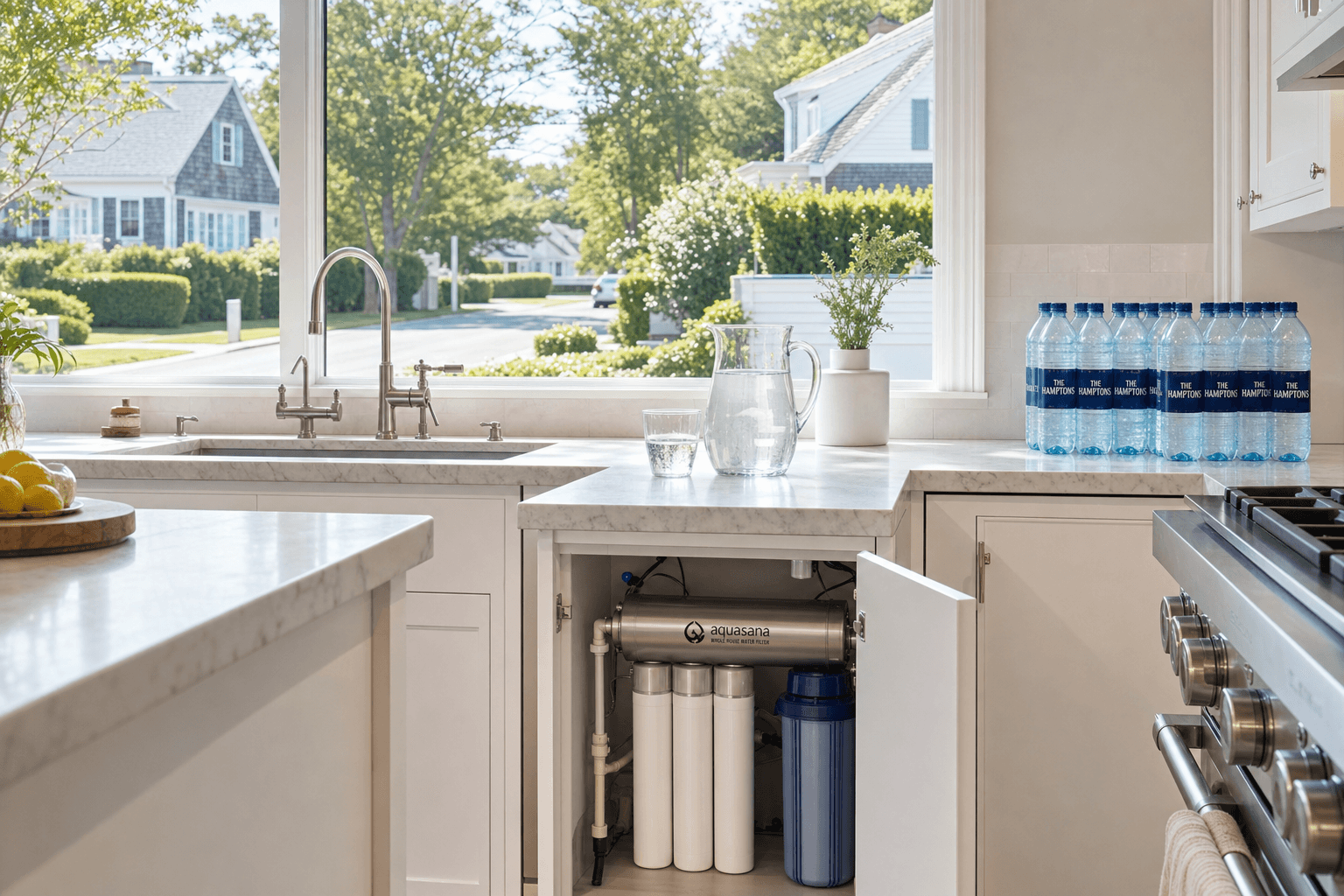
East Hampton homeowners near Buckskill Road are facing an uncomfortable question after the PFPrA discovery and well closures linked to the 2023 battery fire: what is this going to cost — in money, time, and peace of mind?
This post breaks down the real cost of East Hampton water contamination for both public and private well users, and compares three options:
- Rely on emergency measures and do nothing long term
- Switch heavily to bottled water
- Invest in a whole-home filtration system such as the pHountain pHresh Filtration System with professional installation
Understanding the East Hampton Incident and Rising Expenses
In 2023, testing near Buckskill Road in East Hampton found elevated levels of a short-chain PFAS-type compound in groundwater, similar to other “forever chemicals” monitored by the EPA. County officials linked the issue to a battery energy storage facility fire, while state regulators say the source is still under investigation.[^news12]
As a precaution:
- Several Suffolk County Water Authority wells were taken offline in the area
- Officials estimated that around 30 private wells could be affected and offered testing to nearby homeowners[^news12]
County and state agencies are now:
- Expanding groundwater sampling
- Testing nearby ponds for potential spread into surface water
- Working toward a long-term cleanup plan[^news12]
While agencies investigate, East Hampton residents are left to decide how to respond at home — and what each response will cost.
> If you’re on a private well anywhere in Suffolk County, start with a focused look at your water. This guide on what your well water isn’t telling you explains why testing and treatment are becoming essential on Long Island.
The True Price of Taking No Immediate Action
Some homeowners hope the PFPrA contamination issue will be resolved quickly through state cleanup. But relying on public action alone can come with its own costs.
Financial and lifestyle impacts of doing nothing
- Short-term supply changes:
- When public wells are taken offline, water systems may shift supply sources and re-balance pressure and capacity.
- In some cases, that can mean changes in taste, odor, or pressure at the tap, especially during peak demand.
- Emergency purchases:
- If new test results show elevated PFAS-like compounds or other contaminants tracked by the CDC, families often rush to buy bottled water or small filters.
- These emergency purchases are typically more expensive per gallon than planned, long-term solutions.
- Uncertain future costs:
- Cleanup plans and infrastructure upgrades may take years to complete.[^news12]
- During that time, homeowners may cycle through multiple stopgap solutions instead of one stable approach.
Emotional cost: living with uncertainty
- Private well owners near Buckskill Road are already undergoing emergency testing.[^news12]
- While officials say there is currently no indication of exposure in tested private wells so far, testing is still expanding and the full plume boundaries are not yet known.[^news12]
That means:
- Ongoing questions about water safety
- Anxiety over whether conditions might change after heavy rain, drought, or additional infrastructure work
- A sense of having no control over what comes out of the tap
Comparing the Expenses: Bottled Water Versus Whole-House Filtration
For many East Hampton households, the immediate response to water concerns is to buy more bottled water. Over time, though, that can become one of the most expensive and least convenient options.
Below is a simplified comparison of typical household approaches in contamination events like the East Hampton PFPrA plume.
Table: Typical Long-Term Costs by Water Strategy
| Home Strategy | Upfront Cost (Approx.) | Ongoing Monthly Cost (Approx.) | Key Trade-Offs |
|---|---|---|---|
| Rely on Bottled Water | Low (cooler, dispenser if used) | Medium–High (often $50–$150+ for a family) | Safer drinking water source, but no protection for showers, cooking, or laundry; heavy plastic use and hauling |
| Pitcher / Faucet Filters Only | Low–Moderate | Medium (filter changes) | Limited capacity and coverage; mostly for drinking water only; frequent maintenance |
| Whole-Home Filtration System | Higher (system + installation) | Low–Medium (media changes over time) | One-time installation; treated water at every tap; helps cut bottled water dependence |
Many pHountain Water Filters customers who moved from bottled water to a whole-home filtration system report saving about $30–$75 per month by addressing bottled water purchases and avoiding repeated “emergency” fixes.
How the East Hampton Findings Shift Water Cost Considerations
The PFPrA discovery and well closures are not just short-term headlines; they reshape how East Hampton residents should think about water costs.
1. Private wells: beyond emergency testing to ongoing vigilance
For homeowners on private wells near Buckskill Road:
- County health officials are offering testing to nearby private wells.[^news12]
- Even if current results show no elevated contamination, the plume boundaries and long-term movement are still being studied.[^news12]
The realistic choices become:
- Test once and hope conditions stay stable
- Plan for ongoing testing and potential future treatment
- Install a permanent filtration system to help manage PFAS-type compounds and other contaminants over time
2. Public water users: managing impacts beyond your control
If you’re on public water in East Hampton:
- Wells taken offline can shift where your water comes from, especially during peak use.
- That can mean changing water quality profiles over time, even if the supply meets regulatory standards.
Many Long Island homeowners choose whole-home filtration not because the public system has failed, but because they want:
- More consistent taste and odor
- An extra layer of protection against PFAS-type compounds, chlorine, and industrial chemicals
- Less dependence on bottled water for peace of mind
To understand how this fits into the bigger picture, see how Long Island’s broader PFAS challenges are driving more families toward home filtration.
Real-Life Story: An East Hampton Family Facing PFPrA-Linked Water Challenges
To protect privacy, this is a composite example based on typical experiences of East Hampton and Suffolk County homeowners facing PFAS-related concerns.
The problem
- Location: A home near Buckskill Road in East Hampton
- Water source: Private well
- Trigger: News of the PFPrA-type compound in nearby groundwater and closure of SCWA wells
- Initial response: County testing showed elevated PFPrA levels in the area, leading to restricted use of well water for drinking and cooking while more data was collected
The homeowners:
- Switched to bottled water for all drinking and most cooking
- Worried about showers, kids’ baths, and pets still using well water
- Spent $60–$100 per month on bottled water and jugs
The solution they chose
After a consultation with pHountain Water Filters, they installed a pHountain pHresh Filtration System with professional installation, configured to address:
- PFAS-type contaminants
- Chlorine and other disinfection byproducts (for any future switch to public water)
- Sediment and industrial chemicals that can appear in groundwater
Professional installation ensured:
- The system was placed at the main water line so every faucet, shower, and appliance benefited
- Pressure and flow were balanced to maintain normal household use
Cost impact
After installation:
- Bottled water purchases dropped significantly; they kept a small supply for travel and backup only
- The family estimated monthly savings of about $30–$75 compared to their peak bottled water spending
- They gained consistent whole-home coverage, not just filtered drinking water in the kitchen
This pattern is common among pHountain Water Filters customers who face PFAS-related contamination and want a stable, long-term solution rather than relying on repeated testing and short-term fixes.
Features of the pHountain pHresh Filtration System for East Hampton Homes
The pHountain pHresh Filtration System is a whole-house filtration solution designed for Long Island and NYC-area water conditions, including both municipal and private well supplies.
Essential filtration capabilities for PFAS-era water issues
- Contaminant-focused design: The system is engineered for addressing contaminants across categories like chlorine, heavy metals, industrial chemicals, bacteria, sediment, and environmental contaminants commonly found in local tap and well water.
- Whole-home coverage: Installed on the home’s main water supply line, it provides treated water at every faucet, shower, and appliance.
- High-capacity filtration: Built for long service life and low-maintenance operation, helping families avoid constant filter changes.
Because PFAS-type issues like the short-chain compound detected in East Hampton groundwater can be complex and long-lasting, many homeowners prefer a comprehensive, professionally installed system over piecemeal solutions.
To see how a system like this compares with other options, the guide on water filters vs bottled water walks through cost, convenience, and coverage in more detail.
The Importance of Expert Installation in Affected Areas
In areas facing toxic plume testing or PFAS-type concerns, installation quality is not a minor detail.
Advantages of professional system setup for East Hampton properties
- Correct system sizing:
- East Hampton homes vary widely in size, occupancy, and plumbing complexity.
- Professional installers can match the filter capacity to your actual water use, helping maintain performance over time.
- Optimized plumbing integration:
- A properly installed system protects all fixtures, not just one sink.
- Installers can account for irrigation lines, outbuildings, and future expansions.
- Verification and testing:
- After installation, technicians test the system to confirm correct flow and operation.
- They also explain maintenance schedules and how the system addresses specific contaminant categories.
This is especially important in Suffolk County, where groundwater contamination investigations can evolve over years, and homeowners need a long-term, stable solution.
East Hampton’s Specific Water Quality Challenges: PFPrA and Beyond
The situation near Buckskill Road raises several local questions that directly affect cost and planning.
Understanding PFPrA and its implications
- County officials described the detected contaminant as a short-chain PFAS-type compound.[^news12]
- Short-chain PFAS chemicals are often more mobile in groundwater, which can make plume behavior harder to predict.
- State and county agencies are still evaluating potential health effects and working to understand the full extent of contamination.[^news12]
Tracking the possible expansion of the plume
- As of the latest reports, officials are:
- Expanding groundwater testing
- Sampling nearby ponds and surface water
- Investigating potential sources and future cleanup strategies[^news12]
Because plume mapping is still in progress, East Hampton homeowners near the area are wise to:
- Know their exact water source (public vs private well)
- Obtain test results specific to their property
- Consider long-term filtration if they want stable protection regardless of future plume developments
If you’re elsewhere in Suffolk County, the overview of whole-home water filtration for Suffolk County explains how groundwater issues across the region are shaping homeowner decisions.
Practical Steps for East Hampton Residents to Address Water Concerns
Here is a practical, cost-aware plan for dealing with East Hampton water contamination concerns:
- Identify your water source
- Confirm whether you’re on SCWA public water or a private well.
- If you’re unsure, check your utility bills or ask your landlord or property manager.
- Check for local notices or offers of testing
- In the Buckskill Road area, county health officials have been contacting private well owners and offering testing.[^news12]
- If you have not been contacted but are nearby, reach out to your local health department.
- Calculate your current bottled water spending
- Add up how much you spend each month on bottled water, jugs, or delivery services.
- Multiply by 12 to see your annual cost — this is often the biggest surprise.
- Compare short-term vs long-term options
- Decide whether you want to:
- Continue bottled water use as your main safety measure
- Add small filters for some taps
- Move toward a whole-home filtration solution for full coverage
- Schedule a professional water evaluation
- A local specialist can help interpret your test results and recommend system options tailored to your East Hampton water conditions.
- pHountain Water Filters offers a free in-home water test for homeowners in Long Island and the NYC metro area.
- Review installation and maintenance plans
- Understand where the system will be installed, how it will be maintained, and what kind of ongoing costs to expect.
- Compare this with your current and projected bottled water expenses.
> Mid-article CTA: If you live near Buckskill Road or anywhere in East Hampton and want clear numbers for your home, request a no-obligation free in-home water test and cost comparison from pHountain Water Filters.
East Hampton Water Contamination: Answers to Common Questions
Is East Hampton tap water safe to drink right now?
State and county agencies, including the New York State Department of Health, are still evaluating the situation. County and state officials have stated that, as of the latest data, there is no indication that anyone is being exposed to the specific short-chain PFAS-type compound detected in East Hampton groundwater, and initial private well tests have not shown elevated levels of certain cancer-causing chemicals.[^news12]
However, testing and investigation are ongoing, and several public wells have been removed from service as a precaution.[^news12] Many homeowners choose to install home filtration to add an extra layer of protection and stability while the long-term situation unfolds.
I’m on a private well near Buckskill Road. What should I do?
If your home is near the area of concern:
- Confirm whether your well has been offered testing by county health officials.
- If not, contact the county health department to request testing.
- Consider scheduling a home water evaluation with a filtration specialist to understand what options exist if contaminants are found.
pHountain Water Filters works with private-well homeowners across Suffolk County and can help you interpret results and explore customized filtration solutions.
How much does a whole-home filtration system cost compared with bottled water?
Exact system costs vary by home size, water conditions, and configuration. However:
- Families relying heavily on bottled water during contamination concerns often spend $50–$150+ per month on bottled water alone.
- Many pHountain Water Filters customers report saving approximately $30–$75 per month after installing a whole-home system and cutting back on bottled water.
A consultation can help you compare your current bottled water spending with the long-term cost of a professionally installed system.
Does the East Hampton PFPrA plume affect all of Suffolk County?
No. The current investigation is focused on a specific area of East Hampton near Buckskill Road and nearby ponds, where a short-chain PFAS-type compound was detected in groundwater.[^news12]
However, PFAS-related issues have been identified in multiple parts of Long Island over the years. If you’re elsewhere in Suffolk County, this page on whole-home water filtration in Suffolk County explains broader trends and options.
Can I just use a pitcher filter to deal with PFAS-type concerns?
Pitcher filters can improve taste and odor and may help with some contaminants, but they:
- Usually only treat small volumes of drinking water
- Do not cover showers, baths, laundry, or other taps
- Require frequent filter changes to maintain performance
In contamination events like the East Hampton PFPrA plume, many homeowners prefer a whole-home system that treats all water entering the house, combined with targeted point-of-use options if desired.
> Closing CTA: If East Hampton water contamination has you rethinking your options, pHountain Water Filters can help you compare the true cost of bottled water, doing nothing, and installing a whole-home system. Start with a free in-home water test and personalized cost breakdown for your East Hampton home.
This blog is for informational purposes only and does not replace professional water testing, legal advice, or guidance from public health authorities. Always follow official notices and recommendations from your local water provider and health department.
Water quality varies by location. Municipal water provided by SCWA achieved EPA compliance in June 2025. Private well owners should have water tested regularly. pHountain provides free water testing for Nassau and Suffolk County.