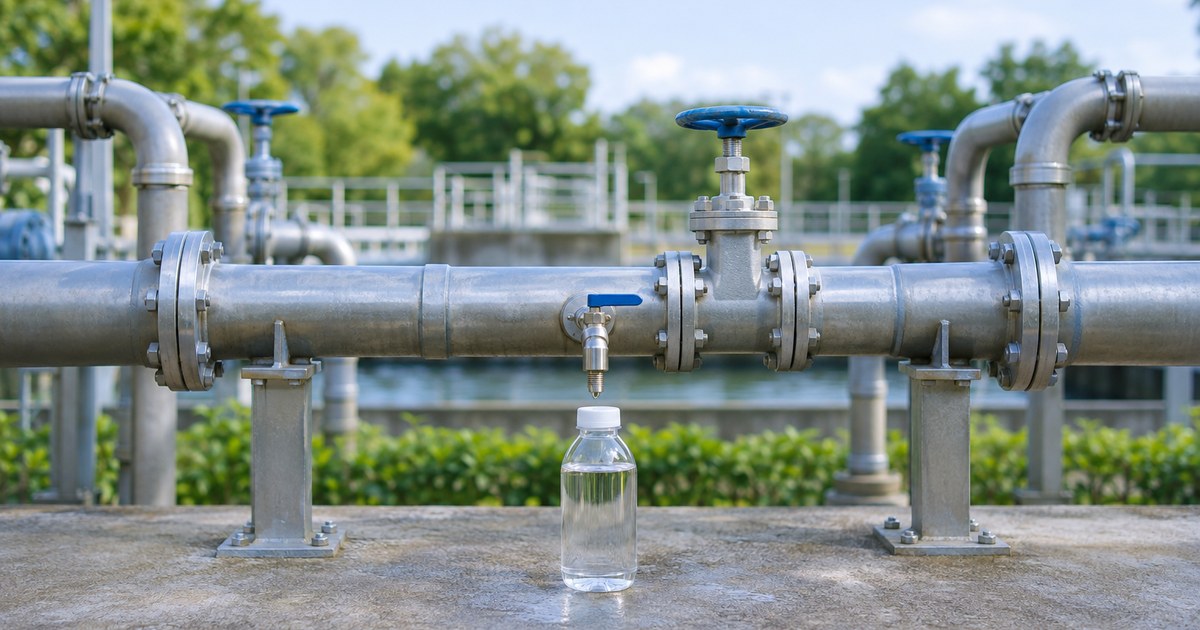
In December 2025, the New York State Department of Health stated, “1,4-Dioxane is a synthetic industrial chemical commonly associated with chlorinated solvents and was widely used as a chemical stabilizer in other formulations” (NYSDOH). The same department also stated, “It is also a byproduct or contaminant in consumer products such as laundry detergent” (NYSDOH).
In the same December 2025 publication, the New York State Department of Health reported, “1,4-Dioxane has been found in groundwater at sites throughout the United States, particularly in the sole source aquifer of Long Island and industrial and hazardous waste sites” (NYSDOH). In its October 25, 2026, publication, pHountain’s 1,4-dioxane guide quoted the background statement, “In water, 1,4-dioxane is stable and does not break down” (pHountain).
1. Check the state limit and its units
As of December 2025, the New York State Department of Health stated, “New York State public drinking water standards have set maximum contaminant levels of 1 microgram per liter or part per billion for 1,4-dioxane” (NYSDOH). In its April 2024 publication, the department defined maximum contaminant levels as “the highest level of a contaminant allowed in drinking water delivered by public water systems” (NYSDOH). The same publication stated, “MCLs are enforceable regulatory limits” (NYSDOH).
In that April 2024 publication, the department explained, “MCLs are different than health advisory levels (HALs) or maximum contaminant level goals (MCLGs) that do not consider feasibility or the ability for water systems to measure the contaminants at low levels” (NYSDOH). The department also stated, “MCLGs are not regulatory levels and are not enforceable” (NYSDOH). It further explained, “MCLs are set as close to MCLGs as feasible using the best available treatment technology and taking cost into consideration” (NYSDOH). When comparing documents, check the units and ask whether the number is an enforceable limit, an advisory level or a goal.
2. Check the monitoring notices and response requirements
As of April 2024, the New York State Department of Health stated, “Public water systems in New York must monitor for more than 100 different contaminants on a regular schedule, including PFOA, PFOS and 1,4-dioxane” (NYSDOH). The same publication stated, “As with all MCLs, water systems must notify their local health department of any exceedances” (NYSDOH). It also explained, “If there is a confirmed MCL exceedance, the public water system will work with their local health department to notify the public and develop a course of action and timetable to reduce levels below the MCL” (NYSDOH).
In the same April 2024 publication, the department stated, “Some water systems will need to make significant infrastructure upgrades to their water treatment processes and these projects could take several years to complete” (NYSDOH). The department qualified its guidance on continued use: “Unless there is an exposure that represents an immediate health risk, the water remains acceptable for use while the water system takes actions to reduce levels below the MCL” (NYSDOH). If you receive a notice, ask your public water supplier for the confirmed result, the applicable limit and the published action timetable.
3. Check the dated federal status
As of October 25, 2026, pHountain’s 1,4-dioxane guide stated, “At the federal level, there is no national drinking water regulation for 1,4-dioxane” (pHountain). The same guide described EPA’s fifth Contaminant Candidate List as “a list of contaminants that are currently not subject to any proposed or promulgated national primary drinking water regulations but are known or anticipated to occur in public water systems” (pHountain).
As of February 27, 2026, the U.S. Environmental Protection Agency described “five additional prioritized CCL 5 contaminants for which the Agency did not make a preliminary determination: 1,2,3-trichloropropane (1,2,3-TCP), 1,4 dioxane, manganese, quinoline, and strontium” (EPA). In the same publication, EPA reported, “1,2,3-TCP, 1,4-dioxane, and strontium were monitored under UCMR 3 (2013-2015)” (EPA).
In that February 27, 2026, publication, EPA stated, “the EPA is administratively reconsidering the 2024 supplemental risk evaluation and revised risk determination, as well as the underlying 2020 risk evaluation” (EPA). The agency described that reconsideration as “focusing on the cancer risk analysis in the hazard assessment and its consistency with the best available science and EPA’s 2005 Cancer Guidelines” (EPA). EPA also stated, “Results of the reconsideration of the cancer risk analysis may be taken into consideration for future Agency actions, as appropriate, to protect public health based on the best available science” (EPA). When checking a federal document, look for its publication date and the exact description of its regulatory status.
4. Check the publication dates on risk assessments
In its November 10, 2026, publication, EPA stated, “In November 2024, EPA released the final revised risk determination for 1,4-dioxane as a whole chemical substance under the Toxic Substances Control Act (TSCA)” (EPA). The same publication stated, “In November 2024, EPA released the final supplement to the risk evaluation for 1,4-dioxane” (EPA). EPA explained, “The supplement considers air and water exposure pathways not evaluated in the December 2020 risk evaluation and exposure to 1,4-dioxane generated as a byproduct” (EPA). It also stated, “EPA’s revised risk determination incorporates information from the 2020 risk evaluation and 2024 supplement” (EPA).
As of November 10, 2026, EPA’s published determination stated, “EPA determined that 1,4-dioxane presents unreasonable risk to human health” (EPA). In the same publication, EPA stated, “EPA identified health risks, risks of liver toxicity, adverse effects in the olfactory epithelium, and cancer from inhalation or dermal exposures to 1,4-dioxane, as well as from ingestion of drinking water” (EPA).
In its December 2025 publication, the New York State Department of Health reported findings from laboratory studies: “1,4-dioxane caused liver cancer in animals exposed at high levels throughout their lifetime” (NYSDOH). The same department also stated, “There is no evidence of 1,4-dioxane cancer effects in humans” (NYSDOH). When discussing these statements, keep the exposure descriptions and study qualifications with the quoted findings.
5. Check the scope of supplier projects
On September 13, 2024, the Suffolk County Water Authority reported, “Two new Advanced Oxidation Process (AOP) water treatment systems have been completed and put into service in the Town of Huntington by the Suffolk County Water Authority” (SCWA). Its announcement stated, “The new systems treat water from two separate public supply wells on Middleville Road in Northport” (SCWA).
In that September 13, 2024, announcement, the Suffolk County Water Authority reported, “One of the two wells at the site had been out of service since September 2020 due to elevated levels of 1,4-dioxane” (SCWA). The same announcement stated, “With the new treatment systems in place, the affected wells return to regular service, easing those constraints on the infrastructure and restoring 2,000 gallons per minute of capacity to the system” (SCWA). Ask your public water supplier which facilities serve your account and where to find the latest project update.
6. Check the data context before comparing results
In December 2025, the New York State Department of Health explained, “The New York State Environmental Public Health Tracker uses data from the Safe Drinking Water Information System (SDWIS) and local health departments to report concentrations of drinking water contaminants” (NYSDOH). The same publication stated, “All data are for public drinking water and do not include private well water data” (NYSDOH).
In that December 2025 publication, the department cautioned, “For PFOA, PFOS and 1,4-dioxane, the data presented may be source water monitoring data prior to any available treatment or being delivered to the customer” (NYSDOH). It also stated, “Data may also include water sources that are out of service” (NYSDOH). The department explained, “these data may not reflect the actual levels that people are drinking” (NYSDOH).
The department’s December 2025 guidance stated, “People should always contact their water supplier or refer to their Annual Water Quality Report to find out more about levels of contaminants in finished drinking water” (NYSDOH). Before comparing results, ask whether each sample represents source water or finished drinking water, and check its collection date. Ask your public water supplier to identify the relevant sampling location and explain any out-of-service designation.
7. Check your reports and laboratory testing options
In April 2024, the New York State Department of Health advised, “Contact your local water supplier, or find their information on your water bill” (NYSDOH). In its October 25, 2026, publication, pHountain’s 1,4-dioxane guide quoted the report-delivery requirement, “Reports must be sent by your water supplier each year by July 1” (pHountain). The same guide quoted the report-search option, “Find and map a large public water system closest to you and view its Annual Drinking Water Quality Report” (pHountain).
In guidance dated October 25, 2026, pHountain quoted EPA’s statement that “Private well owners are responsible for delivering safe drinking water to their households” and pointed readers to its private well water guide (pHountain). The same publication quoted the New York State Department of Health’s advice, “Private well owners should test their tap water at least once a year for bacteria and every three to five years for other contaminants” (pHountain). For a private well, ask which analyses to request and how to collect the samples before arranging testing.
Measuring PFAS and 1,4-dioxane at the levels regulators use (parts per trillion and parts per billion) requires analysis by a certified laboratory; a free in-home water test is a starting point for understanding your water and your options. pHountain offers a free, no-obligation in-home water test.
Information on our website about water quality, health benefits, or filtration performance is provided for general educational purposes only and does not constitute medical, legal, or engineering advice.
Works Cited
- “1,4-Dioxane in Drinking Water: Limits.” pHountain Water Filtration, 25 Oct. 2026, phountainwaterfilters.com/1-4-dioxane. Accessed 12 Nov. 2026.
- “About Drinking Water Contaminants.” New York State Department of Health, Dec. 2025, www.health.ny.gov/statistics/environmental/public_health_tracking/about_pages/drinking_water/about_dw. Accessed 12 Nov. 2026.
- “Drinking Water Safety & Quality Guide.” pHountain Water Filtration, 25 Oct. 2026, phountainwaterfilters.com/water-safety-quality. Accessed 12 Nov. 2026.
- EPA, U.S. “Responses to Public Comments on Preliminary Regulatory Determinations for Contaminants on the Fifth Drinking Water Contaminant Candidate List.” U.S. Environmental Protection Agency, 27 Feb. 2026, www.epa.gov/system/files/documents/2026-03/response-to-comments-document-final-3-2-26-1.pdf. Accessed 12 Nov. 2026.
- “Final Risk Evaluation for 1,4-Dioxane.” U.S. Environmental Protection Agency, 10 Nov. 2026, www.epa.gov/assessing-and-managing-chemicals-under-tsca/final-risk-evaluation-14-dioxane. Accessed 12 Nov. 2026.
- “Public Water Systems and Drinking Water Standards for PFAS and Other Emerging Contaminants.” New York State Department of Health, Apr. 2024, www.health.ny.gov/environmental/water/drinking/emerging_pfas_publicwater.htm. Accessed 12 Nov. 2026.
- “Two New Advanced Treatment Systems Added to Suffolk County Water Authority System.” Suffolk County Water Authority, 13 Sept. 2024, www.scwa.com/two-new-advanced-treatment-systems-added-to-suffolk-county-water-authority-system. Accessed 12 Nov. 2026.