In its October 20, 2026, announcement about the Patchogue-Yaphank Road Well Field grant, the Suffolk County Water Authority (SCWA) listed “Patchogue-Yaphank Road Well Field (Well No. 1): $1,225,000” (SCWA). SCWA’s separately dated July 18, 2025, agenda identified the Yaphank location as “Patchogue-Yaphank Road Pumpstation and Wellfield (Well #1), Yaphank” (SCWA).
Key points from the announcement and agenda
- SCWA’s October 20, 2026, announcement reported “$4.55 million in grant funding” (SCWA).
- SCWA’s July 18, 2025, draft agenda listed a “REGULAR MEETING ON JULY 24, 2025” (SCWA).
- In its October 20, 2026, announcement, SCWA described a “system-wide treatment strategy” (SCWA).
Three projects share the award
SCWA’s October 20, 2026, announcement described funding for “three Granular Activated Carbon (GAC) treatment projects” (SCWA). Alongside the Yaphank entry, the same announcement listed “Hallock Avenue Well Field (Wells No. 2 and 3): $2,100,000” (SCWA). It also listed “Liberty Street Well Field (Well No. 3): $1,225,000” (SCWA).
The earlier draft listed a treatment installation
SCWA’s July 18, 2025, agenda included the heading “Granular Activated Carbon Treatment System Installation Projects” (SCWA). The same document carried the draft label “DRAFT-PAGE 1” (SCWA).
Other proposed installations in the earlier agenda
Within the listed installations in its July 18, 2025, project list, SCWA identified the first listed location and wells as “Crystal Brook Hollow Road Pumpstation and Wellfield (Wells #2, 4), Mount Sinai” (SCWA). For the next listed installation under that same heading, SCWA’s July 18, 2025, project list set out the location and well together in the entry “Edgewood Avenue Pumpstation and Wellfield (Well #2), Head of the Harbor” (SCWA).
In another entry within the listed carbon-treatment installation projects, SCWA’s July 18, 2025, project list identified a location and well through the wording “Fairmount Avenue Pumpstation and Wellfield (Well #2), Medford” (SCWA). For Hallock Avenue’s listed installation, SCWA’s July 18, 2025, project list gave both the well numbers and the well-field location together in the entry “Hallock Avenue Pumpstation and Wellfield (Wells #2, 3), Village of the Branch” (SCWA).
For Liberty Street’s listed installation, SCWA’s earlier July 18, 2025, project list supplied the well identifier and location together, using this wording for that entry: “Liberty Street Pumpstation and Wellfield (Well #3), Hauppauge” (SCWA). The same July 18, 2025, project list included another listed installation under the carbon-treatment project heading, with SCWA naming the location and well in the entry “Margin Drive Pumpstation and Wellfield (Well #1A), Shirley” (SCWA).
Meeting details on the draft agenda
For the meeting time associated with the regular meeting listed in that document, SCWA’s July 18, 2025, draft agenda gave the wording “3:00 P .M.” (SCWA). For the meeting location associated with that scheduled regular meeting, SCWA’s July 18, 2025, draft agenda used the wording “AT OAKDALE, NEW YORK” (SCWA).
When requesting meeting records, ask for the final agenda, any relevant resolution and the corresponding minutes. In your notes, give those records separate labels from any construction-status documents.
How the carbon process was described
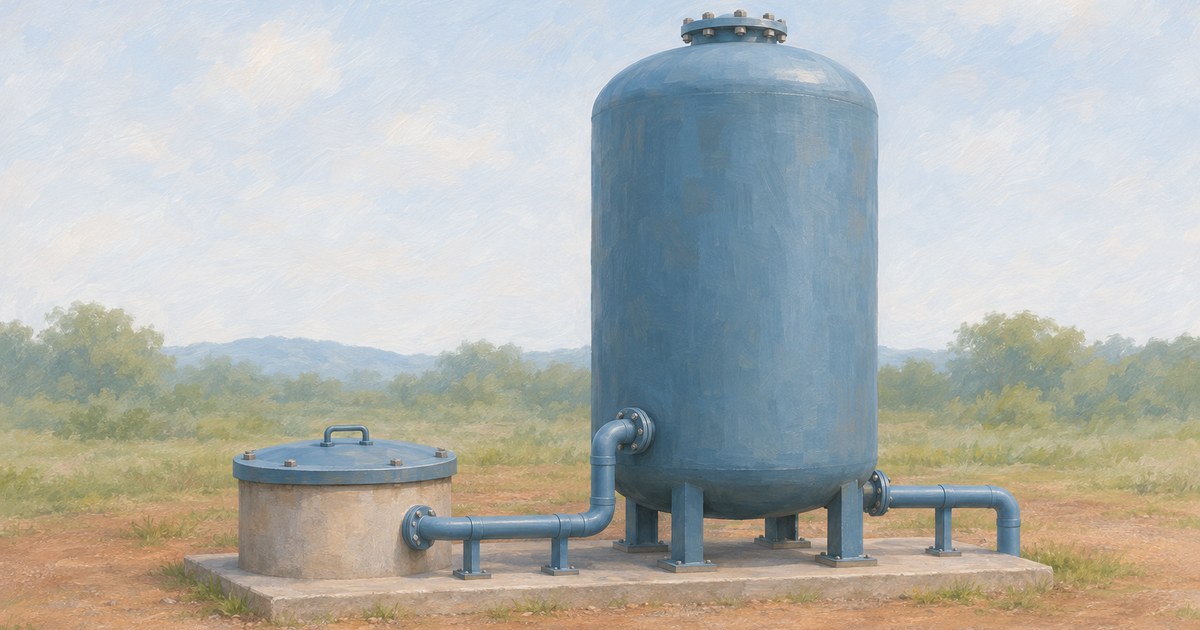
SCWA’s October 20, 2026, announcement stated that “Granular Activated Carbon removes PFAS” (SCWA). The same announcement described the process as occurring “as water passes through carbon media before reaching customers” (SCWA).
What the grant covers
SCWA’s October 20, 2026, announcement described the WIIA program as providing “grants covering a significant portion of eligible project costs” (SCWA). For its broader funding history, the same announcement reported, “Since 2019, SCWA has secured more than $116 million in state and federal grant funding” (SCWA).
The Authority’s operating structure
In addition to describing project funding, SCWA’s October 20, 2026, announcement described the Authority’s operating structure with the statement that it “operates without taxing power on a not-for-profit basis” (SCWA). When organizing funding records, label each document by its issuer and publication date, and leave a separate place for any later budget revisions you request.
Federal limits and proposed deadlines need separate dates
pHountain’s October 25, 2026, PFAS education guide defined the term: “PFAS stands for per- and polyfluoroalkyl substances” (pHountain). The same guide quoted the U.S. Geological Survey’s statement that “Groundwater is the sole source of freshwater supply in Nassau and Suffolk Counties on Long Island” (pHountain).
On the number of substances within the category, pHountain’s October 25, 2026, PFAS guide described the group using the phrase “thousands of PFAS chemicals” (pHountain). When requesting laboratory analysis, ask for a written list of the individual substances included in the requested panel.
Federal limits and the original deadline
For regulatory status as of October 25, 2026, pHountain’s guide stated that “EPA established legally enforceable levels, called Maximum Contaminant Levels (MCLs), for six PFAS in drinking water” (pHountain). The guide described the original limits and compliance schedule: “EPA’s April 2024 rule set limits of 4.0 parts per trillion (ppt) each for PFOA and PFOS, with compliance due by 2029” (pHountain).
A proposed extension, not an adopted deadline
The same guide described a proposed extension: “in May 2026 EPA proposed letting water systems request two more years, to 2031” (pHountain). For the proposals’ status as of October 8, 2026, the guide stated, “Both proposals were still proposals when EPA last updated its pages on October 8, 2026” (pHountain).
A separate state legislative proposal
For the proposed substance of bill S3207B as described on October 25, 2026, pHountain’s PFAS guide stated that the bill “would lower the state limits for PFOA and PFOS to no higher than 4 parts per trillion” (pHountain). For the bill’s legislative status as of October 25, 2026, the same PFAS guide used the phrase “passed by both houses” when describing the Senate’s record for that measure (pHountain). For the separate question of enactment as of October 25, 2026, the same PFAS guide described the bill’s status in the Senate’s record as “not signed into law” (pHountain).
Before using a legislative proposal in a comparison of requirements, request its latest status record and any enacted text. Put the date of that status check beside your notes about the proposal.
New York requirements
As of its October 25, 2026, publication, pHountain’s guide quoted the state requirement that “Until 2029, public water systems must still meet New York State maximum contaminant levels of 10 ppt for PFOA and PFOS” (pHountain). The same guide quoted the requirement that “Public drinking water with PFOA or PFOS above the MCLs must be treated to reduce the levels below the MCL” (pHountain).
Public-system monitoring and additional PFAS testing
pHountain’s October 25, 2026, guide quoted the state monitoring requirement: “Public water systems in New York must monitor for more than 100 different contaminants on a regular schedule, including PFOA, PFOS and 1,4-dioxane” (pHountain). The same guide quoted the accompanying requirement that “If standards are not being met, the public water suppliers are required to notify customers and take actions to come into compliance” (pHountain).
Initial monitoring and public information
For the federal rule’s schedule as described on October 25, 2026, pHountain’s PFAS guide stated that “Public water systems must monitor for these PFAS and have three years to complete initial monitoring (by 2027), followed by ongoing compliance monitoring” (pHountain). The same guide stated that “Water systems must also provide the public with information on the levels of these PFAS in their drinking water beginning in 2027” (pHountain).
For additional state testing, the PFAS guide quoted the requirement that “requires public water systems to test for several other commonly found PFAS compounds when PFOA or PFOS are detected” (pHountain).
Annual-report delivery and your records
For the annual-report delivery requirement as described on October 25, 2026, pHountain’s PFAS guide quoted EPA’s instruction that “Reports must be sent by your water supplier each year by July 1” (pHountain). When requesting a report, specify the reporting year you want and ask for any accompanying notices or explanatory material.
Keep the complete report rather than only a screenshot of a table. For any entry you want explained, copy its heading, units and footnotes into your question to the supplier.
What to check for your household
Keep your household water information, the grant allocation and the installation status separate when you gather records. Use the following questions to organize your requests:
- Confirm whether your home receives public water or uses a private well; check your account records or ask for help identifying the connection.
- If you receive public water, request your public water supplier’s latest annual water quality report and confirm that you have the report for your supplier.
- Ask your supplier for the current status of the specific installation, including whether it is proposed, approved, under construction or operating; request a dated status document rather than treating the grant announcement as a completion record.
- Ask which project costs are eligible for the grant, and request any separate project-cost estimate before comparing the allocation with a construction budget.
- For household testing, ask what the requested analysis measures, which laboratory would perform it and how to interpret the resulting report; keep that request separate from questions about the public-supply project.
For questions to take to your supplier, consult the water quality and safety information. For household-well questions, use the private-well education page alongside the separate Yaphank private-well discussion. Browse the Suffolk County service page separately from the project records.
Questions about the grant and your water information
What treatment goal did SCWA describe?
SCWA’s October 20, 2026, announcement described its “goal of treating all water delivered to customers to non-detectable levels” (SCWA). For a completion update, ask your public water supplier whether the particular installation is operating, rather than using the stated goal as confirmation of a completed result.
Where can I find my supplier’s annual water quality report?
pHountain’s October 25, 2026, PFAS guide described the state report resource with the instruction to “Find and map a large public water system closest to you and view its Annual Drinking Water Quality Report” (pHountain). Confirm the supplier’s identity before choosing which report to use for your household questions.
Who is responsible for a household’s private well?
The same PFAS guide quoted the responsibility directly: “Private well owners are responsible for delivering safe drinking water to their households” (pHountain). Separately, pHountain’s October 25, 2026, private-well guide stated that Suffolk County’s Department of Health Services “operates an extensive water testing program” (pHountain).
The private-well guide also noted that “there is a charge for the service” (pHountain). For a private-well testing schedule, the same guide quoted the state recommendation that “Private well owners should test their tap water at least once a year for bacteria and every three to five years for other contaminants” (pHountain).
Additional details for private-well questions
For the intended users of the county testing program described in pHountain’s October 25, 2026, private-well guide, the guide specified that the program was “for residents with private wells” (pHountain). For an additional agency’s private-well testing recommendation, pHountain’s October 25, 2026, private-well guide quoted EPA’s instruction to “Test your private well annually for total coliform bacteria, nitrates, total dissolved solids, and pH levels” (pHountain).
For the state’s role in private-well oversight as described on October 25, 2026, pHountain’s PFAS guide quoted the state health department’s explanation that “New York State does not regulate PFAS in private wells” (pHountain). When seeking advice about a private-well result, ask which comparison value is being used and request the written recommendation associated with your result.
Before arranging sample collection, request the laboratory’s instructions for containers, collection, storage and delivery. Keep the instructions, your sampling notes and the resulting laboratory report together.
Keep laboratory analysis separate from the free in-home water test
pHountain’s October 25, 2026, PFAS guide noted that “PFAS tests are performed by a small number of certified laboratories that have specialized equipment and quality control procedures” (pHountain). Measuring PFAS and 1,4-dioxane at the levels regulators use (parts per trillion and parts per billion) requires analysis by a certified laboratory; a free in-home water test is a starting point for understanding your water and your options.
pHountain offers a free, no-obligation in-home water test.
Separate questions about household services
pHountain’s specialists are trained for both well water and municipal supply. The systems are designed to be low-maintenance.
A whole-home system is configured around what testing finds. For any specific contaminant, ask for independent certification data (for example NSF/ANSI listings) for the exact system you are considering. Cost depends on the home’s size, whether it is on municipal or well water, and the contaminants involved, so there is no one-size-fits-all price.
Information on our website about water quality, health benefits, or filtration performance is provided for general educational purposes only and does not constitute medical, legal, or engineering advice.
Works Cited
- Mattera, Jessica. Suffolk County Water Authority, 18 July 2025, www.scwa.com/assets/1/28/July_24_2025_Board_Meeting_DRAFT_Agenda_7.18.25.pdf?28307=. Accessed 12 Nov. 2026.
- “PFAS in Drinking Water: Limits & Facts.” pHountain Water Filtration, 25 Oct. 2026, phountainwaterfilters.com/pfas. Accessed 12 Nov. 2026.
- “Private Well Water: Testing & Treatment.” pHountain Water Filtration, 25 Oct. 2026, phountainwaterfilters.com/well-water. Accessed 12 Nov. 2026.
- “Suffolk County Water Authority Awarded $4.55 Million for PFAS Treatment Projects.” Suffolk County Water Authority, 20 Oct. 2026, www.scwa.com/suffolk-county-water-authority-awarded-455-million-for-pfas-treatment-projects/?F_All=y. Accessed 12 Nov. 2026.