In its October 12, 2026, data release about nitrate in groundwater on Long Island, the U.S. Geological Survey (USGS) said the data “could be used to model time-varying nitrate concentration in groundwater” (USGS). The agency said the release documented “nitrate-nitrogen concentration, groundwater ages, age-weighted nitrogen loads” (USGS).
Key points for private-well owners
- Owner responsibility: In its July 6, 2026, private-well guidance, the U.S. Environmental Protection Agency (EPA) said well owners “are responsible for protecting their drinking water” (EPA).
- Individual-well sampling: Suffolk County Government explains the need for “the sampling of each individual well to determine water quality” (Suffolk County).
- Annual testing: The October 25, 2026, pHountain Water Filtration private-well guide says EPA recommends, “Test your private well annually for total coliform bacteria, nitrates, total dissolved solids, and pH levels” (pHountain Water Filtration).
What the historical groundwater data covered
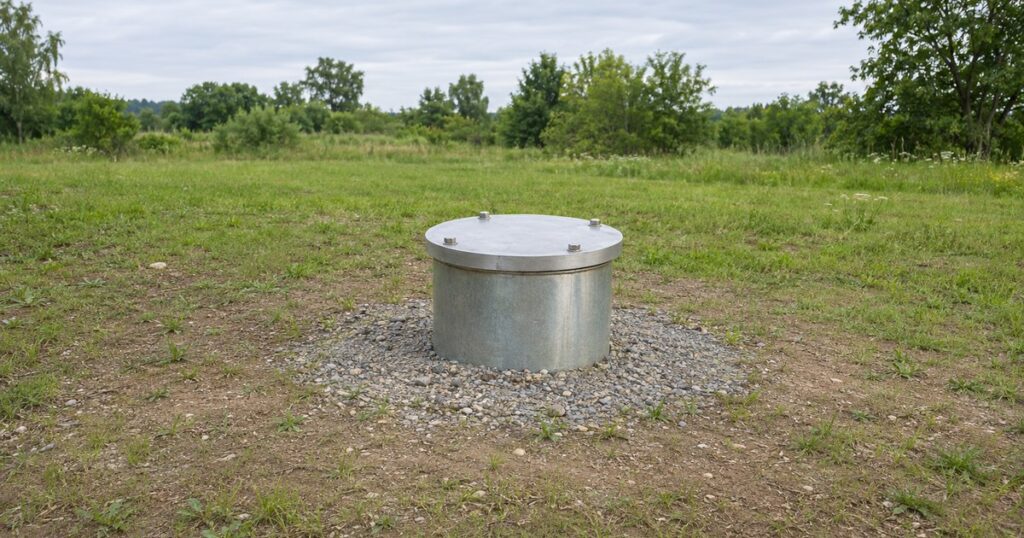
USGS reported on October 12, 2026, that its concentration data consisted of “median annual nitrate concentrations at approximately 700 supply wells from 1988 to 2019” (USGS). The agency identified the source as “data provided by the Suffolk County Water Authority” (USGS). For groundwater ages, age-weighted nitrogen loads, and aquifer and other characteristics, USGS said information was “provided for the supply wells” (USGS). The release also described “selected point locations at five depth horizons in the upper glacial and Magothy aquifers” (USGS).
How nitrate and nitrite can reach a private well
In its July 6, 2026, explanation of private-well contaminants, EPA stated, “Nitrate and nitrite are present in chemical fertilizers, human sewage, and animal waste and fertilizers” (EPA). The agency explained that they can enter a private well “through groundwater movement and surface water seepage and water run-off” (EPA).
The well-analysis request and sampling process
Suffolk County Government says “the Suffolk County Department of Health Services operates an extensive water testing program” (Suffolk County). The county also states that “there is a charge for the service” (Suffolk County).
Request details
The county identifies its form as “Request for Private Well Water Analysis” and specifies “including your tax map location” (Suffolk County). Its description says it will test “only your primary drinking water well” (Suffolk County).
Water to be sampled and collection procedures
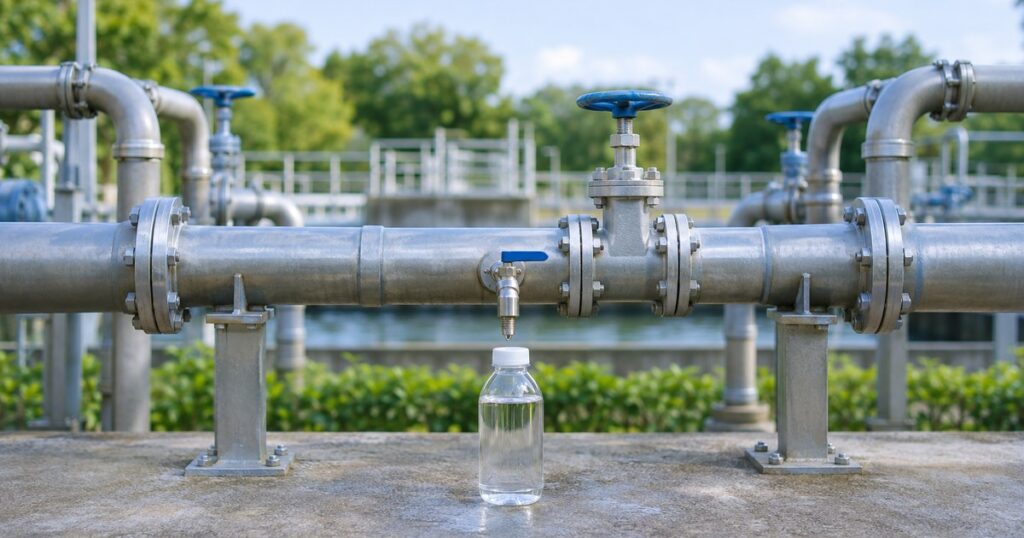
Suffolk County Government states that “requests to test irrigation wells cannot be honored” (Suffolk County). For the water to be analyzed, the county says, “Usually the raw or unfiltered water will be tested unless the department or applicant has requested otherwise” (Suffolk County). The county also specifies, “The sample must be collected by department personnel according to proper sampling protocol in specially prepared containers and in accordance with procedures established for quality control” (Suffolk County).
When to sample and how to obtain bottles
On March 23, 2023, the New York State Department of Health stated, “The best time to test your water is in the late spring or early summer” (NYSDOH). The same state guidance says the “lab will provide instructions and bottles” (NYSDOH). The department also lists the circumstance that you “have made repairs to your well, pipes or home structure, or have changed your drinking water system” (NYSDOH). It also lists a well that “was recently flooded or damaged by extreme weather” (NYSDOH).
The same March 23, 2023, New York State Department of Health guidance also lists a circumstance in which you “notice changes in land use, such as construction or farming, that could cause runoff to enter your well” (NYSDOH). It also lists the circumstance that “The well runs dry or the amount of water flowing from your fixtures changes” (NYSDOH).
How groundwater ages and nitrogen loads were represented
In its October 12, 2026, data release, USGS described groundwater ages as “residence times determined by particle tracking and a MODFLOW-NWT groundwater flow model” (USGS). For age-weighted nitrogen loads, the same release cited “annual nitrogen loads applied to the land surface, 1900 to 2019” (USGS). The agency said the age-weighted loads were also based on “the distribution of groundwater ages of water captured by the supply wells” (USGS).
Background: What nitrate is and how it forms
On September 2, 2026, USGS stated, “Nitrate is the most common form of fixed nitrogen in water” (USGS). The agency also explained that nitrate can be “formed in water bodies through the oxidation of other forms of nitrogen” (USGS). Its description of those other nitrogen forms included “nitrite, ammonia, and organic nitrogen compounds such as amino acids” (USGS).
In its September 2, 2026, explanation of nitrate, USGS also stated, “It can enter water directly as the result of runoff of fertilizers containing nitrate” (USGS). In that same explanation, the agency stated, “Ammonia and organic nitrogen can enter water through sewage effluent and runoff from land where manure has been applied or stored” (USGS).
Background: The nitrate limit and its public-water scope
As of October 25, 2026, pHountain Water Filtration’s common-contaminants guide stated, “EPA’s limit for nitrate in public drinking water is 10 mg/L, measured as nitrogen” (pHountain Water Filtration). The same guide defined a maximum contaminant level: “A maximum contaminant level (MCL) is the highest level of a contaminant that is allowed in drinking water” (pHountain Water Filtration).
The common-contaminants guide also stated that “MCLs are enforceable standards for public water systems” (pHountain Water Filtration). As of October 25, 2026, pHountain Water Filtration’s private-well guide quoted the EPA’s explanation of federal oversight: “The quality and safety of drinking water from private domestic wells are not regulated by the Federal Government under the Safe Drinking Water Act” (pHountain Water Filtration).
What to ask before arranging your well-water sample
- Ask the laboratory to identify nitrate and nitrite by name on your requested analysis. Ask for a written list of the analyses included before you approve the request, and check that list against the questions you want answered.
- Confirm the collection point with the laboratory or sampling service. Specify whether you want a sample before or after any equipment, and ask the laboratory to record that choice on the report rather than leaving the sampling location unspecified.
- Ask the laboratory for its collection instructions and required bottles before gathering a sample. Ask how to label each bottle, how to store it, and when it must reach the laboratory; request written instructions to keep with your sampling paperwork.
- Ask how the laboratory will report results and units, including whether a nitrate result will be reported as nitrogen. Ask whether the report will list a reference value and identify the basis for any comparison, and request an explanation of unfamiliar abbreviations.
- Before comparing an older result with a new one, ask the laboratory whether the sample location, requested analysis and units match. Ask which differences need explanation, and direct questions about an unclear result to the laboratory that issued the report.
- Use the Private Well Water guide to organize your questions, and consult the Common Contaminants guide when preparing your requested analysis. Keep the Water Quality & Safety page with your reference materials for follow-up questions.
Private-well testing questions
Can I use a commercial laboratory for my well-water test?
For county testing, Suffolk County Government says the department “reserves the right to limit the frequency of which your well can be tested” (Suffolk County). On commercial testing, it states, “You can have your water tested by a commercial laboratory at any time” (Suffolk County). Ask the laboratory whether it accepts homeowner-delivered samples or requires an arranged collection appointment, and confirm who should handle the sample paperwork.
Can Suffolk County collect a sample from an outside tap?
Suffolk County Government states, “A sample can be collected from an outside tap or hose bib if one is available” (Suffolk County). When requesting collection, describe the tap you would like considered and ask the department to confirm access arrangements before the appointment, including whether anyone needs to be present.
Which testing option does Suffolk County suggest for a home sale?
Suffolk County Government states, “For homes involved in a resale, it is suggested that a commercial laboratory be used” (Suffolk County). The county also says it “cannot ensure that you will receive test results in time to meet contract or closing dates” (Suffolk County). Ask your laboratory to confirm its reporting date against your transaction schedule before you choose a testing option, and request that confirmation in writing.
What records should I keep for my private well?
In its March 23, 2023, guidance, the New York State Department of Health stated, “Keep records of maintenance activities and water testing” (NYSDOH). Keep the laboratory report, collection date, sampling location and follow-up correspondence together, and add notes describing maintenance work completed between tests so you can refer to the same file when asking follow-up questions.
In-home water-quality indicator checks
During the free in-home water test, the specialist checks water quality indicators such as chlorine, pH, total dissolved solids and hardness on the spot. pHountain Water Filtration offers a free, no-obligation in-home water test.
Information on our website about water quality, health benefits, or filtration performance is provided for general educational purposes only and does not constitute medical, legal, or engineering advice.
Works Cited
- “Common Drinking Water Contaminants | pHountain Water Filters.” pHountain Water Filtration, 25 Oct. 2026, phountainwaterfilters.com/common-contaminants. Accessed 23 Nov. 2026.
- “Data for Modeling Time-Varying Nitrate in Groundwater on Long Island, New York, 1900-2019.” U.S. Geological Survey, 12 Oct. 2026, www.usgs.gov/data/data-modeling-time-varying-nitrate-groundwater-long-island-new-york-1900-2019. Accessed 23 Nov. 2026.
- New York State Department of Health, 23 Mar. 2023, www.health.ny.gov/publications/6628.pdf. Accessed 23 Nov. 2026.
- Mueller, Authors David K, and Dennis R Helsel. “Nitrogen and Water.” U.S. Geological Survey, 2 Sept. 2026, www.usgs.gov/water-science-school/science/nitrogen-and-water. Accessed 23 Nov. 2026.
- “Potential Well Water Contaminants and Their Impacts.” U.S. Environmental Protection Agency, 6 July 2026, www.epa.gov/privatewells/potential-well-water-contaminants-and-their-impacts. Accessed 23 Nov. 2026.
- “Private Well Water Testing Program.” Suffolk County Government, suffolkcountyny.gov/Departments/Health-Services/Environmental-Quality/Water-Resources/Private-Well-Water-Testing-Program/wb48617274/95C60D70. Accessed 23 Nov. 2026.
- “Private Well Water: Testing & Treatment | pHountain Water Filters.” pHountain Water Filtration, 25 Oct. 2026, phountainwaterfilters.com/well-water. Accessed 23 Nov. 2026.