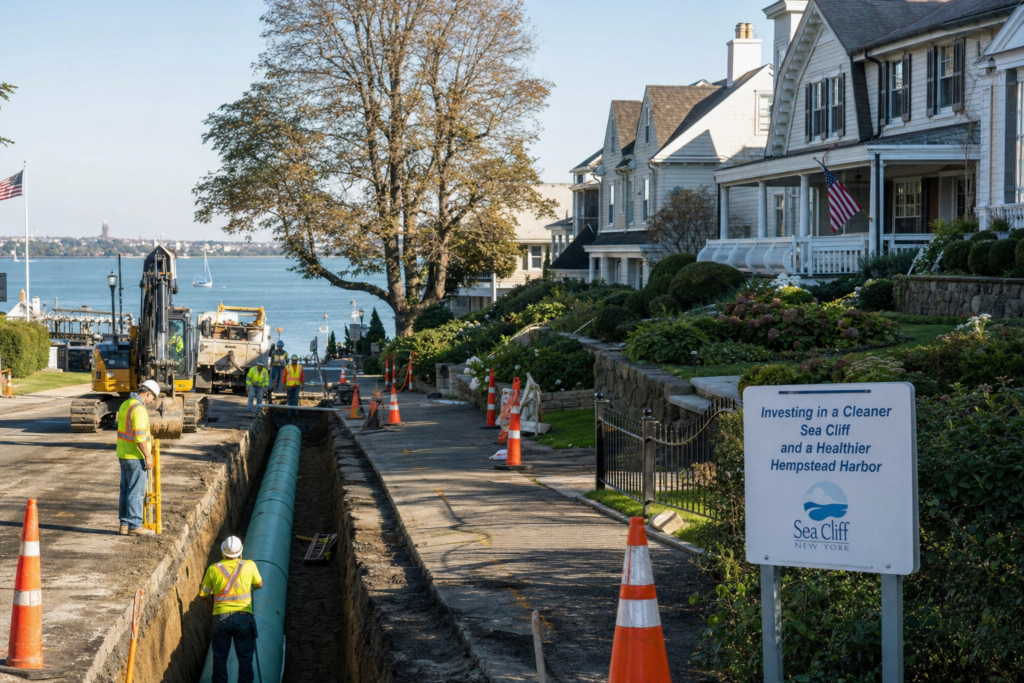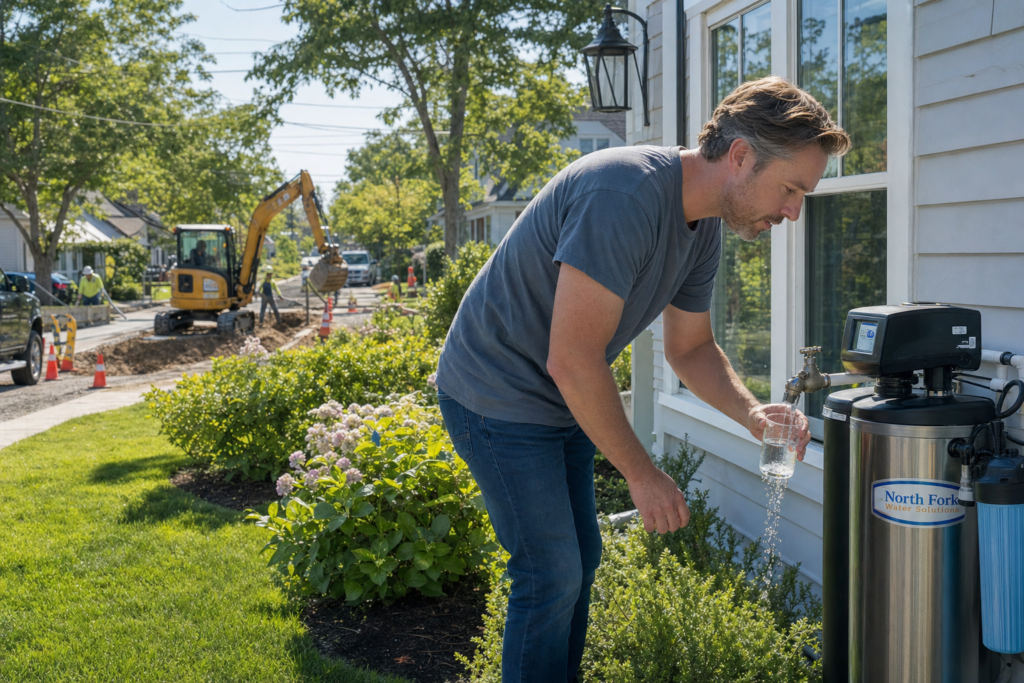
Federal funding is helping extend public water to homes with PFAS‑impacted private wells along Oakside Drive and Landing Avenue in Smithtown, but that doesn’t answer every question for nearby homeowners. Town officials confirmed that $1.1 million will be used to connect 26 homes with contaminated wells to municipal water service, after PFAS was identified in private wells in this area in 2019.
If you live in or around this part of Smithtown, you may be wondering what this means for your well water safety, your long‑term options, and how to protect your home’s water.
This checklist walks through seven practical checks Smithtown homeowners can make right now, whether you’re on a private well or already connected to public water.
1. Verify If Your Smithtown Property Is Within the Contamination Zone
Before you decide on next steps, you need to know how close your property is to the area where PFAS contamination was found.
In 2019, the Suffolk County Department of Health Services surveyed private drinking water wells along Landing Avenue, Oakside Drive and Valley Road in Smithtown. As the process continued, officials determined that a water main extension would be needed to connect 26 homes along Oakside Drive and Landing Avenue to public drinking water.
Important location considerations
- Street location:
- High‑priority: Homes directly on Oakside Drive or Landing Avenue with private wells
- Nearby concern: Homes on adjacent or connecting streets, especially if they share similar groundwater conditions
- Water source:
- Private well: You are responsible for monitoring and managing your own water quality
- Public water: You receive water from the public system, which is subject to regulatory testing
- Past notifications:
- Letters from Suffolk County or the Town of Smithtown: These may indicate prior sampling or eligibility for hookups
- Any past well testing reports: Keep them together for comparison over time
If you’re on a private well anywhere in Smithtown, it’s worth learning more about local well water issues and how they’re managed. The resource on what your well water isn’t telling you can help you understand common risks and testing options.
2. Grasp the Implications of PFAS Contamination in Smithtown’s Water Supply
The funding announcement makes it clear that the affected private wells were identified as containing PFAS, a group of long‑lasting chemicals that can contaminate drinking water.
PFAS fundamentals explained
- PFAS chemicals: A large family of man‑made compounds used in products like nonstick cookware, firefighting foams, and stain‑resistant fabrics
- Persistence: Often called “forever chemicals” because they do not easily break down in the environment
- Groundwater impact: Once PFAS enter soil or groundwater, they can move through aquifers and reach private wells
Because PFAS issues are not limited to one neighborhood, many Long Island homeowners are paying closer attention to this topic. For a broader view of regional concerns, see the overview on Long Island’s PFAS problem.
3. Evaluate Your Choices: Municipal Water Connection Compared to Well Water Treatment
For the 26 homes identified by Suffolk County, federal funding will help cover the cost of extending municipal water service so residents can access safe public drinking water without personally paying tens of thousands of dollars.
That still leaves questions for:
- Nearby homes that were not included in the extension
- Smithtown residents elsewhere in town who rely on private wells
- Homeowners on public water who want an extra layer of in‑home protection
Common scenarios considered by Smithtown residents
| Situation | Primary Option | Common Backup Strategy |
|---|---|---|
| Private well in or near Oakside Drive / Landing Avenue | Connect to public water if available through the extension project | Install whole‑home filtration for added in‑house protection |
| Private well elsewhere in Smithtown | Maintain and test your well regularly | Add customised whole‑house filtration tailored to your water |
| Already on public water in Smithtown | Rely on utility testing and treatment | Install point‑of‑entry filtration for your entire home |
pHountain Water Filters focuses on whole‑house filtration systems that treat water at the main line so every tap, shower, and appliance receives filtered water. You can learn what this looks like locally on the Smithtown water filtration service page.
4. Arrange Up-to-Date Water Testing to Assess Your Home’s Safety
Whether or not your address was in the original 2019 survey, up‑to‑date testing is one of the most important steps you can take.
Reasons to keep testing current in Smithtown
- Conditions change: Groundwater can shift over time, especially after infrastructure projects or changes in nearby land use
- PFAS are mobile: Once present in groundwater, these compounds can travel, and new wells can be affected later
- Peace of mind: Even if you plan to connect to public water, knowing the status of your existing well helps you make informed decisions
Recommended testing types
- Baseline well water panel
- General chemistry: pH, hardness, and other indicators
- Sediment and impurities: Cloudiness, particulates
- Common contaminants: Metals, some industrial chemicals
- Targeted PFAS testing
- PFAS‑specific lab analysis: Looks for key PFAS compounds where available
- Trend tracking: Repeat testing over time can help identify changes
- Post‑filtration testing (if you install a system)
- System performance check: Confirms that the system is functioning as intended
- Maintenance planning: Helps determine when service or upgrades may be needed
pHountain Water Filters offers water quality testing and analysis as part of its consultation process. If you want a professional look at your home’s water, you can request a free in‑home water test to get started.
5. Balance Temporary Fixes Against Permanent Water Safety Solutions
Many Smithtown families near Oakside Drive and Landing Avenue have already relied on bottled water and temporary measures while waiting for infrastructure projects to move forward. Town officials noted that without federal support, converting from private wells to public water could have cost homeowners tens of thousands of dollars per household.
Beyond hookups, you still need a plan for daily water use inside your home.
Immediate measures commonly used by households
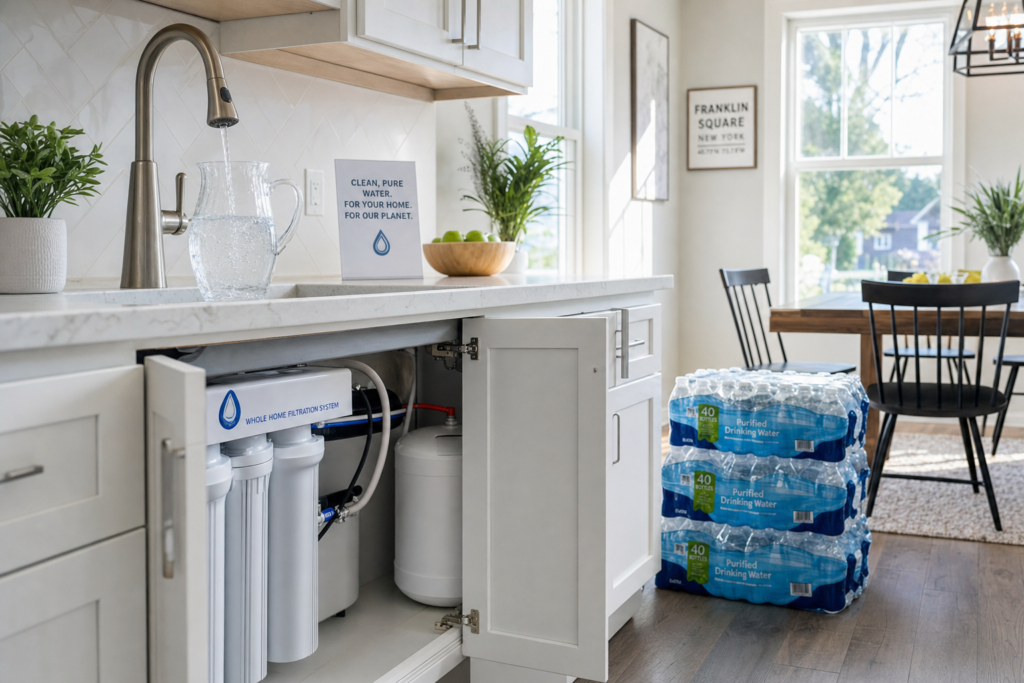
- Bottled water deliveries: Useful for drinking and some cooking, but do nothing for showers, laundry, or dishwashers
- Pitcher filters and faucet filters: Can help with taste and some contaminants at a single tap, but do not treat the rest of the home
- Boiling water: Helpful for some biological contaminants, but does not address PFAS or many chemicals
These steps can be part of an immediate response, but they rarely solve the whole‑home problem.
Sustainable approaches covering the entire home
- Whole‑house filtration systems at the main water entry
- Customised filtration based on your specific well or municipal water profile
- Professional installation that integrates with your plumbing and is designed for high capacity
If you’re weighing bottled water against a permanent system, this comparison of water filters vs bottled water breaks down cost, convenience, and household impact over time.
6. A Typical Smithtown Homeowner’s Filtration Response: A Composite Profile
To understand how a whole‑home filtration solution fits into the Oakside Drive situation, it helps to look at a composite example based on typical installations in Smithtown.
How this scenario usually unfolds in Smithtown
A homeowner on Oakside Drive discovered that their private well had contamination concerns, making the water unsafe for everyday use. While waiting for a potential public water extension, they needed an immediate way to secure clean water throughout the home.
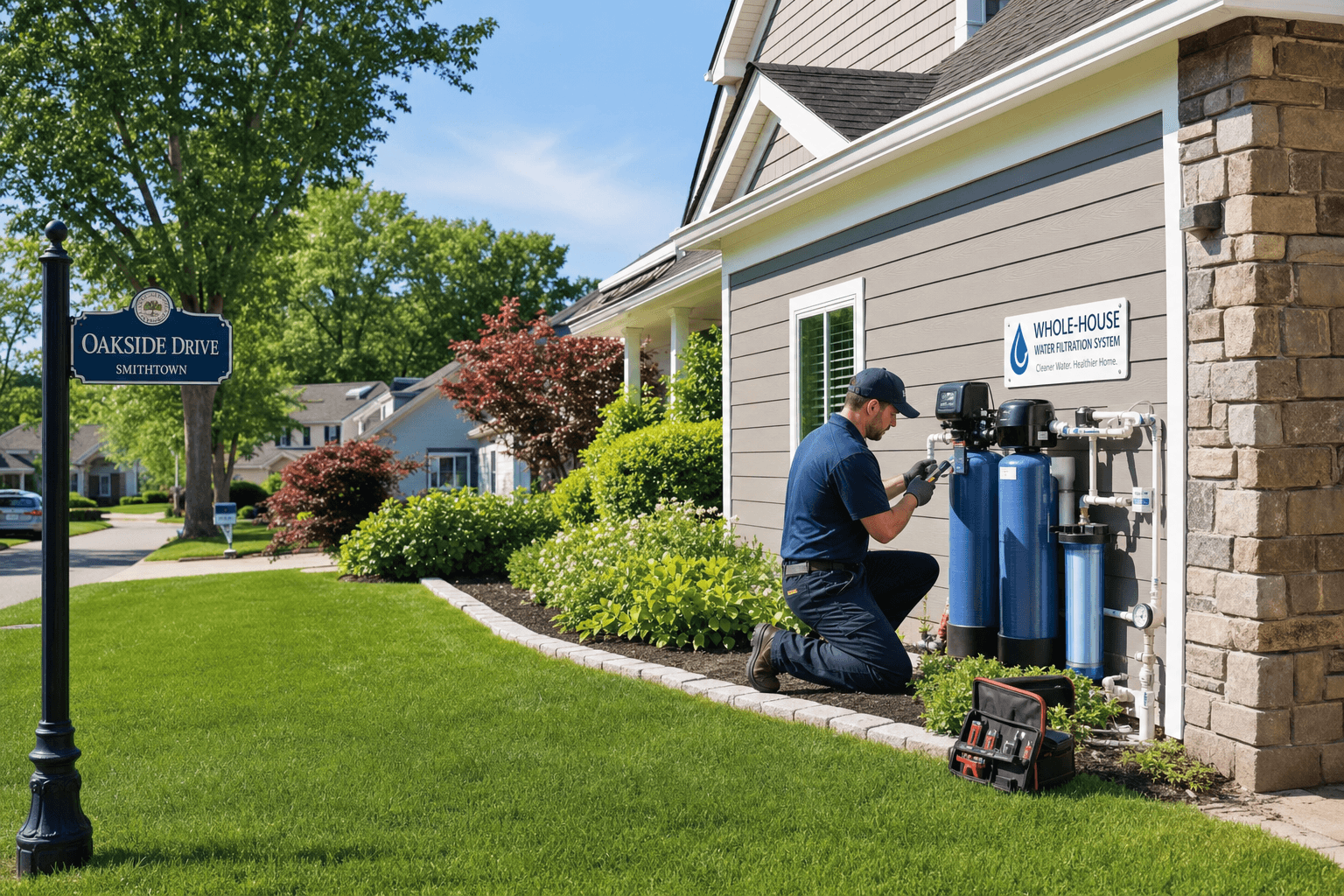
They chose a pHountain pHresh Filtration System with professional installation to treat water at the main entry point. This setup:
- Provided filtered water to every faucet, shower, and appliance
- Helped improve taste and odour, making tap water more appealing for daily use
- Offered a consistent alternative to relying on bottled water and emergency supplies
Because the system served the entire household, they were able to cut back on bottled water purchases and other temporary measures, typically saving approximately $50 to $100 per month in water‑related expenses. Over time, those savings helped offset the investment in permanent filtration.
This example reflects the kind of residential filtration response many Smithtown homeowners consider when facing well contamination — either as a bridge until public water is available, or as an ongoing layer of protection once they connect to the main.
7. Mapping Out Your Next Actions: From Evaluation to System Setup
Once you’ve confirmed your location, understood the PFAS context, and updated your testing, you can decide how to protect your home going forward.
Typical process Smithtown homeowners follow to improve water safety
- Request a professional water analysis A technician evaluates your well or municipal water, reviews any existing test results, and listens to your household concerns.
- Review customised filtration recommendations Based on your water profile, you’ll see options such as a whole‑house system, under‑sink solutions, or a combination approach.
- Choose a system configuration
- pHountain pHresh Filtration System for comprehensive whole‑home coverage
- Additional point‑of‑use filters if you want extra protection at specific taps
- Schedule professional installation Certified installers integrate the system into your main water line, test operation, and confirm proper function.
- Learn how to operate and maintain your system You’ll be shown how the system works, what it targets, and how to recognise when routine maintenance or follow‑up testing may be needed.
- Re‑test periodically Ongoing testing helps verify that your overall water quality remains consistent, especially if local conditions change.
If you’re in Smithtown and want to understand exactly how a system would work in your home, explore the overview of whole‑home water filtration in Suffolk County and how installations are tailored to local conditions.
Ways pHountain Water Filters Assists Smithtown Residents
pHountain Water Filters focuses on Long Island and the NYC metro area, with a strong emphasis on:
- Local water knowledge: Familiarity with issues like PFAS, industrial chemicals, and sediment in regional groundwater
- Whole‑house protection: Systems designed to treat water at the source, before it reaches any fixture
- Professional installation: Certified technicians handle integration with your plumbing, testing, and system setup
- Ongoing support: Maintenance, system checks, and upgrades as water conditions or household needs change
For Smithtown residents — especially those near Oakside Drive, Landing Avenue, and Valley Road — combining public infrastructure upgrades with in‑home filtration can provide a layered approach to water safety and peace of mind.
> If you live in Smithtown and want clarity about your home’s water, you can start by requesting a Free In‑Home Water Test and consultation from pHountain Water Filters.
Questions Smithtown Residents Commonly Ask About Well Water and PFAS
Are all private wells in Smithtown affected by PFAS?
No. The confirmed federal funding specifically addresses 26 homes with PFAS‑impacted private wells along Oakside Drive and Landing Avenue, identified through a 2019 survey of wells in that area. However, PFAS can appear in other locations, and the only way to know your situation is to test your own well.
If my home is near Oakside Drive but not one of the 26, should I still be concerned?
If you are on a private well close to Oakside Drive, Landing Avenue, or Valley Road, it is prudent to treat your property as potentially at risk until you have current test results. Groundwater does not follow street boundaries, and PFAS can move through aquifers. Even if you are not eligible for the publicly funded water main extension, you can still:
- Arrange independent water testing
- Consider whole‑house filtration as a protective measure
- Continue to monitor updates from local officials
I’m already on public water in Smithtown. Do I still need filtration?
Public water systems are subject to regulatory standards and testing, including for certain PFAS compounds, and the new funding is designed to help residents access safe public drinking water. Many homeowners, however, choose to add in‑home filtration to:
- Address taste and odour preferences
- Add a second barrier at the household level
- Protect plumbing fixtures and appliances from sediment and impurities
A whole‑house filtration system can work alongside public water, treating water as it enters your home.
How quickly will the new water main extension fix the problem for affected homes?
The Patch report confirms that $1.1 million in federal funding has been allocated to extend municipal water service to the impacted homes, but it does not provide a specific construction timeline. For schedule details, homeowners should monitor official communications from the Town of Smithtown and relevant local agencies. In the meantime, affected households often rely on bottled water and/or in‑home filtration to manage daily needs.
Will a whole‑house system help if I eventually connect to public water?
Yes. Many Smithtown homeowners use a whole‑house filtration system as a long‑term solution, regardless of whether their source is a private well or municipal supply. If you transition from well water to public water later, a properly configured system can:
- Continue to provide filtered water throughout the home
- Help manage chlorine, sediment, and other municipal water characteristics
- Support consistent water quality even as external conditions change
> Ready to take the next step toward clearer, better‑tasting water in your Smithtown home? Visit the Smithtown water filtration page or request a Free In‑Home Water Test to discuss options tailored to your property.
This blog is for informational purposes only and is not intended as health or medical advice. Water quality conditions can vary significantly between homes, even within the same neighborhood. Homeowners should consult appropriate local authorities, licensed professionals, and certified laboratories for testing, regulatory guidance, and health-related questions before making decisions about their water supply or treatment options.
Water quality varies by location. Municipal water provided by SCWA achieved EPA compliance in June 2025. Private well owners should have water tested regularly. pHountain provides free water testing for Nassau and Suffolk County.